Tool Backpack vs Tool Bag: Key Differences and How to Choose
A tool backpack carries the load on both shoulders and keeps your hands free, while a tool bag (usually a tote with a handle and a single strap) gives faster access to tools but loads one side of your body. Choose a backpack for long walks, stairs and ladders. Choose a tote or open-top bag for short moves and grab-and-go work.
 LOKASS 8605Best overall
 KLEIN TOOLS 5541610-14Orange interior, tough nylon
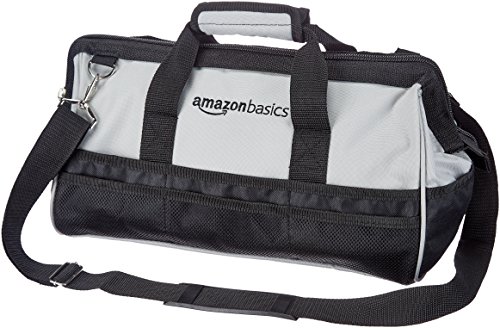 Amazon Basics TB002Open-top tote, 16 outside pockets
The short version of the difference
The main difference is how you carry the weight. A backpack uses two padded straps and a back panel. A tool bag, also called a tote, hangs from handles or one shoulder strap.
That one change affects almost everything else: comfort on long carries, how easily you can climb a ladder, how fast you reach a tool, and how much you can bring along.
Search results often use the words loosely. Many products titled as backpacks are really totes with a single strap, so it pays to read the listing details and not just the product title.
Carrying comfort and hands-free use
A backpack spreads weight across both shoulders and your back. That matters when you walk across a large site, climb several flights of stairs, or need a hand free for a railing or ladder rung.
Look for padded straps, a cushioned back panel, and a chest strap or waist belt. Those features keep the pack close to your body so it shifts less as you move. The LOKASS 8605 on our best-tool-backpack list, for example, lists padded shoulder straps, a chest strap and a waist belt, plus a 110 lb max load.
A tote puts the weight on one shoulder or one hand. For a short walk from the truck to the work area, that is usually fine. For long carries, a heavy tote tends to tire one side of your body faster.
Access, organization and security
Totes are built for quick access. An open top or wide mouth lets you reach in and grab a tool without opening a long zipper. The Amazon Basics 16 inch bag, for instance, lists a wide opening and 26 pockets, and the WORKPRO 16 inch bag uses an internal metal frame to keep its mouth open.
Backpacks usually trade a little speed for organization and security. Many open like a clamshell, so you can see everything at once, and many have zippers that accept a lock. The LOKASS model lists front and rear compartments that each open to 90 degrees, along with a resettable combination lock.
A backpack can also hold a laptop in its own compartment, which helps if you carry a computer to inspections or service calls. Several packs on our list include one.
Side-by-side comparison
Here is how the two styles generally compare. Individual products vary, so treat this as a starting point.
| Feature | Tool backpack | Tool bag or tote |
|---|---|---|
| Carry style | Two shoulder straps, back panel | Handles and a single strap |
| Hands free | Yes | Not while carrying |
| Access to tools | Good, often clamshell opening | Fast, especially open-top designs |
| Pocket count | Often high (56 on our top pick) | Varies (3 to 40 on the bags we list) |
| Security | Lockable zippers on some models | Usually open or a simple zipper |
| Empty weight | Can be heavy (7.94 lb for a wheeled pack) | Can be very light (0.77 lb on one model) |
| Best for | Long walks, stairs, ladders | Short carries, quick grabs |
Weight, capacity and materials
Empty weight counts against what you can carry. The DEWALT wheeled backpack lists 7.94 lb empty, and the PACKOUT-compatible backpack on our page lists 10.45 lb. Compare that with the WORKPRO wide mouth bag at 0.77 lb. A lighter bag leaves more of your carrying limit for tools.
Capacity is not always listed. Only 8 of the 26 products on our backpack page state a max load, so check before you assume a bag can handle a heavy kit. The DEWALT wheeled pack lists 55.12 lb, while the LOKASS lists 110 lb.
Fabric and base also matter. Denier measures thread thickness, and higher numbers such as 1680D usually mean tougher cloth. The Klein Tools Tradesman Pro lists 1680D ballistic nylon and a fully molded bottom. The WORKPRO wide mouth bag lists 600D polyester. A molded base keeps your tools off wet or dirty floors.
What about a PACKOUT-style system?
Milwaukee's PACKOUT is a modular system of stackable boxes and bags that lock together, so it is a different idea from either a backpack or a tote. Instead of one bag holding everything, you build a stack on a cart or dolly and move it as a unit.
A modular system suits a van or a fixed work area where you roll gear in. It is less suited to climbing stairs with everything on your back. If you already own PACKOUT gear, our page includes a PACKOUT-compatible backpack with 48 pockets and a laptop sleeve, so you can carry a smaller kit on your shoulders and still fit the system.
How to choose
Start with how you move on a typical day, then match the bag to that.
Use this short checklist:
- Long walks, stairs or ladders: pick a backpack with padded straps and a chest strap or waist belt.
- Short carries and constant tool swaps: pick an open-top or wide-mouth tote.
- Shared or unlocked spaces: pick a bag with lockable zippers.
- Laptop or meter to protect: pick a pack with a dedicated compartment.
- Heavy kit: check the stated max load and the empty weight before you buy.
- Electrical work: see our best electrician tool bag picks for bags suited to that kit.
Safety notes
Heavy bags strain your back and shoulders, so pack the heaviest tools close to your back and keep them low and centered. Do not climb a ladder with a bag that pulls you off balance. Hoist it up on a rope or tool line instead.
If you work near live circuits, keep metal tools in their pockets so they cannot short across terminals, and use insulated tools rated for the job. Wear eye protection when pulling tools from a crowded bag around cutting or drilling work, and keep sharp blades capped.
For a full ranked list of packs with their pocket counts, weights and capacities, see our best tool backpack comparison.
Frequently asked questions
Is a tool tote the same as a tool bag?
Mostly yes. People use tool bag for both open-top totes and zippered bags. The tote usually has handles and an optional shoulder strap, and no back straps.
Can a tool backpack replace my tool bag?
Often, if your kit fits the pockets. Count your hand tools, meters and batteries first. Backpacks can be slower to reach into for constant tool swaps.
Do tool backpacks keep tools dry?
Some list water resistance. The DEWALT wheeled pack lists an IP54 water-resistant compartment. A molded base also helps keep the bottom off wet floors.
Why do some listings call a tote a backpack?
Titles are not always accurate. Check for padded shoulder straps and a back panel in the details to confirm the carry style.