What Are the Downsides of Using a Car Power Inverter?
The main downsides of a car power inverter are limited power from the lighter socket, extra drain on your battery, energy lost as heat, and possible compatibility problems with sensitive devices. None of these are deal breakers if you match the inverter to your devices and your car. Most problems come from asking a small socket or a small battery to do too much.
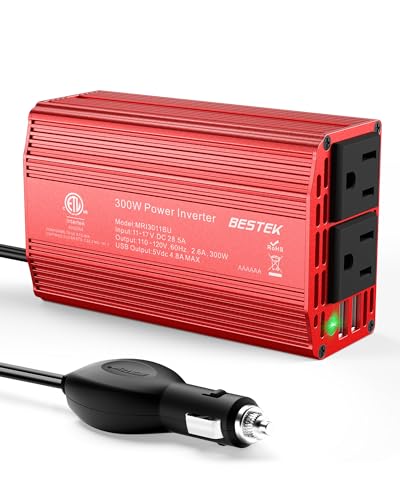 BESTEK MRI3011BU-4.8ABest overall
 BESTEK MRZ3011HU-PD-BKRDMost efficient
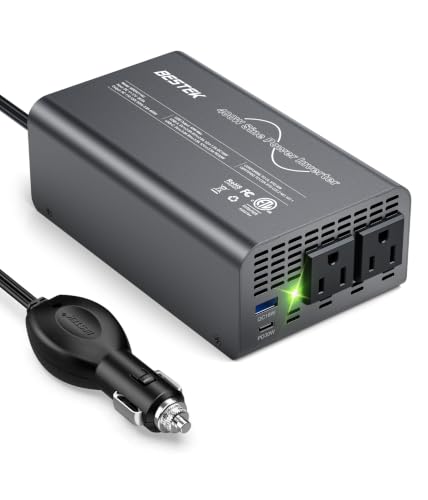 BESTEK MRZ4011AUMost power with USB-C PD
The Main Downsides at a Glance
A car inverter turns 12V DC power from your vehicle into 120V AC, the kind you get from a wall outlet. That conversion is useful, but it comes with trade-offs. Knowing them up front helps you pick a unit that fits how you will really use it.
Here are the downsides most buyers run into:
- The lighter socket can only supply a limited amount of power.
- Running an inverter drains the battery, especially with the engine off.
- Some energy is lost as heat during conversion, so efficiency matters.
- Cooling fans can be noisy on some units.
- Cheaper waveforms may not suit sensitive electronics.
- Voltage differences, such as in some electric vehicles, can cause compatibility trouble.
- Misuse can blow fuses or create heat and fire risks.
The Lighter Socket Is the Biggest Bottleneck
Most car lighter sockets are fused for roughly 150W. At 12V, that works out to about 12 to 13 amps flowing through a small plug and thin wiring. An inverter labeled 300W or 400W can only deliver its full rating if it connects straight to the battery with clamps.
This surprises many first-time buyers. A 300W unit plugged into a lighter socket will not run a 300W appliance. If you draw too much, the car's fuse blows or the inverter shuts itself off. Neither is dangerous when the protections work, but it is annoying when your laptop charger or small fan suddenly stops.
Our best power inverter for car cigarette lighter page lists units that plug into the socket. Check each one's continuous rating against what your socket can supply, not just the number on the box. If you need more than the socket allows, a battery-connected model is the better route.
Battery Drain and Running Time
An inverter pulls power from your car battery. With the engine running, the alternator makes up much of the difference. With the engine off, the battery is the only source, and a weak or older battery can run down quickly. A car that will not start is the most common real-world cost of using an inverter carelessly.
Some vehicles also cut power to the lighter socket when the ignition is off, while others keep it live. Check your owner's manual so you know what to expect.
A few habits help:
- Run the engine while powering anything beyond a phone charge.
- Unplug the inverter when you are done, since some units draw a small amount even when idle.
- Keep loads well below the inverter's rating.
- Avoid long sessions with the engine off, especially with an older battery.
Efficiency, Heat and Fan Noise
No inverter converts power perfectly. The lost energy turns into heat, which the fan then has to remove. A higher efficiency rating means less wasted power and less heat.
Our product data shows how much this varies. The BESTEK 300W Car Power Inverter lists 83.33% efficiency, while the BESTEK 300W Pure Sine Wave Car Inverter lists 96%. At 83.33%, a full 300W load would pull roughly 360W from the car. A more efficient unit wastes less of your battery for the same job.
Fans add some noise. Smart fans that spin up only when needed keep things quieter. The BESTEK 300W Car Power Inverter, for example, runs its fan faster when the unit gets warmer or output goes past 70W. Light loads like a phone charger should leave the fan mostly idle.
Waveform and Device Compatibility
Inverters produce either a pure sine wave or a modified waveform. Pure sine wave power is closer to what comes from a wall outlet and suits sensitive gear such as CPAP machines and some medical or audio equipment. Modified waveforms are fine for most basic chargers but can cause buzzing, heat or odd behavior in some devices.
Voltage input matters too. Some electric vehicles have a lighter socket above 12V. The BESTEK models in our data list 11 to 17V compatibility, while the DrimMek 300W lists that it is not compatible with Tesla vehicles that use a 16V low-voltage system.
| Model | Continuous power | Efficiency | Waveform | Voltage note | |---|---|---|---|---|
| Model | Continuous power | Efficiency | Waveform | Voltage note |
|---|---|---|---|---|
| BESTEK 300W Car Power Inverter | 300W | 83.33% | Not listed | 11 to 17V compatible |
| BESTEK 300W Pure Sine Wave Car Inverter | 300W | 96% | Pure sine wave | 11 to 17V compatible |
| BESTEK 400W Pure Sine Wave Inverter | 400W | 80% | Pure sine wave | 11 to 17V compatible |
| DrimMek 300W Car Power Inverter | 300W | Not listed | Not listed | Not compatible with 16V Tesla systems |
Safety Notes
Treat an inverter as real electrical equipment. The AC side can shock you, and the DC side can carry high current.
Keep the unit dry and in a spot with airflow. Do not cover it with bags, blankets or clothing, because blocked vents can cause overheating. Do not leave it running unattended in a hot, parked car.
Never plug in heating appliances such as hair dryers, space heaters or kettles. They draw far more than a lighter socket can supply. Use a unit with built-in protections such as overload, short circuit, overheat and voltage protection, and make sure any replacement fuse has the same rating as the original.
If you connect an inverter to the battery with clamps, attach the cables in the right order and polarity, and keep metal tools away from the terminals.
How to Reduce the Downsides
Start by adding up the watts of the devices you plan to run. Pick an inverter that handles that total with some room to spare, and check whether your socket can supply it. For laptops, phones and cameras, a compact lighter-socket unit is usually enough.
If you drive a larger vehicle or need more power, look at our best power inverter for truck page, since heavier-duty use often calls for a battery connection. For a broader view across sizes and types, see our best power inverter comparison.
Finally, match features to your needs. Choose pure sine wave for sensitive devices, check voltage compatibility if you drive an electric vehicle, and compare efficiency so you waste less power.
Frequently asked questions
Can a car inverter damage my car?
It can if you overload the socket wiring or drain the battery, but a properly sized unit with built-in protections is unlikely to cause harm. Stay within the socket's limit and watch your battery.
Can I leave an inverter plugged in all the time?
It is better to unplug it when you are not using it. Some units draw a small amount of power while idle, and heat can build up in a parked car.
Do I need a pure sine wave inverter?
Only if you will run sensitive equipment such as a CPAP machine. For most phone and laptop chargers, a modified waveform is usually fine.
Why does my inverter keep shutting off?
Common causes are an overload, low battery voltage, overheating, or a blown fuse. Reduce the load, start the engine, and let the unit cool before trying again.