What Are the Downsides of Smart Locks?
The main downsides of smart locks are dependence on batteries and sometimes a hub or Wi-Fi, a small but real cybersecurity risk, and fit or compatibility limits on your door. A smart lock is only as secure as its physical build, so a weak lock with an app is still a weak lock. For many homes the trade-offs are manageable if you pick a lock with a solid security grade and plan for power loss.
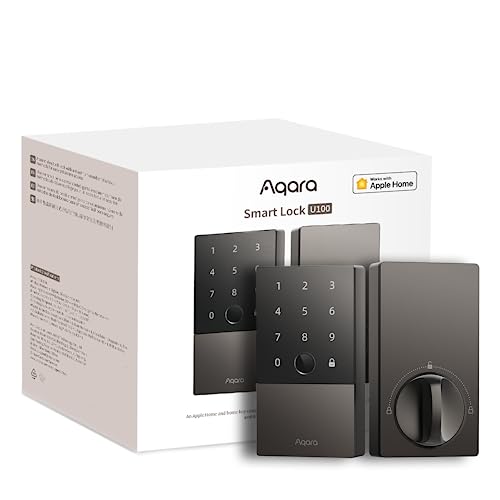 Aqara SDL-D01Best overall
 TEEHO TE001Keypad with guest codes
 Kwikset 96900-463Lifetime warranty keyed set
1. Batteries and power
Most smart locks run on batteries, and a dead battery can leave you with a lock that will not respond. Many electronic models use 4 AA cells. The Aqara U100, for example, is listed with 4 AA batteries included and a battery life of up to 8 months. The TEEHO TE001 also uses 4 AA batteries, but its listing says they are not included, so you need to buy them separately.
Good locks warn you early. The TEEHO listing mentions a red light indicator when the charge drops below 15%. Still, you have to notice the warning and act on it.
Check for a backup way in. The U100 lists a mechanical key for emergency use and a USB-C port for emergency charging. A lock with no backup can turn a small chore into a lockout.
2. Hacking and privacy risks
Any lock that connects to a network adds a way in that a plain deadbolt does not have. Weak passwords, unpatched software and shared accounts are the usual weak points. Remote access features, such as granting codes from an app, also mean you are trusting the maker's software.
Some designs limit the exposure. The Aqara U100 listing says fingerprint data is stored locally and AES encrypted. That is a published claim, not something we verified, so read it as a feature to ask about rather than a guarantee.
Basic steps help: use a strong, unique account password, turn on two-factor sign-in if the app offers it, and remove codes for people who no longer need access.
3. Extra hardware, apps and software
Many connected locks need more than the lock itself. The U100 listing says an Aqara Zigbee 3.0 hub is required for remote passwords and for linking with Google Home, Alexa and IFTTT. Sharing Apple Home Keys needs an Apple Home Hub. The Veise VE017 listing says a G1 Gateway is required for Alexa or Google voice control.
That means a lock can look like a full smart lock in the photos while key features sit behind a second purchase. Read the listing for what works with no extra hardware.
Apps can also glitch, lose connection or stop getting updates. If the maker drops support, features can fade even though the lock still turns.
4. Fit and door compatibility
Smart locks are not universal. Door thickness, backset and bore hole all have to match. Our best smart lock page notes that most locks fit doors 1.375 to 1.75 in thick with a 2.375 or 2.75 in backset, while a few reach higher. The Aqara U100 lists a thickness range of 1.378 to 2.165 in and a backset of 2.362 to 2.756 in.
Bore hole size matters too. The TEEHO TE001 listing says it fits only 2-1/8 in holes and not 38 mm holes. Measure first, then compare.
5. Security grade and lock quality
A smart feature does not replace strong hardware. Look for ANSI/BHMA Grade 3 or better on exterior doors and make sure a deadbolt is included. If a listing shows no grade, treat the security as unconfirmed.
Also watch the keyword itself. Some products sold as smart locks are keyed sets with no electronics. On our best smart lock comparison, the lifetime warranty pick is one of these, so the warranty alone does not mean it is a smart lock.
Here is how a few listed products differ on points that matter for downsides:
| Product | Grade | Deadbolt | Power | Extra hardware noted |
|---|---|---|---|---|
| Aqara U100 | Grade 3 | Yes | 4 AA (included) | Zigbee hub for remote codes |
| TEEHO TE001 | Grade 3 | Yes | 4 AA (not included) | None noted |
| Veise VE017 | Grade 3 | Yes | Not stated here | G1 Gateway for voice control |
| Kwikset Tylo 96900-463 | Grade 3 | Yes | Keyed, no electronics | None |
6. Is a smart lock still worth it?
For many households, yes. The downsides are mostly avoidable if you plan ahead. A keyed set avoids the electronics problems entirely, but you lose codes, fingerprints and remote control.
Use this checklist before you buy:
- Confirm a Grade 3 or better rating and a deadbolt.
- Measure thickness, backset and bore hole against the listing.
- Find out what needs a hub, gateway or extra purchase.
- Check whether batteries are included and what the backup entry is.
- Look at the warranty term and how the maker handles updates.
Safety notes
Never rely on a smart lock as your only way in. Keep a physical key somewhere safe but not hidden near the door. Change batteries before the low warning becomes a lockout, and replace them all at once.
If you drill or reshape a door during installation, wear eye protection. Do not disable an automatic lock feature without thinking about who might be locked out, including kids and guests.
Frequently asked questions
Can a smart lock be opened without a phone?
Often yes. Many models also offer a keypad, fingerprint reader or a mechanical key. The Aqara U100 lists a mechanical key for emergency use, for example.
Do smart locks work during a power or internet outage?
Battery-powered locks keep working during a power cut. Features that rely on a hub or Wi-Fi, such as remote codes, may stop until the connection returns.
Are keypad locks without Wi-Fi safer from hackers?
A lock with no network connection has fewer remote attack paths. Its strength then depends on the physical build and your code habits.
Will a smart lock fit my existing door?
Only if thickness, backset and bore hole match. Check the listing against your own measurements before you order.