What Are the Alternatives to a Forstner Bit?
The most common alternatives to a Forstner bit are spade bits, hole saws, self-feed bits, and a brad-point bit paired with a chisel. Spade bits and hole saws are the easiest swaps for rough or large holes, while a Forstner bit is still the best choice for clean, flat-bottomed holes like hinge cups. Pick based on whether the hole is blind or through, how neat it needs to look, and how big it is.
 Fisch FSA-367208Best overall
 Freud PB-100Lifetime guarantee included
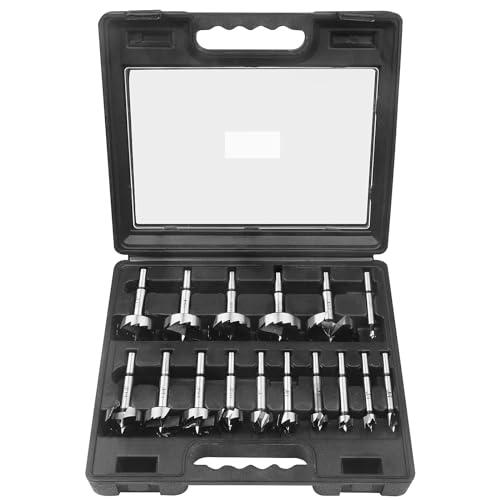 BAIDETS BD210035Every size named
Why people look for a substitute
A Forstner bit is made for one job: a clean, flat-bottomed hole with a smooth wall. A center point locates the cut, and the rim shears the wood fibers. That makes it ideal for hinge cups, dowel holes, and overlapping holes.
Still, you may not own the size you need, or the job may not call for that level of finish. A through hole in a stud for a wire does not need a flat bottom. A very wide hole may be larger than the bits you have. Our best forstner bit set comparison shows that common sets run from 0.25 in up to 2.125 in, so anything wider needs another tool anyway.
The main alternatives at a glance
Each option trades something away. The table below sums up how they compare in general terms.
These are general tool traits, not rankings of specific products.
| Tool | Best for | Flat bottom? | Main drawback |
|---|---|---|---|
| Spade bit | Fast, rough holes in framing and through holes | No, leaves a pointed or ragged bottom | Rough walls and tear-out on exit |
| Hole saw | Large through holes in wood, plastic, or sheet material | No, it cuts a ring and leaves a plug | Needs a pilot bit and can bind |
| Self-feed bit | Fast, deeper holes in wood with a power drill | Mostly no | Aggressive, can grab and twist the drill |
| Brad-point bit | Accurate small holes and shallow starts | No, it has a pointed center | Limited to smaller diameters |
| Router with a template | Flat-bottomed pockets and recesses | Yes | Needs setup and a router |
| Brad-point plus chisel | One-off flat recesses by hand | Yes, after cleanup | Slow and takes skill |
Spade bits and self-feed bits
A spade bit is a flat blade with a center point. It cuts quickly and covers many diameters, so it is a common choice when the hole will be hidden or when speed matters more than finish. The wall tends to be rough, and the exit side can splinter.
Backing the workpiece with scrap wood reduces the splintering. Drill slowly at the start so the center point seats before the blade bites.
A self-feed bit uses a screw-style tip that pulls itself into the wood. It clears chips well and works for deeper holes. The pull can be strong, so it suits a drill with a side handle and a firm two-handed grip. If the bit catches, the drill can twist hard in your hands.
Hole saws
The forum-style question of Forstner bit vs hole saw comes down to what you want to remove. A Forstner bit removes all the material in the hole as chips. A hole saw cuts only a ring and leaves a plug of waste in the middle.
That ring cut is what makes hole saws practical for big holes, because less material is being cut and less power is needed. It is also why they do not leave a flat bottom, and why they are usually used for through holes. They work in wood, plastic, and many sheet materials, depending on the saw.
A hole saw needs a pilot bit at the center. Sawdust packs into the cup, so back the saw out now and then to clear it. Pushing hard makes the saw bind and can twist the drill sharply, so hold the drill firmly and keep your body out of the line of any kickback.
Router and hand-tool options
If your goal is a flat-bottomed recess, there are ways to get one without a Forstner bit. A router with a straight bit and a template can cut round or shaped pockets to a set depth. The floor stays flat, and you can make the pocket any size your template allows.
For a single shallow recess, you can drill a ring of smaller holes with a brad-point bit, stopping at the depth you want. Then pare away the waste with a sharp chisel. This takes patience, and the floor will not be as flat as a Forstner or router cut.
Chisels are sharp, so keep both hands behind the cutting edge and clamp the work down before you start.
How to choose the right option
Start with the hole itself. Ask these questions in order:
- Does the hole go all the way through? If yes, a spade bit, self-feed bit, or hole saw usually works.
- Does the bottom need to be flat? If yes, use a Forstner bit or a router.
- Is the hole wider than your largest bit? Use a hole saw for through holes or a router for pockets.
- Will the edges show? Choose a Forstner bit or a hole saw with backing scrap to keep the wall neat.
- Are you working by hand or at a drill press? A drill press steadies Forstner bits and hole saws, while handheld drills suit smaller spade bits.
Safety basics for any of these tools
Wear safety glasses, since chips and dust fly. Hearing protection is smart with a hole saw or a router. Clamp the workpiece so it cannot spin, because a binding bit will turn the board into the hazard.
Unplug corded tools or remove the battery when changing bits. Keep loose sleeves and long hair away from the chuck. If you are drilling into walls or framing, check for wiring and pipes first.
If you decide a Forstner bit is still the right tool after all, look at the steel, rim, and shank on our forstner bit set comparison. The listings there note whether a maker names a center point, a wave rim, and a case.
Frequently asked questions
Can I use a spade bit instead of a Forstner bit for hinges?
Not well. Hinge cups need a flat, even floor and a clean wall. A spade bit leaves a pointed, rough bottom, so a Forstner bit or a router is a better match.
Is a hole saw better than a Forstner bit for large holes?
For through holes, often yes, because it removes less material and needs less power. For blind holes with a flat bottom, a Forstner bit or a router is the better choice.
Can I use a Forstner bit in a handheld drill?
Yes, in smaller sizes, if you clamp the work and hold the drill square. Larger bits are steadier in a drill press.
What can I use if I only need one odd hole size?
A hole saw, a router with a template, or a spade bit can cover odd sizes. Pick based on whether you need a through hole or a flat-bottomed recess.