What Are the 4 Types of Welding? MIG, TIG, Stick and Flux-Cored Explained
The four types of welding most people mean are MIG (gas metal arc), TIG (gas tungsten arc), stick (shielded metal arc) and flux-cored arc welding. All four use an electric arc to melt metal so two pieces fuse together, but they differ in how the filler metal is fed and how the weld is protected from air. For most beginners, MIG or flux-cored is the easiest place to start.
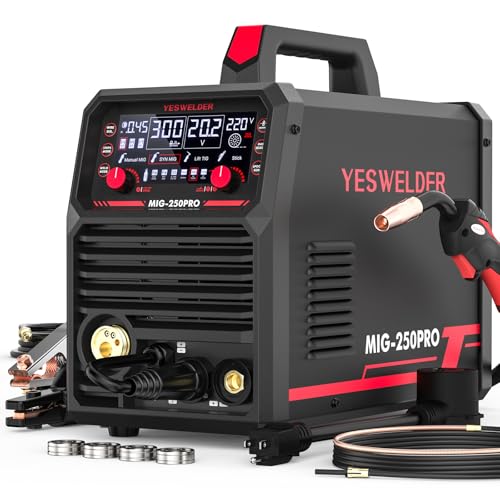 YESWELDER MIG-250DS PROBest overall
 ARCCAPTAIN MIG200Saved presets for repeat jobs
 BILT HARD WLD-1603Portable 250 A steel welder
Welding in plain terms
Welding joins two pieces of metal by melting them at the joint, usually with filler metal added so the seam is strong. Arc welding does this with electricity. A machine sends current through an electrode, an arc forms between the electrode and your workpiece, and the heat creates a small pool of molten metal.
That pool needs protection. Hot, molten steel reacts with oxygen and moisture in the air, which can leave the weld porous and weak. Each of the four types handles this protection in a different way, and that is the main thing that sets them apart.
The four types at a glance
The table below compares the four processes on the points that matter most when you pick one. These are general characteristics, not the specs of any one machine.
| Process | Filler and shielding | Best for | Learning curve |
|---|---|---|---|
| MIG (GMAW) | Solid wire fed by the machine, shielded by bottled gas | Clean, fast welds on mild steel and thin to medium metal | Gentle |
| Flux-cored (FCAW) | Hollow wire with flux inside, with or without extra gas | Outdoor work, thicker or slightly dirty metal | Gentle to moderate |
| Stick (SMAW) | Flux-coated rod you replace as it burns down | Repairs, rusty or painted metal, windy conditions | Moderate |
| TIG (GTAW) | Non-melting tungsten electrode, filler rod added by hand, bottled gas | Thin metal, stainless, aluminum, neat visible welds | Steep |
MIG and flux-cored welding
MIG welding feeds a solid wire through a hand-held gun at a steady speed. A shielding gas flows around the arc to protect the weld pool. You pull the trigger, and the machine does the feeding while you guide the gun along the joint. It is quick, leaves little cleanup, and works well on mild steel. The tradeoff is that you need a gas cylinder, and a breeze can blow the gas away, so it suits a garage or shop better than an open yard.
Flux-cored welding looks a lot like MIG, but the wire is hollow and filled with flux. As it burns, the flux makes its own shielding, so many flux-cored setups need no gas bottle. That makes it popular for outdoor jobs and metal that is not perfectly clean. The welds are usually rougher, you chip off a layer of slag afterward, and it tends to throw more spatter and smoke, so ventilation matters.
Many modern machines offer both modes and add synergic control, which sets a matched voltage and wire speed from one setting. That removes much of the guesswork, because mismatched settings are a common cause of poor welds.
Stick and TIG welding
Stick welding uses a rod coated in flux. The rod is both the electrode and the filler. As the arc burns, the coating creates shielding gas and a slag layer over the weld. When the rod gets short, you swap in a new one. Stick needs no gas and no wire feeder, so the equipment is simple and works well outside. It handles rusty, painted or dirty steel better than MIG or TIG. The catch is technique: striking and holding the arc takes practice, and rods can stick to the metal until you get a feel for it.
TIG welding uses a tungsten electrode that does not melt. You hold the torch in one hand and feed a filler rod with the other, while a foot pedal or hand control adjusts the current on many machines. Bottled gas shields the weld. The result is the neatest and most precise weld of the four, which is why TIG is common on thin stainless, aluminum and visible work. It is also the slowest and hardest to learn.
Some budget machines offer Lift TIG, where you touch the tungsten to the metal and lift to start the arc. Others use high-frequency start, which begins the arc without contact and can reduce wear on the tungsten.
Which one should you learn first?
If you are new, pick based on where you will weld and what you will weld. These questions help narrow it down:
- Welding mild steel in a garage or shop: start with MIG.
- Welding outdoors or on dirty metal: try flux-cored or stick.
- Doing repairs on farm or yard equipment: stick is a reliable choice.
- Working with thin stainless or aluminum and want clean seams: plan on TIG later, once you have basic skills.
Choosing a machine that covers several types
You do not have to buy a separate machine for each process. Multi-process welders combine several in one box. On our best welding for beginners page, every ranked model runs on 110V/220V dual voltage, so you can learn on a household outlet and move to 220V later for thicker steel.
Process counts need a closer look, because a listed process only helps if you can run it. The top-ranked YESWELDER MIG-250DS PRO lists six processes, including Lift TIG, stick, flux core and spool gun MIG, but its listing says a separate Lift TIG torch and spool gun are required. The ARCCAPTAIN MIG200 also notes that its TIG gun and spool gun are not included.
Some machines go further. The FEMEROL MTC200PRO lists HF TIG and plasma cutting alongside MIG and stick. Check the full list of included parts before you buy, and see how each model compares on the beginner welder comparison.
Safety basics for every process
Welding is safe when you respect the hazards. The same core rules apply to all four types:
- Wear a welding helmet with the right shade lens. The arc can burn your eyes and skin in seconds, and bystanders need protection too.
- Use leather gloves and flame-resistant clothing that covers your arms and legs. Skip synthetic fabrics that melt.
- Weld in a well-ventilated space. Fumes from metal, coatings and flux can harm your lungs, and you should never weld galvanized or painted metal without proper ventilation and respiratory protection.
- Keep flammable items away and have a fire extinguisher close by. Sparks can travel and smolder.
- Secure gas cylinders upright and keep hoses in good shape. Check fittings for leaks.
- Check cables and plugs for damage, keep your work area dry, and never touch live parts. Electric shock is a real risk.
- Wear hearing protection and safety glasses when grinding or chipping slag.
Frequently asked questions
What are the 5 basics of welding?
There is no single official list. People often mean the four processes above plus a fifth topic, such as joint types or welding positions. Learning the arc, shielding, filler, joint and technique together helps you make sound welds.
Which type of welding is strongest?
Strength depends more on correct settings, clean metal and good technique than on the process itself. Any of the four can make a strong weld when matched to the metal and thickness.
Can I weld aluminum with these processes?
Yes, usually with TIG or with MIG using a spool gun. Aluminum behaves differently from steel and needs the right wire, gas and equipment, so check what your machine supports.
What is welding for dummies in one sentence?
You use an electric arc to melt metal at a joint, add filler, and keep air away from the molten pool until it cools into one solid piece.