Common Outdoor Lighting Mistakes and How to Avoid Them
The most common outdoor lighting mistakes are using too much or too little light, picking bulbs that do not suit the fixture or the weather, and aiming lights where they cause glare instead of visibility. Most of them are easy to fix with the right bulb type, a sensible brightness, one consistent color tone and a quick look at placement. Safety matters too, so turn the power off before any work and take care on ladders.
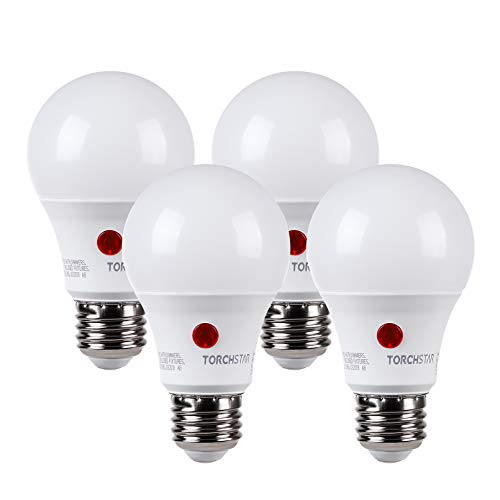 TORCHSTAR A-50408Best overall
 SETEN LED BULB 10WBrightest A19
 Sunco Lighting PAR38_D2D-15W-5K-2PKBest floodlight
Mistake 1: Too much light, or too little
The first thing most people get wrong is brightness. A very bright bulb on every wall and post can wash out the yard, create harsh glare and make the space feel like a parking lot. Too little light leaves steps, door locks and walkway edges in shadow, which is a real tripping risk.
A better approach is to light the spots where you need to see: the front door, the steps, the garage door and the path between them. Everything else can stay dim or dark. For a porch lantern or coach light, an A19 bulb around 800 lumens is plenty. Our outdoor bulb comparison shows brightness side by side, with bulbs ranging from 450 to 1250 lumens, so you can match the output to the job instead of guessing.
Mistake 2: Choosing the wrong bulb shape for the fixture
Outdoor fixtures are not all built for the same bulb. A lantern or wall light usually takes an A19 bulb, which spreads light in all directions. A floodlight fixture over a driveway is different. It needs a reflector bulb such as a PAR38 or PAR30, which throws light in a focused beam.
Putting a standard A19 in a floodlight housing wastes much of its light, because it scatters in directions you did not want. Going the other way, a flood bulb in a lantern aims light in one direction and leaves the rest of the lantern dark. For example, the Sunco PAR38 on our page puts out 1250 lumens through a 40 degree beam, and the Sunco PAR30 uses a 40 degree beam too at 850 lumens. Check the base as well. Most of the bulbs we compare use a standard E26 base, but confirm that before you buy.
Mistake 3: Ignoring weather ratings
Rain, snow, humidity and cold are hard on bulbs. An indoor-only bulb in an open fixture can fail early or become unsafe when water gets in. Look for a wet rating or an IP rating on the packaging. IP65 is listed on the SETEN 1100 lumen A19 bulb in our data, and the Sunco PAR38 is wet rated and listed for operation from minus 4 to 104 degrees F.
An enclosed fixture, such as a sealed lantern with a glass cover, protects the bulb from rain. Even then, a damp or wet rating is a sensible extra margin, since moisture can still collect inside over time. Open sockets and bare floodlight fixtures should always get a bulb rated for the weather.
Mistake 4: Relying on switches and timers that drift
Manual switches get forgotten, and basic timers need resetting as sunset moves through the year. The result is a dark porch in winter evenings or lights burning in the middle of a summer afternoon.
Dusk-to-dawn bulbs solve this with a built-in light sensor. They turn on at sunset and off at sunrise, and the wall switch simply stays on. A few details trip people up:
Keep the switch on all the time, or the sensor never gets power.
Do not cover the sensor. The TORCHSTAR listing specifically says not to cover the red photo sensor with anything.
Do not use these bulbs on a dimmer. The Sunco PAR38 and PAR30 dusk-to-dawn bulbs are both listed as non-dimmable.
Point the sensor at open sky. A bulb tucked deep in a closed, dark fixture may read it as night all day.
- Keep the switch on all the time, or the sensor never gets power.
- Do not cover the sensor. The TORCHSTAR listing specifically says not to cover the red photo sensor with anything.
- Do not use these bulbs on a dimmer. The Sunco PAR38 and PAR30 dusk-to-dawn bulbs are both listed as non-dimmable.
- Point the sensor at open sky. A bulb tucked deep in a closed, dark fixture may read it as night all day.
Mistake 5: Mixing color temperatures
Color temperature is measured in kelvins. 2700K looks warm and yellow, 3000K is a soft white, and 5000K is a crisp daylight white. Mixing them on one house makes the front look patchy, with some fixtures glowing amber and others looking blue-white.
Pick one tone for the front of the house and stay with it. Warm tones suit porches and seating areas. Daylight 5000K suits driveways and work areas where you want a clear view. A plain bulb like the TJOY 2700K A19 is warm, while the dusk-to-dawn picks in our comparison are mostly 5000K, so check the tone before you mix and match across fixtures.
Mistake 6: Poor aim and placement
Where a light points matters as much as how bright it is. Common problems include:
Floodlights aimed at the street or a neighbor's window, causing glare and annoyance.
Bare bulbs at eye level that dazzle anyone walking toward them.
Lights placed so that they leave deep shadows right where people step.
Fixtures mounted too high to reach, so no one ever changes the bulb.
As a rule, aim floods down and toward the area you want lit, and keep light sources shielded from direct view. Walk the route at night after installing and adjust anything that makes you squint.
- Floodlights aimed at the street or a neighbor's window, causing glare and annoyance.
- Bare bulbs at eye level that dazzle anyone walking toward them.
- Lights placed so that they leave deep shadows right where people step.
- Fixtures mounted too high to reach, so no one ever changes the bulb.
Mistake 7: Skimping on safety during installation
Changing a bulb is simple, but outdoor work adds risks. Switch the power off at the wall and let the old bulb cool before you touch it. If you are doing more than a bulb swap, such as replacing a fixture or adding wiring, turn off the breaker and consider hiring a licensed electrician. Outdoor circuits should be protected by a GFCI, which cuts power quickly if there is a fault near water.
Use a stable ladder on level ground, and have someone hold it when you work above head height. Wear safety glasses when you handle glass or reflector bulbs overhead. If you use low-voltage landscape lighting, size the transformer for the total load and watch for dim lights at the end of long cable runs, which is a sign of voltage drop.
Quick reference: mistakes and fixes
Use this table as a checklist before you shop or install.
| Mistake | What goes wrong | Fix |
|---|---|---|
| Too bright everywhere | Glare, washed-out yard | Light only the door, steps and paths |
| Wrong bulb shape | Wasted or misdirected light | A19 for lanterns, PAR30 or PAR38 for floods |
| No weather rating | Early failure, moisture risk | Choose wet-rated or IP65 for open fixtures |
| Manual switch or old timer | Lights off when needed, on in daytime | Use a dusk-to-dawn bulb, switch left on |
| Mixed color tones | Patchy, uneven look | Pick one kelvin value for the whole front |
| Poor aim | Glare and shadows | Aim down, shield the source, check at night |
Frequently asked questions
Can I use an indoor bulb in an outdoor fixture?
Only if the fixture is fully enclosed and dry, and even then an outdoor-rated bulb is the safer choice. Open fixtures need a wet-rated or IP-rated bulb.
Is warm or cool light better outside?
Neither is wrong. Warm light feels cozy on porches and patios, while cooler daylight tones give a clearer view on driveways. The key is to stay consistent.
Why does my dusk-to-dawn bulb stay on all day?
The sensor probably cannot see daylight. It may be covered, buried in a dark fixture or shaded by a deep overhang. Move the bulb or fixture so the sensor faces open sky.
How often should I check my outdoor lights?
A quick look each season is enough. Check that bulbs work, sockets are dry and clean, fixtures are secure and plants have not grown over the light or its sensor.