Should You Use Water and a Hammer When Core Drilling?
Yes, use water when core drilling in concrete, block or brick with a wet diamond bit, and do not use hammer action. Water cools the bit and flushes out slurry, while hammering chips the diamond segments and wears out the drill. Set the drill to rotary only, run it at the speed the bit maker recommends, and let the bit cut with steady, light pressure.
 VEVOR Z1Z-9230Best overall
 VEVOR (8260H)Z1Z-9260Largest hole capacity
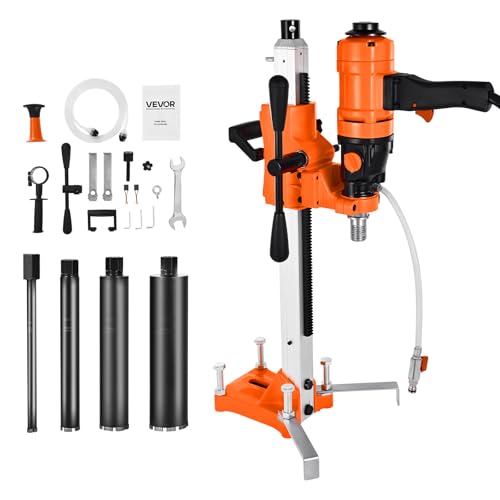 VEVOR Z1Z-CF03-80SHandheld or stand with four bits
Water: why wet drilling is the default
A core bit cuts by grinding. The diamond segments on its rim wear away the material, and that grinding creates a lot of friction and heat. Water carries that heat away, which keeps the segments from glazing over or overheating and losing their cutting ability.
Water also controls dust. Drilling concrete, brick and block releases fine mineral dust, and breathing it in is a health risk. A steady water feed turns the dust into slurry that stays at the hole instead of floating in the air. Slurry also clears out of the cut so the bit can keep touching fresh material.
For these reasons, wet drilling is the standard choice for diamond core bits on masonry. If a bit is labeled for wet use, treat water as part of the tool, not an optional extra.
Can you core drill without water?
Sometimes. Dry core bits exist, and they are built for lighter jobs such as drilling brick, block or tile with a handheld drill. Dry bits still run hot, so they need patience.
If you drill dry, follow these habits:
- Confirm the bit is rated for dry use. Never run a wet-only bit dry, because it can overheat quickly and the segments can be ruined.
- Drill in short bursts and pull the bit out regularly so it can cool and clear dust.
- Keep pressure light. Pushing harder makes more heat, not faster progress.
- Use a vacuum or dust shroud to catch dust at the source, and wear a properly rated respirator.
- Stop if you smell burning or see the segments turn dark or glazed.
| Method | Best for | Main trade-off |
|---|---|---|
| Wet drilling | Concrete, block and thick masonry | Needs a water feed and slurry cleanup |
| Dry drilling | Brick, block and light masonry with a dry-rated bit | Heat builds fast, so you must pause often and control dust |
| Dry drilling in reinforced concrete | Not recommended | Rebar and heat can quickly damage a dry bit |
Hammer action: leave it off
It helps to separate two questions, because people mean different things by hammer.
The first is hammer mode on a drill. A diamond core bit is meant to grind, not pound. Impact action sends shocks into the segments, which can crack them or loosen them from the bit body. It also strains the drill's bearings and gearing, which are designed for steady rotation when core drilling.
The second is hitting the bit or the core with an actual hammer. Avoid striking the bit barrel, since dents and cracks change its shape and make it bind in the hole. If a core is stuck inside, work it out from the open end of the bit using a dowel or rod, or tap the core gently once the bit is off the drill and the bit is secure. Wear eye protection whenever you tap or break material.
What setting to use on a core drill
There is no single correct number, because the right setting depends on the bit diameter, the material and the drill. A larger bit generally needs a lower speed, and a smaller bit can turn faster. The most reliable guide is the speed range printed on the bit or in the bit maker's instructions.
In general, use this approach:
- Select rotary-only mode and turn hammer action off.
- Choose the lowest gear or speed range if your drill has several, then raise it only if the bit maker suggests it.
- Start the hole slowly so the bit does not wander. Many people tilt the drill slightly at first, then bring it upright once a groove has formed.
- Once the bit is seated, apply steady, moderate pressure and let the diamonds do the cutting.
- Back off the pressure when you near the far side of the material to avoid blowout or a sudden grab.
Choosing equipment that suits wet drilling
Not every drill is suited to water. A drill used for wet work should be designed for it, with a water feed or a way to supply water to the bit and electrical protection that fits the setup. If you are comparing models, our best core drill page lines up published specifications so you can check things like speed range, chuck or spindle type and whether a unit is intended for wet use.
Also think about how you will hold the drill. For larger holes, a drill stand bolted or anchored to the surface keeps the bit square and reduces the risk of the bit grabbing and twisting the drill out of your hands. Handheld drilling is more common with smaller bits. When you review specs on our core drill comparison, match the drill's rated capacity to the hole size you actually need rather than aiming for the biggest number.
Safety notes you should not skip
Water and electricity are a serious combination. Plug mains-powered tools into a GFCI-protected outlet, keep connections and cords out of puddles and slurry, and only use equipment the maker says is suitable for wet use. If water reaches the motor housing or a plug, stop and unplug before checking anything.
Protect yourself too. Wear safety glasses or a face shield, hearing protection, gloves and non-slip footwear. Slurry makes floors slick, so clean it up as you go.
Before you drill, check what is behind and inside the surface. Hitting rebar, conduit, pipes or wiring can stall the bit and cause a violent twist. Use a scanner if you have access to one, and shut off power to circuits that could be in the wall. If you drill overhead or from a ladder, get stable footing or scaffolding first, because a grabbing bit can throw you off balance. Never hold the part of the work that is about to fall free, since the finished core can be heavy.
A simple step-by-step routine
Putting it together, a typical wet drilling job goes like this:
- Mark the hole and check behind the surface for hidden hazards.
- Set up a stand or a firm stance, and confirm the bit is rated for wet use.
- Connect the water feed and plug into a GFCI outlet.
- Choose rotary-only mode and a speed in the bit maker's recommended range.
- Start slowly, begin water flow, then drill with steady light pressure.
- Lift the bit occasionally to clear slurry if the cut slows down.
- Stop the drill fully before removing the bit, then remove the core and clean up the slurry.
Frequently asked questions
What happens if I run a wet diamond bit dry?
The segments can overheat and glaze over, which dulls the bit and slows cutting. In bad cases the segments can separate from the bit body, so stop if you see smoke or smell burning.
Can I use a regular hammer drill for core drilling?
Only if it can run in rotary-only mode and the bit size is within its rated capacity. Check the drill's specifications and the bit's requirements before you start.
How much water should I use?
Enough to keep a steady flow that cools the bit and carries slurry out of the cut. If the bit smokes or dust appears, increase the flow. If water floods the work area, reduce it.
Why does my core bit stop cutting?
The segments may be glazed from heat or too much pressure. Check for rebar, slow down, and consult the bit maker about dressing the bit on an abrasive block.