Should You Put Ice Melt Down Before or After Snow?
Put ice melt down before snow or ice starts, when you can, because it stops ice from bonding to the pavement and makes shoveling easier. If you missed that window, shovel first and then spread it on what is left. Ice melt does little on deep, loose snow, so after a storm it works best as a second step.
 Snow Joe AZ-50-EBBest overall
 Snow Joe AZ-BH-50Deep cold, large bag
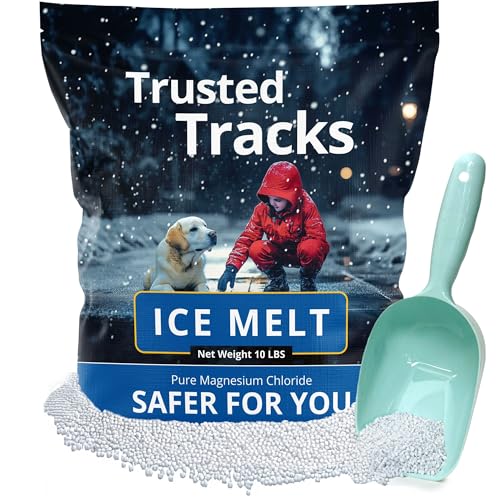 FIREKI ICEMELT-10-BAG-ALowest temperature rating
The short version: before, then after
Think of ice melt as a two-part routine. The first part is a light layer spread just before or as the snow begins. The second part is a touch-up after you shovel, aimed at the thin film of ice that shovels cannot lift.
Spreading first matters because ice melt works by making brine, a salty liquid that melts ice and keeps a bond from forming between ice and the surface. If the product is already on the ground when flakes land, that brine has a head start. Some listings say the same thing. Both FIREKI magnesium chloride listings, for example, say their product works best when applied at the beginning of snowfall.
Why applying before snow helps
Packed snow and ice stick to pavement. Once that bond forms, you are chipping and scraping instead of shoveling. A pre-treated surface lets the first inch or so of snow slide off with far less effort.
A few details make the "before" approach work better:
- Use a thin, even layer. More product does not melt more ice, it just wastes material.
- Spread it shortly before the storm, not days ahead. Wind, foot traffic and rain can move or dilute it.
- Pre-treat only the areas you actually walk: steps, the path to the door, the part of the driveway where the car sits.
- Check the forecast low first. Ice melt stops working once the air is colder than its rating.
When applying after snow is the better call
Sometimes you cannot treat ahead. Snow may arrive overnight, or freezing rain may glaze the steps before you are awake. In that case, spreading after is still worth doing, with one rule: clear the snow first.
Ice melt needs to touch the ice or the pavement. If you scatter it over several inches of snow, much of it gets used up melting the top layer and the rest sits in slush. Shovel down to the surface, then spread a thin layer on whatever remains. That leftover film is what causes most slips.
If snow keeps falling, a common routine is to shovel when about an inch has built up, then reapply. Waiting until the whole storm ends often means packed, icy layers that are much harder to remove.
Timing guide by situation
Here is how the choice usually plays out. Adjust it to your weather and your walkways.
| Situation | Best timing | What to do |
|---|---|---|
| Snow is forecast, temperatures at or below freezing | Before snow starts | Spread a thin layer on walkways and steps |
| Light snow already falling | As soon as you can, during the storm | Shovel when about an inch builds up, then reapply |
| Heavy snow already on the ground | After shoveling | Clear to the surface, then treat the leftover ice |
| Freezing rain or sleet expected | Before it starts | Treat early, since ice bonds quickly |
| Ice formed overnight, no snow | Right away | Spread, wait for the brine to work, then scrape or shovel |
| Cold snap below your product's rating | Do not rely on it | Shovel and use sand or another traction aid |
How to spread it safely and evenly
Good technique matters as much as timing. These steps work for most products:
- Shovel first if there is accumulated snow.
- Spread by hand, scoop or spreader so the product lands evenly, not in piles.
- Aim for a light scattering with space between granules. The brine spreads out from each piece.
- Give it time. Ice melt is not instant, and thick ice may need a second pass.
- Scrape or shovel the loosened slush away, then sweep leftover product off hard surfaces and floors.
Safety notes
Wear gloves, and wear eye protection when spreading on a windy day so granules do not blow into your face. Wash your hands afterward. Keep bags and pails closed and out of reach of children and pets, and read the product label before you use it.
Walk carefully while you work. Wet, treated surfaces can still be slick, and steps are the riskiest spot. If you have to clear a roof edge, a ladder or a steep slope, skip the DIY approach and call a pro. Do not use ice melt as a reason to stand on ice.
If you have pets, look for a pet-safe claim on the label. On our best ice melt page, those claims are the maker's wording, not independent lab results, so rinse paws after walks on treated ground anyway.
Pick a product that fits your timing
The right product depends on your lowest temperatures and how much you want to carry. If you pre-treat before every storm, you will go through more product, so check bag size and storage. Our best ice melt page puts the specs side by side, including minimum temperature, bag weight, form and safety claims.
Effective-down-to ratings on that page run from -35°F to -2°F. The Snow Joe Blue Heat is rated to -25°F in a 50 lb bag of tinted pellets, while the FIREKI magnesium chloride listings are rated to -35°F in 10 lb bags. If your winters are mild, the Safe Paw 8 lb jug is rated to -2°F and is marked chloride-free and plant-safe. Its listing also says it helps prevent ice formation for up to 72 hours when used as directed.
A tint helps with the "before" approach, because you can see where you have spread. The Snow Joe Premium Enviro Blend uses green-coated crystals for that reason. For a deeper look at pellets, crystals, granules and bag sizes, see our ice melt comparison. Coverage per bag is often not published, so choose by bag weight and the size of the area you clear.
Frequently asked questions
Does rain wash ice melt away before the snow comes?
It can. Heavy rain dilutes or moves the product, so a pre-treatment may not last if rain falls before the freeze. In that case, wait until rain has passed and the forecast shows snow or ice coming.
Can I spread ice melt on a dry driveway?
Yes, but dry granules can bounce or blow off, especially on a windy day. A light, even layer applied close to the storm stays put better than a heavy layer applied days early.
Is it okay to use ice melt on new concrete?
Check the label first. Some listings, like Safe Paw's, mention protection for properly cured concrete. Newly poured concrete is often more vulnerable, so follow the maker's guidance or the installer's advice.
What if the temperature drops below my product's rating?
Then it will do little. Shovel as much as you can and use sand or another traction aid until it warms up.