Reciprocating Saw Blades: Metal vs Wood Differences
Metal and wood reciprocating saw blades differ mainly in tooth spacing, tooth shape, steel type and thickness. Wood blades have large, widely spaced teeth that clear chips fast. Metal blades have small, closely spaced teeth that take thin bites. A metal blade will cut wood slowly, but a wood blade is a poor and risky choice for metal.
 HORUSDY 97394Best overall
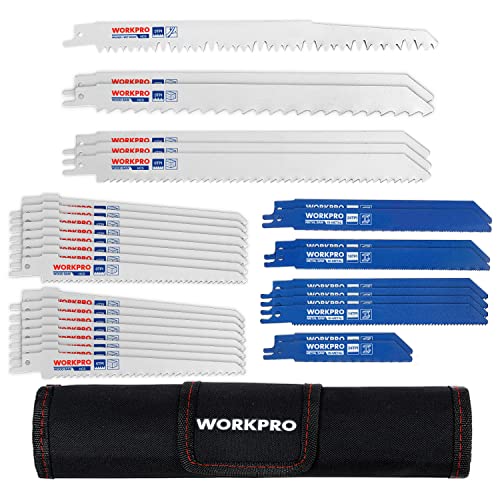 WORKPRO W000501AHighest cut capacity listed
 SEDY 86501Compact 10-piece starter
The short version: what really changes between the two
Every reciprocating saw blade is a thin strip of steel that moves back and forth. What changes is how the teeth are cut and how the steel is made. Those choices decide how much material each tooth removes and how well the blade survives heat and vibration.
Wood is soft and fibrous, so a blade needs room to carry away a lot of sawdust. Metal is hard and produces tiny chips, so a blade needs many small teeth sharing the load. Pick the wrong one and you get slow cuts, burned edges, bent blades or snapped teeth.
Tooth count (TPI) and tooth shape
Tooth count is listed as TPI, or teeth per inch. Wood blades use a low TPI. The teeth are large, and the deep gaps between them (called gullets) clear sawdust quickly. This lets the blade cut fast through lumber, and many are built to survive the occasional nail in demolition work.
Metal blades use a high TPI. More teeth touch the work at once, so each tooth takes a smaller bite. That keeps the load even and stops teeth from snagging on thin material like sheet, tubing or conduit. The trade-off is that the tiny gullets clog quickly in wood.
Thicker material generally calls for a lower TPI within the metal range, and thin material calls for a higher one. A good rule is to keep several teeth in contact with the metal at all times. If only one or two teeth touch, the blade can grab and chatter.
Blade material and thickness
Wood blades are often made from carbon steel or a tougher alloy. They are usually thicker and wider, which keeps them stable during aggressive cuts and rough demolition.
Metal blades need to resist heat and wear, so they are commonly made from bimetal construction. That means a flexible spring-steel body with harder cutting edges welded on. Some specialty blades use carbide for very hard or abrasive materials. For a deeper look at which metal blades suit which jobs, see our guide to the best reciprocating saw blades for metal.
Check the packaging for the materials a blade is rated for. A blade marked for wood only, or for metal only, tells you what the manufacturer designed it to handle.
Side-by-side comparison
This table sums up the general differences. Exact figures vary by brand, so check the product label for specifics.
| Feature | Wood blade | Metal blade |
|---|---|---|
| Tooth count (TPI) | Low | High |
| Tooth spacing | Wide, deep gullets | Close, shallow gullets |
| Typical body | Thicker and wider | Thinner and narrower |
| Common materials | Carbon or alloy steel | Bimetal, sometimes carbide-tipped |
| Cutting style | Fast, aggressive, rough | Slower, controlled, smooth |
| Best for | Lumber, pruning, demolition | Pipe, sheet, angle iron, conduit |
Can you swap them?
Using a metal blade on wood works in a pinch. The fine teeth cut slowly, clog with sawdust and can burn the wood. The cut will be cleaner but much slower. A thin metal blade can also wander in thick lumber.
Using a wood blade on metal is a bad idea. The big teeth catch on thin metal, which can make the saw kick and bend the blade. On thick metal the teeth wear down quickly or break off. A wood blade will not do a clean job on sheet metal, pipe or tubing.
The one common mix is demolition. Some blades are labeled for both wood and metal because they are meant for cutting through framing with embedded nails. These are a compromise. They handle both, but they are not as fast in wood or as smooth in metal as a dedicated blade.
Choosing the right size and length
Blade length matters as much as tooth count. Choose a blade long enough that the cutting edge passes fully through the material, with a bit of extra length so the saw shoe, the flat plate at the front, can rest on the surface without hitting it. Short blades are more rigid, which suits precise or thin cuts. Longer blades suit thick lumber, but they flex more.
Use this quick checklist when buying:
Match the blade to the material first, then pick tooth count by thickness.
Pick a length that clears the material thickness with room to spare.
Check that the shank fits your saw. Most use a universal tang, but confirm on the package.
Use a thicker, stiffer blade for heavy cutting and a thinner one for tight curves.
Replace blades as soon as they dull, since a dull blade overheats and cuts crooked.
- Match the blade to the material first, then pick tooth count by thickness.
- Pick a length that clears the material thickness with room to spare.
- Check that the shank fits your saw. Most use a universal tang, but confirm on the package.
- Use a thicker, stiffer blade for heavy cutting and a thinner one for tight curves.
- Replace blades as soon as they dull, since a dull blade overheats and cuts crooked.
Safety and technique
Wear safety glasses, because broken blade pieces and sparks can fly. Hearing protection is smart too, since metal cutting is loud. Gloves help with hot, sharp metal, but keep sleeves and cuffs away from the blade.
Clamp the work down so it cannot vibrate or jump. Keep the shoe pressed firmly against the material to reduce chatter. Let the blade do the cutting without forcing it. Used blades and freshly cut metal can be very hot, so let them cool before handling.
Before cutting into walls or floors, check for hidden wires and pipes. Unplug a corded saw or remove the battery when changing blades. Cutting live wiring or gas lines is dangerous, so shut off power or gas at the source first.
If you need a tool other than a recip saw for some metal jobs, a hand saw built for cutting metal offers more control for small, precise cuts.
Frequently asked questions
Do metal blades work on plastic or PVC?
Often yes. Fine teeth give a smoother cut in thin plastic pipe, though they can melt the edge if you push too fast. Use a light touch and steady speed.
How do I know when a blade is worn out?
Signs include slow progress, burning smells, crooked cuts and extra vibration. Rounded or missing teeth mean it is time for a new blade.
Is a bimetal blade worth using on wood?
It works and lasts well, especially in demolition where nails may appear. For clean, fast wood cuts, a dedicated wood blade with large teeth does better.
Should I use cutting oil on metal?
A little cutting lubricant can reduce heat and extend blade life on thick metal. Skip it on wood, and keep it away from hot or sparking areas.