Post Hole Digger or Auger: Which Is Better?
For a handful of holes in soft soil, a manual post hole digger or hand auger is enough and costs you nothing in fuel or upkeep. For a whole fence line, hard clay or roots, a powered auger is faster and far less tiring. The two names overlap, so what really matters is whether the tool is manual or powered.
 NEO-TEC NEO-TECLightest gas digger
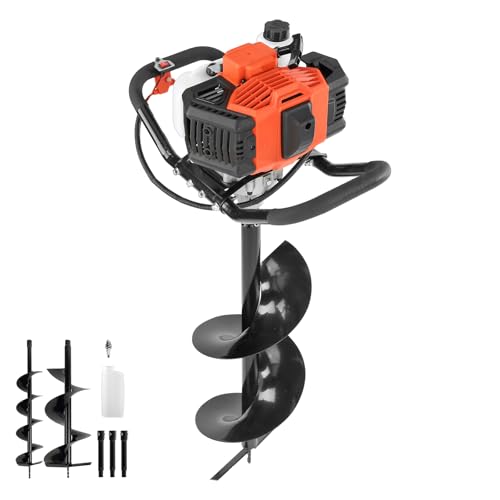 VEVOR D52-FMost extension rods
 WORKIT OO-EA62BWidest bit included
What the two names actually mean
People use "post hole digger" and "auger" as if they were different tools, but they overlap. A post hole digger is often the clamshell type: two hinged blades on long handles that you drive into the ground, spread apart and lift out. An auger is a screw-shaped bit that bores down as it turns.
An auger can be turned by hand with a T-handle or by a motor. Powered units are sold as post hole diggers, earth augers or gas augers, sometimes all in the same listing. So the useful comparison is manual clamshell, manual auger and powered auger.
The three options side by side
Here is how they compare in general terms. These are broad patterns, not measurements of any one product.
| Option | Best for | Effort | Weak spot |
|---|---|---|---|
| Clamshell post hole digger | A few holes in loose, stone-free soil | High, all arm and back work | Struggles in clay, gravel and roots |
| Manual auger | Small jobs, tight spots, tree planting | Moderate, you twist and lift | Slow in hard or rocky ground |
| Powered auger | Many holes, dense soil, larger diameters | Low physical effort, but heavier to handle | Needs fuel or a power cord, plus upkeep and noise |
When a manual tool is the better pick
Manual tools win on simplicity. There is no engine to start, no fuel to mix and nothing to store besides the tool itself. They are quiet, light and easy to use near buildings or in a small garden bed.
A clamshell digger is a good fit for a mailbox post, a few garden stakes or a single sign. A hand auger can feel easier in loose or sandy soil because the screw pulls itself down, and it can leave a tidier, straighter hole.
If the ground is packed clay, full of roots or stony, manual digging gets slow quickly. A digging bar can help break up the worst spots, but it adds time.
When a powered auger makes sense
Powered units pay off once the hole count or the soil difficulty goes up. A fence line, a deck with many footings or a day of tree planting is much easier with a motor doing the cutting.
Specs on our post hole digger comparison page show how much range there is. Gas models there run from 43cc to 72cc, and the one electric model lists 1500 W. Bit sizes range from 6 in to 12 in, so you can match the hole to your post or footing.
Weight is a real trade-off. The NEO-TEC 72cc gas unit lists 17.6 lb, while the VEVOR 52cc lists 34.5 lb. The XtremepowerUS electric model lists 28.3 lb and a 6 in bit, and its listing describes a digging depth of about 28 inches. Lighter units are easier to carry and control, though a heavier one may come with more extension rods.
What to check before you buy a powered unit
Once you decide to go powered, a few specs decide whether it fits your job. Our best post hole digger page lays these out side by side.
- Bit diameter: the bit sets the hole width. The WORKIT 72cc includes a 12 in bit along with 4 in and 6 in bits, while the NEO-TEC and the larger VEVOR include 6 in and 10 in bits.
- Extension rods: they add depth without bending over. The VEVOR 52cc includes three rods, the WORKIT includes two and the NEO-TEC includes one.
- Safety features: look for a stop switch and an anti-vibration handle. Each product we list shows a safety stop, and several add anti-vibration handles.
- Power source: gas needs the right fuel mix and a refill routine. A corded electric unit needs an outlet nearby, which limits where you can work.
- Weight and length: heavy units wear you out over a long day, so check both numbers.
Safety notes for powered augers
A powered auger can kick or bind suddenly if the bit hits a root or rock. Keep a firm grip with both hands, stand with your feet apart and know where the stop switch is before you start. Some models are built for two people in tough ground, so read the manual.
Wear safety glasses, hearing protection, sturdy boots and gloves. Gas engines are loud and throw debris.
Before digging, call your local utility locator service so buried gas, water, electric and data lines are marked. Never dig blind. Run gas engines outdoors only, mix and store fuel as the manual says, and let the engine cool before refueling. With a corded electric model, keep the cord clear of the bit and avoid wet ground.
So which should you choose?
Choose manual if you have fewer than a handful of holes, the soil is soft, and you value low cost of ownership and quiet. Between the two manual types, a clamshell digger suits loose soil, while a hand auger suits tight spots and tree planting.
Choose powered if you have a long fence line, dense soil or wide holes. Then use our comparison page to match bit size, weight and rods to your project.
If you only dig once in a while but the soil is tough, consider renting or borrowing a powered unit rather than struggling with a hand tool all day.
Frequently asked questions
Is a post hole digger the same as a shovel?
No. A shovel is made for lifting loose soil, not for cutting a narrow, deep hole. A clamshell digger grips and lifts a core of earth, so the hole stays narrower and straighter.
How do I know what hole size I need?
Check your post or footing size first. The hole is normally wider than the post so you have room to set and fill around it. Then pick a bit that matches, and confirm the kit includes it.
Can one powered auger handle every kind of soil?
Not equally well. Engine size or power output shows cutting force, and dense clay and roots call for more. Even a strong unit can stall on large rocks, so be ready to stop and clear them.
Does a pincer-style digger work better than a clamshell?
The term usually points to the same two-handle, two-blade design. Both work best in loose soil and both get tiring in hard ground, so the soil matters more than the name.