Outdoor Light Bulbs vs Indoor Light Bulbs: What Is the Difference?
Outdoor light bulbs are built or rated to handle moisture, cold and temperature swings, and many add features like a dusk-to-dawn sensor. Indoor bulbs often work in a covered outdoor fixture, but a bulb without a damp or wet rating should not be exposed to rain. Outdoor-rated bulbs can usually go inside, though some, like sensor bulbs, only make sense where there is a day and night cycle to read.
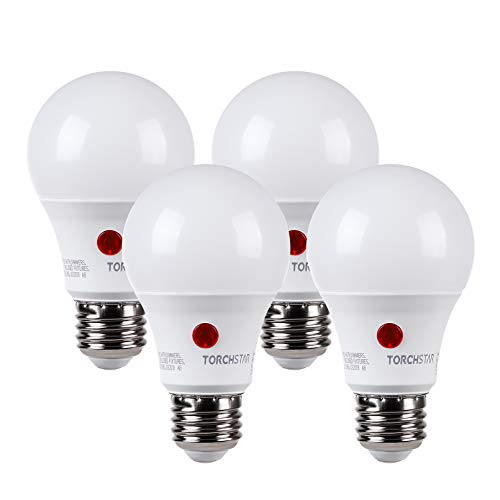 TORCHSTAR A-50408Best overall
 SETEN LED BULB 10WBrightest A19
 Sunco Lighting PAR38_D2D-15W-5K-2PKBest floodlight
The real differences between indoor and outdoor bulbs
Many outdoor and indoor bulbs look alike. The same A19 shape and E26 base appear on both. The differences are mostly in what you cannot see: the seal around the bulb, the materials, the temperature range it is built for, and the safety rating it carries.
Outdoor bulbs also tend to come with features that suit outdoor jobs. A built-in light sensor, a focused flood beam and a daylight color tone are all common. An indoor bulb is usually designed for a living room or kitchen, where it sits dry, at a steady temperature, and is switched by hand.
- Moisture protection: outdoor bulbs carry a damp or wet rating, or an IP rating such as IP65, which describes protection against dust and water jets.
- Temperature range: a bulb meant for outdoors is built to start and run in cold and hot weather. One of the Sunco floods on our outdoor page lists a range of minus 4 to 104 degrees F.
- Automatic control: dusk-to-dawn bulbs have a sensor that turns them on at sunset and off at sunrise.
- Beam shape: floodlight bulbs such as PAR30 and PAR38 push light in a focused beam, while A19 bulbs spread light in all directions.
- Color tone: 5000K daylight light looks crisp outdoors, while 2700K to 3000K looks warm and cozy indoors.
Can you use outdoor light bulbs inside?
Yes, in most cases. A bulb rated for wet locations has been built to handle more than a dry room asks of it, so it is generally fine in a lamp, hallway or garage. The Sunco PAR38 flood on our outdoor page, for example, is described as wet rated for indoor and outdoor use.
The catch is the extra features. A dusk-to-dawn bulb switches itself off when it senses daylight. Put one in a bright bedroom and it may stay dark all day, and in a windowless closet it may stay on all the time. The SETEN 10W A19 bulb (1100 lumens, IP65, 25,000 hours) is listed for outdoor fixtures and also for indoor spaces that need automatic night lighting, so it can work as a hallway or entry night light.
Other sensor bulbs are more limited. The TORCHSTAR A19 dusk-to-dawn bulb (800 lumens, 9W, UL listed) comes with a note that it is only for outdoor use, and that the red sensor must not be covered. Always read the packaging before moving a sensor bulb indoors.
Can you use indoor bulbs in outdoor fixtures?
Sometimes. It depends on how exposed the fixture is. A deep porch ceiling light or a fully enclosed lantern keeps rain off the bulb, and a plain indoor bulb may be acceptable there. Look for a damp rating at minimum, and check the fixture label for any restrictions.
An open fixture is different. A bare socket, a floodlight aimed at a driveway or a lamp post with gaps lets water, snow and cold reach the bulb. An indoor-only bulb in that spot can fail early, and moisture near a live socket is a safety concern. For open fixtures, pick a bulb with a wet rating or IP65, which matches the weather advice on our best light bulbs for outdoor fixtures page.
A plain, non-sensor bulb still has a role outdoors. Our outdoor page lists the TJOY 2700K A19 (800 lumens, no sensor) as a plain bulb for covered fixtures, which suits a porch where you prefer to use the wall switch.
Can outdoor light fixtures be used indoors?
Often yes. Outdoor fixtures are built from sealed, corrosion-resistant parts, so they are safe in a garage, mudroom, laundry room or covered entry. Check the fixture's listing. Fixtures rated for wet locations can generally go in dry or damp spots as well, though not the other way around.
The main trade-off is style and light. Many outdoor fixtures are designed to direct light downward or in a narrow pattern, which may feel harsh or dim in a living area. Pair them with a bulb whose tone suits the room, and keep the bulb's wattage within the fixture's stated maximum.
Indoor and outdoor bulbs compared
This table summarizes the usual differences. Specific numbers come from the products on our outdoor page and may vary by bulb.
| Feature | Typical indoor bulb | Typical outdoor-rated bulb |
|---|---|---|
| Moisture rating | Often none or dry only | Damp, wet or IP65 |
| Temperature range | Room conditions | Built for cold and heat (one Sunco flood lists minus 4 to 104 degrees F) |
| Switching | Wall switch or dimmer | Often a dusk-to-dawn sensor, with the switch left on |
| Common shapes | A19, candle, globe | A19 for lanterns, PAR30 and PAR38 for floods |
| Color tone | 2700K to 3000K warm | 5000K daylight common, 2700K available |
| Best fit | Lamps and ceiling lights | Porches, garages, driveways, gardens |
How to choose a bulb for an outdoor fixture
Work through these steps in order. It takes only a minute and avoids most mistakes.
- Check how exposed the fixture is. Open means a wet rating or IP65. Enclosed means a damp rating is still a good idea.
- Pick the shape. A19 around 800 lumens is plenty for coach lights and porch lanterns. A PAR38 or PAR30 flood suits a floodlight over a driveway.
- Decide on automatic control. A dusk-to-dawn bulb follows the real sunset, so there is no timer to reset as the seasons change. Leave the wall switch on.
- Choose the tone. 5000K looks crisp and clear, while 2700K or 3000K feels warmer.
- Look for certification such as UL and a warranty length that suits you. For example, the Sunco PAR30 flood on our page carries a 5-year warranty.
- Confirm the base is E26 and the bulb fits the fixture. Sunco lists its PAR38 at 4.72 by 5.12 inches, so check clearance in tight housings.
Safety notes
Turn off power at the breaker, not just the switch, before you change a bulb in a fixture you cannot easily dry out. Let a recently used bulb cool, since even LEDs get warm.
Use a stable ladder on firm ground and keep a hand free for balance. Do not use a ladder near overhead power lines. Wear safety glasses when reaching overhead, in case a bulb or lens shatters.
Never exceed the fixture's maximum wattage, and do not cover a sensor bulb's photocell. If you see water inside a fixture or a cracked socket, leave the bulb out and have the fixture repaired. For more options across the whole house, see our best light bulbs page, and if light quality matters to you, our best light bulbs for health guide covers it.
Frequently asked questions
Do outdoor bulbs use a different socket?
No. The common E26 base fits both indoor and outdoor fixtures. The difference is in the bulb's construction and rating, not the thread.
Will a dusk-to-dawn bulb work in a fixture on a dimmer?
Not reliably. The Sunco floods on our outdoor page are non-dimmable and are meant for a regular switch that stays on.
Why does my sensor bulb stay on during the day?
The sensor may be blocked or in a dark spot, such as a deep, covered fixture. Make sure the photocell can see daylight and is not covered.
Is a brighter bulb better for outdoor lighting?
Not always. Pick brightness to match the job. Our outdoor page lists bulbs from 450 to 1250 lumens, and a focused beam can light a driveway better than a wide spread.