Miter Saw Stand vs Workbench: Which Should You Use?
Use a miter saw stand if you move between job sites or need to pack the saw away, and use a workbench if your saw stays in one shop and you want a flat, sturdy surface for other work too. A stand wins on portability and long board support. A workbench wins on stability, storage and versatility. Many woodworkers end up with a fixed station that combines both.
 EVOLUTION 005-0002Best overall
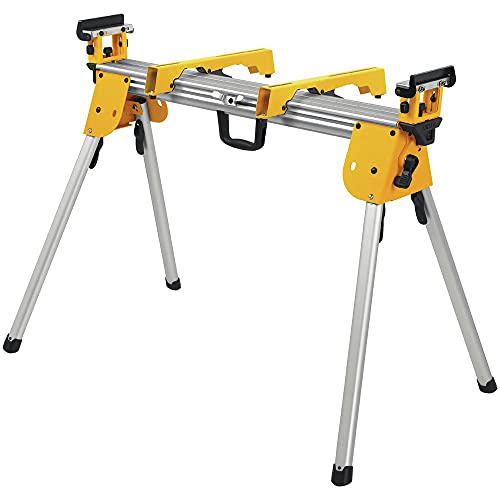 DEWALT DWX724500 lb aluminum stand
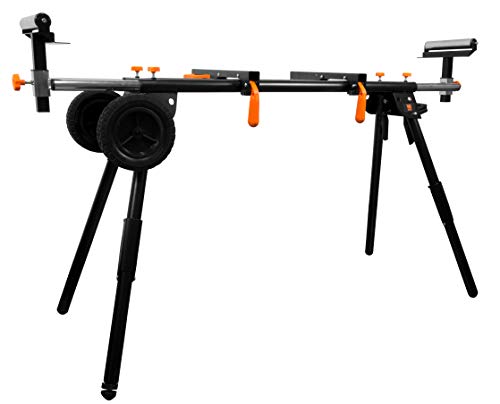 WEN MSA330Longest board support
The short comparison
Both options hold your saw at a comfortable working height. The difference is what else they do for you. A stand is built around one tool and folds up. A workbench is a general surface that you adapt to the saw.
The table below sums up how each setup behaves in everyday use. Treat it as a general guide, since individual models and builds vary.
| Factor | Miter saw stand | Workbench |
|---|---|---|
| Portability | Folds and rolls, easy to carry to a job | Heavy and fixed, hard to move |
| Stability | Good on a flat floor, can flex under heavy cuts | Very solid when built or bought well |
| Material support | Side wings and stops come built in | You add supports or an outfeed table |
| Other uses | Mostly the saw only | Assembly, clamping, sanding, hand tools |
| Storage | Little to none | Shelves and drawers are easy to add |
| Shop footprint | Small when folded | Takes permanent floor space |
When a miter saw stand makes sense
A stand is the right call when the saw has to travel. Trim carpenters, deck builders and anyone who works in several rooms or driveways benefit from a stand that folds flat and fits in a truck or trunk.
It also suits small garages where you need the floor back after each project. Most stands include extendable side supports and a stop system, which saves you from building those yourself. If you are shopping for one, our best miter saw stand page compares published specifications side by side.
- You move the saw to different locations.
- Your shop doubles as a parking space.
- You cut long trim or lumber and want built-in side support.
- You want a quick setup with no building.
When a workbench is the better choice
A workbench shines when the saw lives in one place. A fixed bench does not rock, flex or creep across the floor, which helps when you make repeated, precise cuts. The saw also sits at the same height as your bench top, so long boards can slide straight across.
A bench also earns its footprint by doing more than one job. You can clamp work, glue up panels and store blades, clamps and fasteners underneath. If you are choosing a saw for fine joinery, see our best miter saw for woodworking guide, since those saws pair well with a permanent station.
The tradeoff is that a bench is heavy and costs you floor space. If you rearrange your shop often, that can become a frustration.
Stand vs sawhorse, table saw stand and station
Sawhorses are the cheapest and simplest option. They work for occasional cuts, but they lack built-in stops, they can wobble, and the saw can slip if it is not clamped or bolted down. They are fine for a quick job and weaker for repeat work.
A table saw stand is built for a different tool. It is designed around the weight, vibration and footprint of a table saw, and its mounting points usually do not suit a miter saw. Do not swap them unless the maker says the stand supports both.
A miter saw station is a larger fixed or semi-fixed setup with a saw platform, long side wings and often storage or dust control. Think of it as a workbench designed specifically for the saw. It costs you space but gives you the most support and organization of any option.
- Sawhorses: lightest and simplest, least stable.
- Stand: portable, purpose-built, limited versatility.
- Table saw stand: wrong tool, usually a poor fit.
- Station: best support and storage, least portable.
How to decide in five steps
Work through these questions in order. Your answers usually point clearly to one setup.
- Decide whether the saw will move. If yes, lean toward a stand.
- Measure your space. A bench or station needs permanent room, including space on both sides for long boards.
- List what else you will do at the same surface. If it is more than cutting, a workbench adds value.
- Check your saw size. A larger sliding saw needs a wider, deeper platform, and our best 12 sliding compound miter saw page lists the dimensions to plan around.
- Think about dust. If collection matters, a station gives you room to build in a hookup, and the best miter saw for dust collection page shows which saws handle it best.
Setup and safety notes
Whichever you choose, the saw must be secured. Bolt or clamp it to the stand or bench using the mounting holes, and check the fasteners now and then. A saw that shifts mid-cut can kick the workpiece or cause a serious injury.
Make sure the work surface is level and the support wings sit at the same height as the saw table. A board that droops or rises at the ends can bind the blade.
Wear eye protection and hearing protection every time you cut, and use a dust mask when sawdust is airborne. Keep your hands clear of the blade path, and unplug the saw before changing the blade or making adjustments.
If you are new to the tool, our best miter saw for beginners guide is a helpful place to start before you plan your setup.
Frequently asked questions
Can I mount a miter saw directly on a workbench?
Yes. Bolt it to the bench top and add side supports level with the saw table. Make sure the bench is heavy or anchored enough that it will not shift during a cut.
Do I need an outfeed support with either setup?
For long boards, yes. Stands often include wings, while benches need added supports or a long side table so the board stays flat during the cut.
Is a stand steady enough for a large saw?
Check the stand's published weight capacity against your saw's weight before buying. Open the legs fully, lock them and use it on a flat, firm floor.
Can I use a stand now and build a station later?
Yes. Many people start with a stand for flexibility, then build a station once they settle into a permanent shop layout.