Kitchen Ceiling Lighting vs Island, Wall, or Fan Lighting: Which Do You Need?
A kitchen ceiling light should be your main source of general light, because it covers the whole room evenly. Island pendants, wall lights and fan lights are better as add-ons: they handle one spot, one task or one mood. Most kitchens work best with a ceiling fixture as the base and one or two of the others layered on top.
 LUTEC XDD-7Best overall
 Brightever XD300-09Slimmest, most efficient fixture
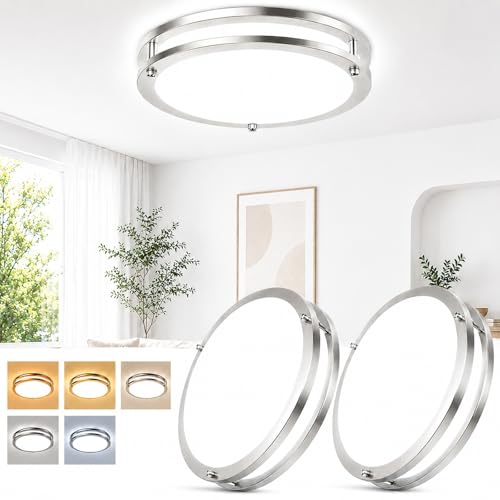 weddeg 63633008-03Most color-accurate light
What each type of light actually does
Kitchen lighting jobs fall into three groups. General light fills the room so you can walk around safely. Task light shines on the spots where you work, like the cutting board and the sink. Accent light sets the mood and shows off the room's style.
A ceiling fixture is built for the first job. Island pendants and wall lights lean toward task and accent work. A ceiling fan's light is usually a bonus feature attached to a cooling device, so it tends to be a side player rather than the main source.
Once you see lighting as layers, the question changes. It is less about which one to choose and more about which ones your kitchen needs.
Ceiling light vs island lighting
A flush or semi-flush ceiling light spreads light across the room. Island pendants hang lower and put a pool of light on one surface. That makes them good for island prep, homework or casual meals, but not for lighting the perimeter counters, where you do most of your chopping.
Pendants also add visual weight. They can block sight lines across an open room, and a low pendant can cast hard shadows if it is the only light on. A common rule of thumb is to hang pendants roughly 30 to 36 inches above the island surface, then adjust for your ceiling height and how tall the people in your home are.
If you have to choose one, choose the ceiling light. If you want a dining-style look over a table or island seating, our guide to lighting over a kitchen table covers fixtures made for that spot.
Ceiling light vs wall lighting
Wall lights, such as sconces beside a window or over a sink, add soft side light and character. They are not strong enough to light a whole kitchen on their own. Their light also comes from the side, so it can leave dark spots in the middle of the room.
Where wall lights shine is in filling gaps. A sconce near the sink can cut the shadow you cast on yourself while washing dishes. A ceiling fixture overhead plus one or two wall lights gives you even light with a bit of warmth.
Wall fixtures also need a wired location on the wall, which can mean opening drywall if there is no power there. A ceiling swap usually reuses the box that is already in place.
Ceiling light vs ceiling fan light
A ceiling fan moves air, which helps with cooking heat. The light kit on most fans is a small add-on, and the shades often block or soften output. Fan blades can also create a flicker effect as they pass through the light, which some people find tiring when they are cutting food.
A dedicated ceiling fixture gives you more control. Among the flush mounts on our best lighting for kitchen ceiling page, output runs from 1300 lumens to 4200 lumens. Check the fan's light kit rating before you assume it will match that.
If you want both airflow and good light, a fan paired with a separate light is often a better setup than one fan trying to do both jobs. In a small kitchen without room for both, a range hood fan and a bright ceiling light cover the same ground.
Side-by-side comparison
This table sums up where each option fits best.
| Type | Best at | Weak at | Works best as |
|---|---|---|---|
| Ceiling flush mount | Even light across the room | Focused light on one spot | Main light |
| Island pendants | Light over an island or bar | Lighting the whole kitchen | Task and style layer |
| Wall lights | Side light and mood | Lighting a large room alone | Accent layer |
| Ceiling fan light | Light plus airflow | Bright, steady task light | Backup light |
How to choose and combine them
Start with the ceiling light, since it sets the baseline. Then add layers where your kitchen has real gaps.
Specs matter most for the main fixture. Take the LUTEC XDD-7 on our page: it lists 4200 lumens and a 250 sq ft coverage area, which suits a large kitchen. The Lithonia 1x4 flat panel lists 4000 lumens and a damp rating, and its long shape suits a galley layout. For color accuracy, the weddeg 2-pack lists CRI 90, the highest on the page.
Here is a simple order to follow:
- Pick the ceiling fixture first and match its lumens and coverage to your room size.
- Choose a color temperature. Cooler white near 4000K or 5000K helps with prep, while warmer 2700K or 3000K suits dinner.
- Add pendants only if you have an island or bar that needs its own light.
- Add wall lights to fix a shadow spot, such as the sink.
- Use a fan only if heat and airflow are an issue, and keep your main light separate.
- Put layers on separate switches or dimmers so you can mix them.
Fit and height to check before you buy
Ceiling height decides a lot. Low ceilings suit slim fixtures. The Brightever 12 in model lists a height of just 0.67 in, while the weddeg 2-pack lists 2.6 in, so check clearance if you have a low ceiling or a tall household.
Steam and splashes matter too. A damp rating adds some peace of mind near the stove or sink, and our page notes that only a few models list one. Dimming is worth having if one fixture must handle both cooking and meals, but most dimmable models need a compatible dimmer bought separately.
Safety notes for installing any of these
Turn off power at the breaker, not just the wall switch, and confirm the circuit is dead with a voltage tester before touching wires. Follow the instructions that come with the fixture.
Use a sturdy stepladder on a level floor, and have a helper hold the fixture while you wire it. Heavy pendants and fans must attach to an electrical box rated for their weight. A fan needs a fan-rated box, not a standard light box.
If you are not comfortable working with household wiring, or you find old or damaged wiring, hire a licensed electrician. Only use bulbs and dimmers that are rated for the fixture.
Frequently asked questions
Can island pendants replace a ceiling light?
Usually not. Pendants light one area well but leave the rest of the room dim. They work best on top of a ceiling fixture.
Do I need both a ceiling fan and a ceiling light in the kitchen?
Not always. If cooking heat is a problem, a fan helps with air movement. For seeing your work, a separate ceiling light is the safer choice.
How many ceiling lights does a large kitchen need?
It depends on the fixture. Check the listed coverage area, such as 250 sq ft on some models. If none is listed, plan on two fixtures for a larger kitchen.
Should all my kitchen lights match in color temperature?
Try to keep them close. Mixing very warm and very cool lights in one room can look uneven, so pick one setting and use dimmers to change the feel.