Is a Miter Saw Stand Worth It? How to Decide
A miter saw stand is worth it if you cut long boards, move your saw often, or work outdoors or in a garage without a good bench. It gives you a stable, supported platform and saves your back. If your saw lives on a sturdy workbench and you mostly cut short pieces, you can probably skip it.
 EVOLUTION 005-0002Best overall
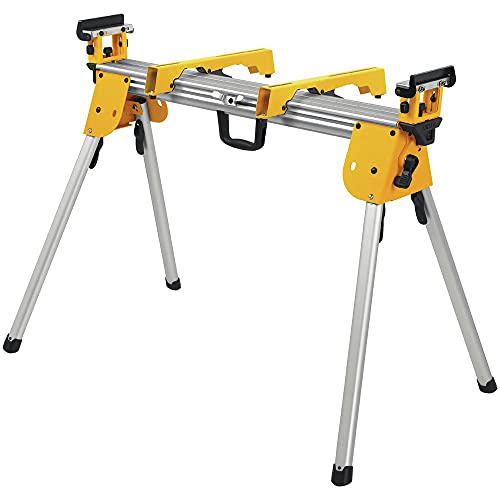 DEWALT DWX724500 lb aluminum stand
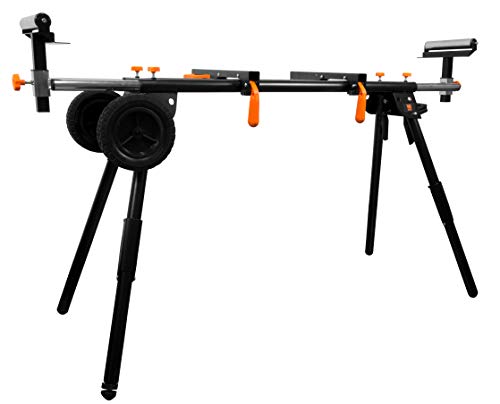 WEN MSA330Longest board support
What a miter saw stand is used for
A miter saw stand is a frame that holds your saw at a comfortable working height. Most have side supports, often called wings, that hold long boards level with the saw table. Many fold flat, and some have wheels so you can roll them around a shop or job site.
The stand does three jobs. It raises the saw so you are not bending over a low bench or a pair of sawhorses. It supports the ends of long stock so the board does not sag or tip during a cut. And it gives you a repeatable setup, so the saw is in the same position every time you work.
If you are still choosing a saw, our guides on the best miter saw for beginners and the best miter saw for woodworking explain what to look for before you think about a stand.
When a stand is worth it
A stand earns its place when your work involves long or heavy material. Trim, baseboard, crown molding, deck boards and framing lumber all hang far past the saw table. Without support at both ends, the board can tilt as the blade finishes the cut. That can pinch the blade, ruin the cut, or throw the offcut.
A stand also makes sense if you have no permanent bench. Many people use a miter saw in a driveway, garage or spare room, then pack it away. A folding stand lets you set up quickly and store the saw upright against a wall.
A stand is also worth considering if you have back or knee trouble. Working at a proper height reduces the bending and lifting that come with a saw on the floor or a low table.
- You cut boards longer than the saw table, regularly.
- You move your saw between rooms, a garage and job sites.
- You do not have a bench at the right height.
- You want to store the saw and its support in a small space.
- You want a more stable setup than sawhorses and a plywood sheet.
When you can skip it
A stand is not essential for everyone. If your saw is bolted or clamped to a solid workbench that is level with the saw table, you already have most of what a stand offers. You can add support for long boards with a roller stand, a block clamped to the bench, or a second table set at the same height.
If you mostly cut short pieces, such as small frames, craft projects or shelving parts, the extra support may sit unused. In that case, a stable bench and a clear floor space do the job.
One more case: if you have a permanent shop and plan to build a cabinet-style station with storage, a custom bench may suit you better than a portable frame. A built station can also include dust control, which matters if you cut a lot of wood. Our guide to the best miter saw for dust collection covers saws that work well with that kind of setup.
Types of stands compared
Stands come in a few common styles. The right one depends on how often you move the saw and how much space you have. This table compares them in general terms, since exact capacities and sizes vary by model.
Check the maker's published specs for weight capacity and saw compatibility before you buy any of them. Our best miter saw stand page lines these details up side by side.
| Stand type | Best for | Main strength | Main drawback |
|---|---|---|---|
| Folding stand with wings | Home DIY and mobile work | Folds flat and sets up fast | Can feel less rigid than a fixed bench |
| Wheeled stand | Job sites and shared garages | Easy to roll around | Wheels need locking during cuts |
| Fixed workbench stand | Permanent shops | Very stable and often has storage | Takes up space and does not travel |
| Homemade bench | Woodworkers who want a custom fit | Sized to your saw and space | Takes time and skill to build |
What to check before you buy
Start with saw fit. Make sure the stand's mounting brackets match your saw's base. Larger saws, such as a 12 inch sliding model, need more room behind them for the rails to move. If you own one, or plan to, compare it against our list of the best 12 sliding compound miter saw options and check the rear clearance the stand allows.
Next, look at weight capacity, which should comfortably exceed the weight of your saw. Then check how the wings extend, whether they lock firmly, and whether they line up with the saw table height. A support that sits even slightly high or low can tilt the board and cause a bad cut.
Finally, think about storage and carrying. A stand that folds small but is awkward to lift may not get used.
- Mounting brackets that fit your saw base
- Weight capacity above your saw's weight
- Wing supports that lock and sit level with the table
- Clearance for sliding rails if your saw has them
- Locking wheels, if the stand rolls
- A folded size that fits where you store it
Safety tips for using a stand
A stand improves control, but it does not make a saw harmless. Follow these habits every time.
Always wear safety glasses and hearing protection. A miter saw throws chips and dust, and it is loud. Wear a dust mask when cutting wood or composite materials.
Set up on level, firm ground and lock any wheels or leg braces before you start. Keep the power cord clear of the blade path and your feet, and unplug the saw before changing a blade or adjusting the stand brackets.
Keep your hands well away from the blade line, hold the board firmly against the fence, and let the blade stop spinning before you lift it away. Never cut a board that is not supported at both ends.
Frequently asked questions
Can I use sawhorses instead of a miter saw stand?
You can, but it takes more care. Sawhorses can wobble, and getting the board and saw table level takes extra work. A stand is built to hold the saw and your stock at the same height.
Do all miter saws fit all stands?
No. Mounting brackets and base sizes differ. Check the stand's published compatibility notes and your saw's base layout before you buy.
Should I bolt my saw to the stand?
Most makers recommend securing the saw to the stand or bench using the mounting holes or brackets. This keeps the saw from shifting or tipping during a cut.
Is a wheeled stand less stable than a fixed one?
It can be, if the wheels are not locked. With the wheels locked and the legs set on level ground, a good wheeled stand works well for most home projects.