Is a Home Concrete Mixer Worth It or Better to Rent?
A home concrete mixer is worth buying if you expect several pours, spread over months or years, such as fence posts, steps, a small patio and later repairs. Renting is the better choice for one weekend project, or for a big pour that needs more drum than a home mixer offers. For very large slabs, a delivered truckload beats both.
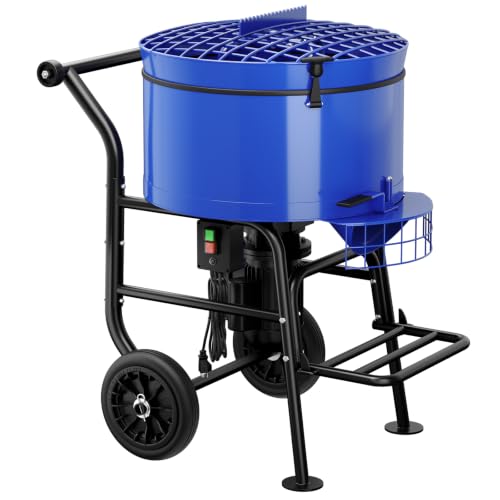 Dkenicor KF100368US-01LHC-001-YIH
 Dkenicor KF100248-02-YH-OBest compact steel drum
 Dkenicor KF100322US-02MLHC-001Best overall
The short rule: count your pours, not your projects
The real question is how many separate mixing sessions you expect over the next few years. One session, such as setting a mailbox post, rarely justifies owning a machine. Five or six sessions across fences, a shed pad, steps and patches usually does.
Storage matters too. A mixer that sits in a damp garage and gets rinsed poorly can end up caked with cured concrete. If you do not have dry space for something that weighs roughly 90 to 125 lb, renting looks better.
If you decide to buy, our best concrete mixer for home use page puts the home-sized electric models on one spec sheet so you can compare drum size, motor power and weight.
When renting makes more sense
Renting fits a single, well-defined job. You pick up the machine, finish the work in a day or two, rinse it and return it. You skip storage, maintenance and the worry about where to keep it afterward.
Renting also lets you use a larger or gas-powered machine than most homeowners would buy. That helps when a project needs big, continuous batches or when there is no power outlet near the work area.
- You have one project and no plans for another soon.
- The job needs more mixing capacity than a home drum provides.
- You have no dry storage space for a 90 to 125 lb machine.
- You want a gas-powered unit for a site without electricity.
- You are unsure you will enjoy the work and want to try it first.
When owning makes more sense
Owning wins when you have a list of jobs. A mixer sitting in your garage lets you do small repairs the day you spot them, instead of putting them off until you can plan a rental pickup.
It also helps with the mixing quality. A mixer blends dry mix and water evenly, which matters for strength. Hand mixing tends to leave dry pockets and wet streaks, especially when you are tired.
Home models are also useful beyond concrete. Several listings mention mortar, grout and stucco, and some mention bulk materials such as seed or fertilizer. Check the manufacturer's guidance before mixing anything other than cement products, and clean the drum well between materials.
Mixer vs. wheelbarrow vs. truck
A mixer is not always the right tool. Here is how the three common ways of getting concrete compare for home work.
Hand mixing in a wheelbarrow works for a few bags. Past that, fatigue sets in and batches get inconsistent. A delivered truck makes sense for large slabs and driveways, where you need a lot of concrete placed before it starts to set. A mixer sits in between: steady batches, one or two bags at a time, at your own pace.
| Option | Best for | Main drawback |
|---|---|---|
| Wheelbarrow and hoe | A bag or two, small patches | Tiring and uneven mixing |
| Home mixer (owned) | Posts, steps, small patios, repeat jobs | Needs storage and cleaning |
| Rented mixer | One-off jobs, larger batches | Pickup, return and timing limits |
| Delivered truck | Large slabs and driveways | Must be ready to place it all quickly |
If you buy, what size and features to look for
Drum size is the first decision. The drums on our home-use page range from 4 to 6 cu ft. A 4 cu ft drum handles one or two bags at a time, which is enough for fence posts and repairs. For example, the BILT HARD 4 cu ft poly model is listed for up to two 80 lb bags of mix plus water, with a 235 lb load limit.
For bigger jobs, look higher. The BILT HARD 6 cu ft poly drum is listed to mix three 80 lb bags at once, with a 375 lb mixing capacity. The Dkenicor 5.3 cu ft steel mixer pairs its drum with a 750W motor, the strongest on that page.
Motor power and drum speed matter because a full drum is heavy. Motors on our page run from 375W to 750W, and drum speeds of about 24 to 30 RPM mix evenly. Steel drums are tough and traditional. Poly drums resist rust and dents and are easier to clean, which suits occasional use and outdoor storage.
Then think about moving it. Larger wheels help on grass and gravel. The BILT HARD 4 cu ft model, for instance, lists 10-inch flat-free tires, while the Dkenicor 4.3 cu ft lists 7-inch solid rubber wheels. For a wider side-by-side look at the field, see our best concrete mixer comparison.
Safety notes before you start
Concrete work looks simple, but a few habits prevent most injuries. Wet concrete and dry cement are caustic and can burn skin and eyes, and the dust is not good to breathe.
Electric mixers add electrical risk when used outdoors, so treat the setup carefully.
- Wear safety glasses, waterproof gloves, long sleeves and a dust mask or respirator when loading dry mix.
- Use a GFCI-protected outlet and an outdoor-rated extension cord of the right gauge for the motor.
- Keep the cord and plug out of wet areas and away from spilled water.
- Unplug the mixer before cleaning the drum or clearing a jam. Never reach into a drum that is plugged in.
- Lift with your legs, and get help moving a mixer that weighs around 90 to 125 lb.
- Hearing protection is a good idea for longer sessions, since motors and gears can be loud.
A quick way to decide
Write down every concrete job you can picture in the next two or three years. If the list has one item, rent. If it has three or more and you have dry storage, buying is likely worth it. If one item is a large slab, plan on a truck for that job and consider a mixer for the rest.
Whichever way you go, prep matters more than the machine. Have forms built, tools ready and helpers lined up before the first bag goes in, because concrete will not wait for you.
Frequently asked questions
Can a home mixer handle a driveway?
Not practically. Home drums hold one to three bags at a time, so a driveway would take many batches and the early ones could start setting before the last is placed. Use a delivered truck for that.
How do I keep a mixer from getting ruined by cured concrete?
Rinse the drum and blades right after the last batch, before the concrete hardens. Some models list wash-down rated motors, but you should still keep water away from electrical parts unless the manual says otherwise.
Do I need a gas mixer for a home project?
Usually not. Electric mixers run from a standard outlet and suit most home jobs. Gas makes sense only when no power is available near the work area.
Is a steel or poly drum better for occasional use?
Poly drums resist rust and dents and are easier to clean, which suits occasional use and outdoor storage. Steel drums are tough and traditional, so either can work if you keep the drum clean.