Insulated vs Non-Insulated Screwdrivers: Key Differences
The main difference is protection from electric shock. A true insulated screwdriver has a handle and shaft coating that carry a voltage rating and a certification marking, while a non-insulated one is built only for turning screws. If you might touch anything that could be energized, use a rated insulated tool. For furniture, bikes and general repairs, a regular screwdriver does the job.
 SUNHZ MCKP YMX022Best overall
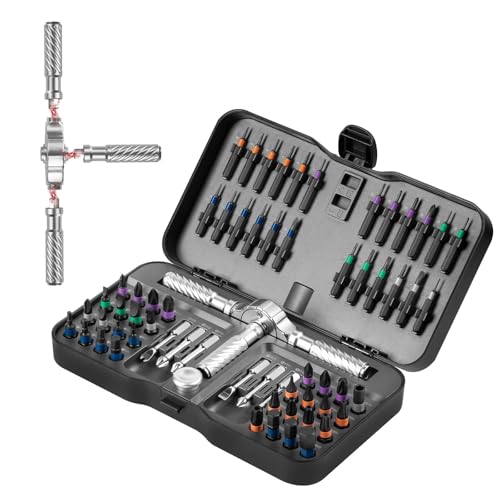 VMAN VMAN-66IN1
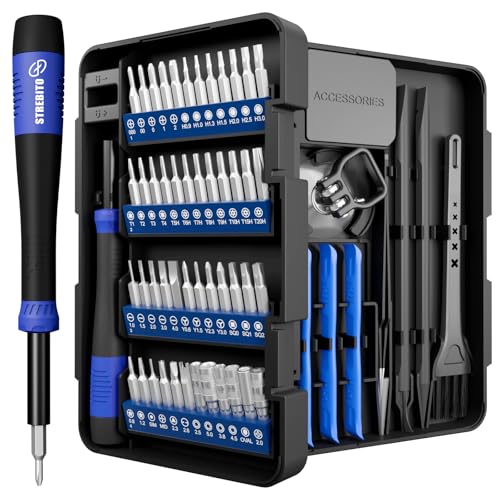 STREBITO Broad electronics repair kit
The main difference in plain terms
A regular screwdriver is a steel shaft with a handle. The handle is made for grip and comfort, and the steel conducts electricity like any metal. An insulated screwdriver adds a layer of electrical insulation around the handle and most of the shaft, so only the very tip is bare metal.
That layer is tested and rated for a specific voltage. The rating is what separates a real insulated tool from one that only looks the part. The coating is also a backup layer of protection, not a replacement for good habits, and it will not make a live circuit safe to work on.
How to tell if a screwdriver is truly insulated
Color is not proof. Many screwdrivers have rubber or soft plastic handles that feel protective but are only there for grip. A genuinely insulated driver is marked, and the maker should state the rating in the listing or on the packaging.
Look for these signs:
- A voltage rating printed on the handle or shaft, often shown with a double triangle symbol or a number followed by V.
- A certification marking from the standard the tool was made to.
- Insulation that covers the shaft down to a short bare tip, not just the handle.
- A maker who describes the insulation in the product details, not only the grip.
What each type is built for
Non-insulated screwdrivers cover most everyday jobs. That includes assembling furniture, tightening cabinet hardware, fixing toys, working on bikes and opening devices that are unplugged. These tools can have excellent steel and comfortable handles, and they are usually sold in larger and more varied sets.
Insulated screwdrivers are meant for work where your tool could contact a conductor. Electricians use them in panels, outlets and switch boxes. They are also used around equipment where a slip could bridge two points. Even then, the safest first step is to turn off the power and confirm it is off with a proper tester.
Side-by-side comparison
This table sums up how the two types differ in the places that matter to a buyer.
| Feature | Insulated screwdriver | Non-insulated screwdriver |
|---|---|---|
| Electrical protection | Rated and marked for a stated voltage | None |
| Handle | Insulating material, plus grip features | Grip and comfort only |
| Shaft | Coated, with a short bare tip | Bare metal |
| Best for | Electrical panels, outlets, switches | Furniture, general repair, electronics |
| Marking to look for | Voltage rating and certification symbol | Usually none |
| Set variety | Often a smaller range of sizes | Often large kits with many bits |
Insulated vs Phillips: not the same comparison
People sometimes search for insulated versus Phillips screwdrivers, but these describe different things. Phillips is a tip shape, the cross pattern that fits Phillips screws. Insulated describes the handle and shaft coating. A screwdriver can be both, with a Phillips tip and an insulated body, or a Phillips tip with no insulation at all.
The same goes for slotted, Torx and other tips. When you shop for electrical work, pick the tip types you need and then check that each driver is rated. Do not assume a certain tip means a certain level of protection.
What to check on a spec sheet
When we put sets side by side, the first thing we check is whether the maker states a voltage rating and a certification marking. On our best insulated screwdriver set page, we found that none of the five products reviewed lists an insulation or voltage rating in its data. Most of them are precision electronics kits. If a listing does not state a rating, treat the tool as not rated for live electrical work.
After insulation, look at blade steel, driver sizes and storage. The top-ranked set on that page lists 14 full-size drivers and S2 alloy steel blades in a tool box, which suits general work, but it carries no stated insulation rating. Another set on the page uses chrome vanadium steel and a TPR/PP cushion grip. A cushion grip is a comfort feature, not electrical protection.
Safety notes before you pick up either tool
Insulated tools reduce risk. They do not remove it. Use these habits whatever tool you own:
- Turn off power at the breaker and test that the circuit is dead before you touch it.
- Never use a rated tool that is cracked, chipped, melted or has exposed metal under the coating. Replace it.
- Do not use a precision electronics screwdriver in a panel or on mains wiring.
- Wear safety glasses when a tip could slip or a screw could snap.
- If you are unsure about a job involving household wiring, hire a licensed electrician.
Which one should you buy?
Match the tool to the job. If you only work on unplugged devices, furniture and basic repairs, a good non-insulated set with a wide mix of sizes is the practical choice. Our insulated screwdriver comparison can help you weigh blade steel, sizes, storage and warranty.
If you do any electrical work, buy at least a couple of full-size drivers with a clearly stated voltage rating and certification marking, such as one Phillips and one slotted. Many people keep both kinds. Rated drivers handle the electrical jobs, and a bigger general set covers everything else.
Frequently asked questions
Can I use an insulated screwdriver on live wires?
Rated tools are made for work near energized parts, but the safest practice is still to de-energize and test the circuit first. Insulation is a backup, not permission to work live.
Does a rubber handle make a screwdriver insulated?
No. Rubber and cushion grips are often there for comfort. Only a tool with a stated voltage rating and certification marking should be treated as insulated.
Do insulated screwdrivers wear out?
Yes. Cuts, cracks, melting and exposed metal under the coating mean the protection is compromised. Retire the tool and replace it.
Are precision screwdriver kits insulated?
Usually not. Precision kits are made for small electronics, and the ones we compared do not list an insulation rating. Do not use them for live electrical work.