How to Work in an Office Without Windows
Fix the lighting first, because a windowless office depends entirely on its fixtures. Use bright, high-CRI light with a daylight-like setting of about 5000 to 6500 K during the day, add a desk lamp, and build in breaks away from your desk. Then handle air, sound and room feel so the space stops feeling closed in.
 LED ENERGY PLUS LEP-2X43K4K5K405060ZEBest overall for grid ceilings
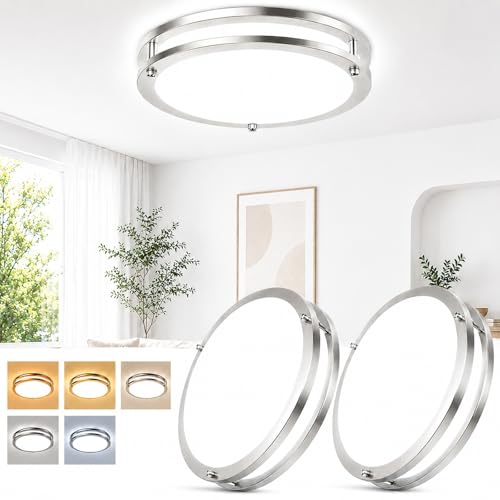 weddeg 63633008-03High CRI, top coverage rating
 LUTEC XDD-74200 lm compact fixture
Start with the lighting
Without a window, the ceiling fixture supplies all of your light. If it is dim or the color looks off, you notice it in tired eyes, a flat mood and a room that feels like a closet. That is why lighting gets the most attention here.
Three specs matter most. Lumens tell you how much light the fixture puts out. CRI describes how natural colors look under it. Color temperature, measured in kelvin, sets how warm or cool the light appears. For daytime desk work, a cool setting around 5000 to 6500 K comes closest to daylight. Warmer settings near 3000 K suit the end of the day.
If you are choosing a fixture, our best lighting for office with no windows page puts the specs side by side so you can compare them quickly.
Match the fixture to your room
Bigger rooms need more output, and the fixture type depends on your ceiling. Round flush mounts attach to a standard ceiling junction box. Commercial offices with a suspended grid ceiling can use lay-in 2x4 panels instead.
Here is how a few fixtures from our comparison stack up, based on published specifications:
| Fixture | Listed lumens | Color range | CRI | Notes |
|---|---|---|---|---|
| weddeg 13in flush mount, 2-pack | 3600 each | 2700 to 6500 K | 90 | Listed for rooms up to 250 sq ft |
| LUTEC 13in flush mount | 4200 | 3000 to 6500 K | Not published | Color is set with a switch before installing |
| Shine LUEST 39.4in ring fixture | 8000 | 3000 to 6000 K | 90 | Remote control for brightness and color |
| LED Energy Plus 2x4 panel, 4-pack | 9360 | 3000 to 6500 K | Not published | For suspended grid ceilings; dimmable |
Layer your light
One bright ceiling light is a good base, but it can leave shadows on your desk and make the walls look dark. Add a second source at desk level so your work area gets focused light without turning the whole room up.
A dimmable fixture helps too. You can run it brighter in the morning, then ease it down later. Our top-ranked panels, for example, list dimming support, and several ring fixtures on the page offer remote control of brightness and color.
A few easy layers to add:
- A desk lamp with an adjustable arm, aimed so light does not reflect off your screen.
- A lamp in a corner or on a shelf to light the walls and soften shadows.
- Warm light in the late afternoon if the room allows a color change, then cooler light for focused work earlier in the day.
Build a daily rhythm
A window normally tells your body what time it is. Without one, you have to create that signal yourself. Keep the room bright and cool-toned when you start work, and move to a warmer, lower setting near the end of the day if your fixture allows it.
Breaks matter as much as bulbs. Time away from the room gives your eyes a different distance to look at and gives you real daylight if you can get outside.
- Take a short walk outdoors at lunch if you can, even for a few minutes.
- Eat away from your desk, ideally near a window or outside.
- Look across the room or down a hallway every so often to rest your eyes.
- Use a regular schedule for breaks so the day has clear sections.
Make the room feel larger and calmer
Light colors on the walls and ceiling bounce light around and make a small room feel more open. A matte or low-sheen finish helps avoid glare. Pale furniture and a simple layout work in the same direction.
Add things that suggest the outside world. Plants, nature photos or a large piece of art on the wall can give your eyes something to rest on. A framed print of a landscape will not replace daylight, but it makes the room feel less sealed off.
Keep the desk clear of clutter. In a room with no view, visual noise adds up quickly.
Pay attention to air, sound and temperature
A room with no window often has no natural airflow either. If you can, keep the door open when it suits your work, or ask your building manager how the ventilation runs. A stuffy room can make long days feel harder.
Check the temperature too. Small enclosed rooms can feel warm with a computer and people in them, so a fan or a thermostat adjustment may help.
Sound can feel different in a closed room. If the space echoes, a rug, curtains on a wall or soft furniture can take the edge off. If you wear headphones for a long time, keep the volume at a comfortable level and take breaks.
Safety notes
If you are changing a ceiling fixture, turn off power at the breaker before you touch any wires, and confirm it is off with a tester. Follow the maker's installation instructions. If you are not comfortable with wiring, hire a licensed electrician.
Use a stable ladder or step stool and have someone hold it when you can. Large fixtures can be awkward to hold overhead, so get a helper for those.
In a rented or commercial space, ask the building manager before swapping fixtures or changing ceiling panels. Keep exits and walkways clear in a small room, and never block an emergency exit with furniture.
If bright light bothers your eyes or gives you headaches, lower the brightness and talk with an eye care professional.
Frequently asked questions
Do I need a special light for a windowless office?
No special type is required, but the fixture should be bright enough for the room and have a daylight-like setting. Look for a color range that reaches at least 5000 K, and check whether the maker publishes a CRI figure.
Can plants survive in a room with no windows?
Most plants need some light, and a room lit only by ceiling fixtures may not give enough. Some tough, shade-tolerant plants may manage with good lighting, and you can also rotate plants in from a brighter spot. Check each plant's care needs first.
Will a faux window help?
It will not give you real daylight, but it can make the room feel less closed in. Treat it as a design touch, and rely on good lighting and breaks for the practical benefits.
Should I keep the light the same all day?
Not necessarily. A cooler, brighter setting suits focused work, and a warmer or dimmer one suits the end of the day. Fixtures with remote or dimmer control make this easier.