How to Weld Aluminum at Home: A Beginner's Guide
Yes, a beginner can weld aluminum at home, but expect a steeper learning curve than steel. The easiest route is MIG with a spool gun, pure argon gas and aluminum that is cleaned right before you weld. The trick is speed and cleanliness: aluminum carries heat away fast, then melts with little warning.
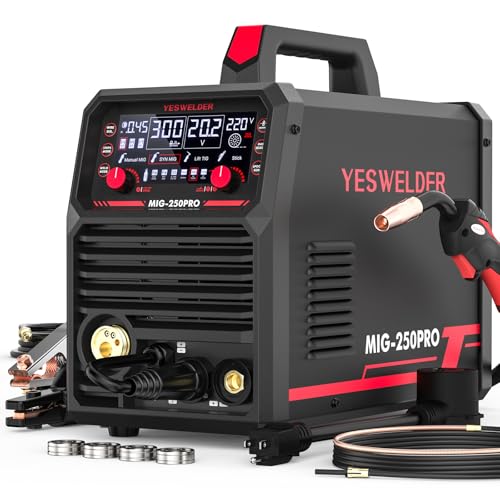 YESWELDER MIG-250DS PROBest overall
 BILT HARD WLD-1603Lightest
 ARCCAPTAIN MIG200Best finishing controls
Why aluminum feels harder than steel
Aluminum behaves differently in three ways. It conducts heat quickly, so the whole part soaks up warmth and the puddle can suddenly sag or burn through. It also shows no color change before it melts, so you lose the visual cue steel gives you.
The third issue is the oxide skin. That thin layer on the surface melts at a far higher temperature than the metal underneath. If you do not remove it, you get dirty, weak, lumpy welds. Most beginner problems trace back to one of these three facts, which is why prep and travel speed matter so much.
Pick your process: spool gun MIG or AC TIG
There are two practical routes at home. Spool gun MIG is the easier one to learn and handles thicker aluminum well. AC TIG gives the cleanest, most controlled welds, but it needs an AC-capable machine and more hand skill.
Aluminum wire is soft and tangles easily in a long MIG cable. A spool gun solves that by holding a small spool right at the gun. Some machines also let you install a Teflon liner and run aluminum wire through the standard gun, as the Femerol MIG 250PRO listing describes, though a spool gun is the more reliable setup.
| Process | Skill level | What you need | Best for |
|---|---|---|---|
| Spool gun MIG | Beginner friendly | MIG welder with spool gun support, aluminum wire, pure argon | Thicker aluminum, general repairs |
| MIG with Teflon liner | Beginner to intermediate | Compatible machine, liner, aluminum wire, pure argon | Short runs when no spool gun is available |
| AC TIG | Advanced | AC TIG machine, tungsten, filler rod, pure argon | Thin material, finished-looking welds |
Gear checklist
Every machine on our best welding for aluminum page reaches aluminum through MIG with a spool gun, and none lists AC TIG. Aluminum needs more heat than steel, and the machines there offer 200 to 250A. Here is what to gather before you start:
- A MIG welder that supports a spool gun. The spool gun is often sold separately, and several listings say so.
- Aluminum wire in a size your machine accepts. The YESWELDER MIG-250DS PRO lists .035 and .045 in. aluminum wire for spool gun use, while the ARCCAPTAIN MIG200 lists .035 and .040 in.
- Pure argon gas. Do not use the mixed gas you may have for steel.
- A stainless steel brush used only on aluminum.
- A welding helmet, gloves, a long-sleeve cotton or leather jacket, and safety glasses to wear under the helmet.
- Clamps and a clean, flat work surface.
Prep the metal
Clean aluminum just before welding, not an hour earlier. The oxide layer grows back quickly. Wipe off oil and grease first with a solvent made for the job, let it dry fully, then brush the weld area with the stainless brush in one direction.
Keep the brush for aluminum only. A brush that has touched steel can carry steel particles into your weld. Also fit the joint tightly. Aluminum does not bridge big gaps the way a steel puddle can.
If the piece is thick, a gentle preheat can help the weld fuse, since the part pulls heat away so quickly. Keep it modest and never heat sealed or hollow parts.
Set up and weld, step by step
Many machines use synergic control, which suggests voltage when you set wire feed speed. The BILT HARD WLD-1603 and the YESWELDER MIG-250DS PRO both list this feature, and it gives beginners a starting point. Treat those suggestions as a start, then fine tune on scrap of the same thickness.
Follow this order:
- Fit the spool gun and aluminum wire, and connect pure argon.
- Select spool gun MIG mode on the machine, and set the wire size.
- Clean your scrap piece and your real workpiece.
- Start from a comfortable stance with the gun angled slightly in the direction of travel, so you push the puddle rather than drag it.
- Strike the arc and move steadily. Aluminum rewards a quicker, even pace than steel.
- Finish by filling the crater. Features like crater fill and burn-back control, which the ARCCAPTAIN MIG200 lists, help prevent a pit at the end of the bead.
- Let the part cool before you handle it, since aluminum stays hot without glowing.
Fixing common beginner problems
Black, sooty welds usually point to dirty metal or poor gas coverage. Re-clean the surface and check your gas supply, hoses and any drafts, since a fan or open door can blow shielding gas away.
Holes mean too much heat or too slow a pace. Move faster or lower the settings a little. If the wire bunches up or stutters, check the spool gun drive and the wire path before blaming your technique. A bead that sits on top without blending in is usually too cold, so raise the heat or slow down slightly.
Practice on scrap first and change one setting at a time. That makes it clear which adjustment fixed the problem. If you are still deciding on equipment, compare spool gun welders side by side so you can match amperage and wire range to your projects.
Safety notes
Welding combines electricity, intense light, fumes and heat, so treat setup as part of the job.
Dual-voltage machines run on 110V or 220V. Make sure your outlet and circuit match what the machine needs, and never open the case while it is plugged in. The ARCCAPTAIN listing notes that you should not switch between 110V and 220V while the screen is on, so wait for it to turn off.
Wear a proper welding helmet every time, because arc light can injure your eyes within moments. Wear safety glasses under it when chipping or brushing, and use ear protection if you grind. Weld in a ventilated area and keep flammable items well away. Never weld near degreasers that contain chlorinated solvents, because the heat and light can turn their vapors into toxic gas. Keep a fire extinguisher close, and secure gas cylinders upright.
Frequently asked questions
Can I use my steel MIG wire and gas for aluminum?
No. Aluminum needs aluminum wire and pure argon. Steel wire will not make a sound aluminum weld, and mixed steel gas is the wrong shield.
Do I need a spool gun?
It is the most dependable choice because it keeps soft wire from tangling. Some machines also support a Teflon liner setup, but that is less forgiving.
Can I weld aluminum with a flux core setup?
Flux core is meant for steel. For aluminum, plan on gas shielded MIG with pure argon or AC TIG.
Why does my aluminum weld look dirty or gray?
Usually the oxide layer was not removed, the metal was oiled, or shielding gas coverage was poor. Clean again right before you weld.
Should I start with thin or thick aluminum?
Start with a medium thickness scrap. Very thin sheet burns through quickly, which makes learning harder.