How to Wear Hearing Protection Correctly
Earmuffs must fully cover your ears and press evenly against your head. Ear plugs must be inserted deep enough to seal the ear canal and be held in place while they expand. A good fit matters as much as the rating, because a poor seal gives you less protection than the number on the box.
 Walker's GWP-RSEMBest overall
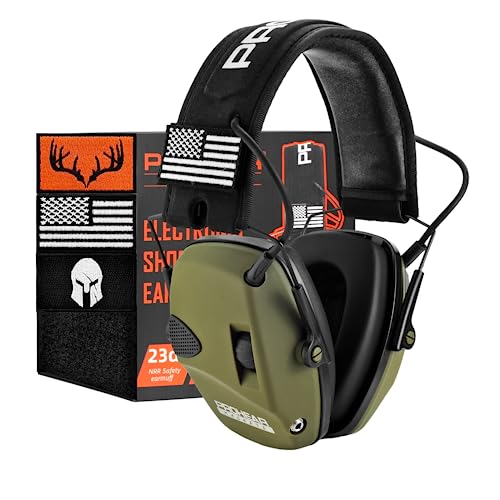 PROHEAR PROHEAR 066Light electronic, long battery
 Pro For Sho PAS-GYHigh NRR, low weight
Why fit matters as much as the rating
Every hearing protector lists a noise reduction rating, or NRR, which shows how many decibels it can take off. But that number only applies when the device seals properly. A muff with a gap, or a plug that sits loosely at the ear opening, lets sound leak in.
That is why our best ear protection page treats fit as part of the buying decision. A higher NRR helps, but only if you wear the protector the way it was designed. The steps below cover both earmuffs and ear plugs.
How to wear earmuffs correctly
Earmuffs are quick to put on, but small mistakes are common. Work through these steps each time you put them on.
Take your time with the first fitting. Once you find the right headband setting, it is easy to repeat.
- Before you put them on, move your hair, hat and anything else away from the area around your ears.
- Open the cups wide and place them over your ears so the ear is fully inside each cup.
- Set the headband across the top of your head, then pull each cup down or slide it until the cushion rests flat against your head.
- Check that pressure feels even all the way around the cushion, with no gaps at the edges.
- Make sure the headband sits snugly and the cups do not tilt or slide when you turn your head.
- Rest your hand over each cup for a moment. If the sound changes a lot, the seal may not be right yet.
How to wear ear plugs correctly
Ear plugs only work when they are inserted well. The most common mistake is leaving a foam plug sitting loosely at the entrance of the ear canal.
For roll-down foam plugs, use this routine. First, roll the plug into a thin, smooth cylinder with clean hands. Next, reach over your head with the opposite hand and gently pull the top of your ear up and back to straighten the canal. Then slide the plug in and hold it with a finger for 20 to 30 seconds while it expands to fill the canal.
Once it is in, check the fit. The plug should feel snug, not painful, and the outer end should not stick out far. If you can hear your own voice louder than usual, that often means the plug is sealed. If outside sound is still strong, remove it and try again.
Pre-molded and banded plugs work differently. They need to be pressed into the ear canal with an inward motion, not just placed at the opening. Follow the instructions that come with them, since each design has its own technique.
Ear plugs go in the ear canal, so keep your hands clean. Do not push a plug deeper than it is designed to go, and never use a cotton ball or tissue in place of a real hearing protector.
Common things that break the seal
Even a well-made protector can fail if something gets in the way. Watch for these problems:
- Glasses with thick arms, which can leave a gap under the cushion.
- Long hair, hats or headbands trapped between the cushion and your head.
- Muffs worn tilted, with the cushion edge lifting off the side of the head.
- Headbands that are too loose, or cups that are not pulled down far enough to cover the whole ear.
- Worn, cracked or compressed cushions that no longer press evenly.
- Foam plugs that were not rolled well or not held while they expanded.
Adjusting muffs for different designs
Different muffs adjust in different ways, so check how yours is built. The listings behind our comparison show a few examples. For instance, the Pro For Sho muffs list a fully adjustable, padded headband for kids through adults, and you pull each cup down to fit. The Decibel Defense muffs list adult sizing, with the ear cups sliding up and down on metal sliders. The cups should fully cover your ears.
Some makers also describe a break-in period. Both the Pro For Sho and Decibel Defense listings say the snug feel is intentional, because it helps create the seal, and suggest stretching the muffs over a box for a while if they feel too tight at first.
| Model | Type | NRR | How it adjusts |
|---|---|---|---|
| Walker's Razor Slim Electronic | Electronic | 23 dB | Padded metal wire headband |
| PROHEAR 066 | Electronic | 23 dB | Telescopic, padded headband |
| Pro For Sho Ear Muffs | Passive | 34 dB | Fully adjustable, padded headband |
| Decibel Defense Ear Muffs | Passive | 37 dB | Ear cups slide on metal sliders |
When to wear both together
In very loud settings, you can wear ear plugs under earmuffs. The Pro For Sho listing suggests this for extreme noise. Fit the plugs first, then put the muffs on over them and check that the cushions still seal.
Combining the two does not simply add the two ratings together, so do not assume the total protection is the sum of both numbers. Read the maker's guidance if you rely on double protection for work.
Safety and care notes
Hearing protection is only useful when it stays on. Put it on before you enter the noisy area, and do not take it off until you leave. Even a short unprotected moment around loud sound can add up.
Electronic muffs can raise quiet sounds and let you hear speech, but they are still protection devices. If you use an audio input, keep the volume low enough that you can still hear warnings and instructions. Never use muffs in a way that stops you from noticing traffic, machinery or other hazards around you.
Check your gear before each use. Look for cracks in the cups, stiff or torn cushions and a headband that has lost tension. Replace foam plugs when they are dirty or no longer expand, and replace worn parts or the whole muff when the seal is poor. If you are choosing new gear, our best ear protection comparison lists the weight, cushion and headband details that affect comfort during long wear.
Frequently asked questions
Should ear protection feel tight?
A snug fit is normal because it helps the seal, but it should not hurt. If it does, adjust the headband or cups, or follow the maker's break-in advice.
Can I wear earmuffs over a hat or hood?
It is better to keep the cushions directly on your skin around the ears. Anything between the cushion and your head can open a gap.
How do I know if my foam plug is in deep enough?
It should feel snug and the outer end should not stick far out. Your own voice should sound louder or more muffled than usual.
Do I need to clean hearing protection?
Yes. Keep cushions and plugs clean and replace anything cracked, stiff or worn, since damaged parts may not seal well.