How to Wash a Welding Jacket Without Damaging It
Yes, you can wash most flame-resistant (FR) cotton welding jackets in a machine, but only by following the care label and skipping bleach and harsh additives. Leather jackets should not go in the washer. Wipe them with a damp cloth and a little mild soap, then air dry them away from heat. Never put either type in a hot dryer unless the label allows it.
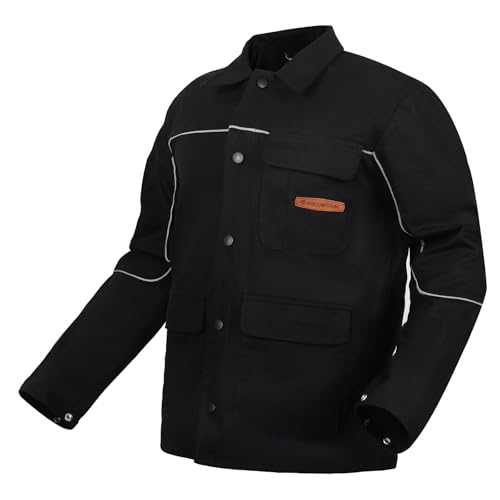 ARCCAPTAIN Best overall
 QeeLink QLCJBMKevlar-stitched FR cotton
 ARCCAPTAIN Heavy cowhide with Kevlar
Read the care label before anything else
Welding jackets are protective gear, so the wrong wash can weaken the very thing you bought them for. The care label and the maker's instructions outrank any general advice, including this guide. If the label is worn off, look up the maker's care notes for your exact model.
Start by working out what your jacket is made of. FR cotton and leather need very different care. A hybrid with leather sleeves and a cotton body needs the gentler leather approach, because the leather is the part most likely to be harmed by water and heat.
Some makers publish wash details. For example, the YESWELDER ZRF02 listing says the jacket endures washing cycles up to 165F (74C). The MAGID SparkGuard 1830 is listed as rated for 50 washes. Those figures belong to those jackets only, so do not assume your jacket can handle the same water temperature or number of washes.
How to wash an FR cotton jacket
Most FR cotton jackets tolerate a machine wash when you keep things simple. The goal is to remove grease, sweat and grime without stripping or coating the fabric.
Before you start, empty every pocket and brush off loose spatter and dust outdoors. Fasten the snaps or buttons so the hardware does not snag the fabric or bang around the drum.
- Wash the jacket alone or with other work clothing, not with towels that shed lint.
- Use a regular liquid detergent in the amount the bottle suggests for your load size.
- Choose a warm or cold setting unless the label says otherwise. Hotter water raises the risk of shrinkage.
- Skip bleach and fabric softener. Both can leave residue or damage fabric, and softener can coat the fibers.
- Run an extra rinse if the jacket was very dirty so no detergent stays in the cloth.
- Treat oily stains early with a small amount of detergent worked in by hand, and check the label before using a stain remover.
How to clean a leather jacket
Leather dislikes soaking and high heat. Water can leave it stiff, and a washing machine can warp the shape and loosen stitching. A gentle surface clean is the safer route for most leather jackets.
Wipe the outside with a cloth that is only slightly damp. For stubborn dirt, use a small amount of mild soap on the cloth, not poured on the jacket. Then wipe again with a clean damp cloth to lift the soap.
Hang the jacket on a wide hanger and let it dry slowly at room temperature. Keep it away from heaters, direct sun and hair dryers, since fast heat can make leather brittle. Once it is dry, a leather conditioner made for work gear can help keep it supple.
Do not forget the lining. Many leather jackets have a cotton lining that picks up sweat. Wipe it lightly with a damp cloth and let it air out fully before you store the jacket.
Can you put a welding jacket in the dryer?
For FR cotton, a low heat setting is usually the safest if the label allows machine drying. Take the jacket out while it is still slightly damp to limit shrinkage, then hang it to finish. Air drying on a hanger is the lowest risk choice and works well for most jackets.
For leather, skip the dryer entirely. Heat pulls moisture out of leather unevenly and can shrink or crack it.
Whatever the type, make sure the jacket is completely dry before you store or wear it. A damp jacket can grow mildew and leave you uncomfortable on a long shift.
Cotton and leather care at a glance
Use this quick comparison as a reminder. Your label still has the final word.
| Care step | FR cotton | Leather |
|---|---|---|
| Machine wash | Usually fine, per label | Avoid |
| Water temperature | Warm or cold unless label says otherwise | Damp cloth only |
| Detergent | Regular liquid detergent | Mild soap on a cloth |
| Bleach and softener | Avoid | Avoid |
| Dryer | Low heat only if label allows | Never |
| Best drying method | Hang to dry | Hang at room temperature |
Mistakes that damage a welding jacket
Most damage comes from a few repeat habits. Avoiding them keeps the jacket protective for longer.
Using bleach is the big one for FR cotton. Another is washing with products that leave a film, such as fabric softener. A film can build up on the fibers and may interfere with how the fabric is meant to perform.
Hot water and hot dryers are the next problem. They shrink cotton, which can leave the jacket riding up and exposing your waist. Our best welding jacket guide points out that a jacket that rides up leaves your waist open to sparks, so a shrunken jacket is a real safety issue, not just a fit issue.
Finally, do not skip the look-over after washing. Check seams, snaps, buttons, cuffs and the collar before you wear the jacket again.
Safety notes and when to replace the jacket
Inspect the jacket every time you wash it. Look for thin spots, burn holes, scorched patches, frayed stitching, torn seams and stiff or cracked leather. A jacket with holes or worn fabric will not protect you the way it should, even if it is clean.
Grease and oil are a fire risk on any work clothing, so do not wear a jacket that is soaked in oil or solvent. Wash it first, or retire it if it will not come clean. Never use gasoline or solvents to clean a jacket.
If you are shopping for a replacement, check for a stated flame-resistance standard. As we note on the best welding jacket comparison page, NFPA 2112 appears on three jackets in that ranking, while five of the nine products state no standard at all. Look at the maker's care instructions too, since some list wash limits or a rated wash count.
Frequently asked questions
Can you wash a cotton welding jacket?
Yes, in most cases. Use a regular detergent, warm or cold water, and no bleach or fabric softener, and always follow the care label for your exact jacket.
How often should I wash a welding jacket?
Wash it when it is visibly dirty, greasy or sweaty, not on a fixed schedule. Brush off dust and spatter between washes to keep it cleaner.
Will washing remove the flame resistance?
Washing as the label directs should not. Bleach, softener and very hot water are the common causes of trouble, so avoid them. If the jacket lists a wash rating, such as 50 washes for the MAGID SparkGuard 1830, treat that as the limit.
How do I get the smell out of a leather jacket?
Wipe the lining and surface with a lightly damp cloth, then air the jacket on a hanger in a ventilated spot out of direct sun. Do not soak it or use heat.