How to Use Wire Cutters Properly
Pick a cutter rated for your wire, set the jaws square to it and close them in one steady squeeze while wearing eye protection. Never cut live wire, and never use a cutter on a material it is not rated for. Check the stated material and size on the tool or its listing before you start.
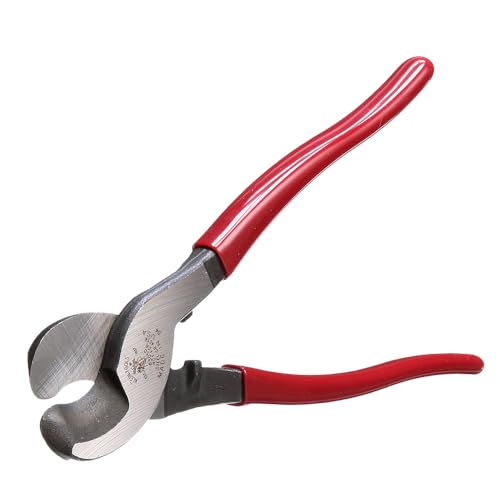 KLEIN TOOLS 63050Best overall
 Muzata MZZ1616Highest wire rope rating
 HKS Cable Cutter 36DLargest copper capacity
Start with the right cutter
Most cutting mistakes come from using the wrong tool. A cutter built for soft copper can be damaged by steel wire, and a rope cutter may be too small for thick power cable. Read the rated material and the maximum size before you pick the tool up.
Our best cable cutter comparison puts five models on one spec sheet so you can see what each is listed to cut. Some state a steel wire rating, some state a copper size, and some state neither. If a figure is missing, treat the limit as unknown and choose a tool that does publish it.
Get ready and stay safe
A few minutes of preparation prevents most injuries. Cut ends can spring free, strands can whip, and a slipping tool can nick your hand.
Use this short checklist before every cut:
- Wear safety glasses, because cut ends and small fragments can fly.
- Wear gloves if the wire is rough or frayed.
- Turn off the power, lock it out if you can, and confirm electrical cable is dead. An insulated handle is not a reason to cut live cable.
- Hold or clamp the wire so it cannot swing when it is cut.
- Keep your free hand and fingers well clear of the jaws and the cut line.
- Check that the jaws are clean and that any safety lock is released.
Make the cut, step by step
The same basic method works for most hand cutters. Take your time on the first cut, since a rushed cut is the one that goes crooked.
Follow these steps:
- Mark the point where you want to cut and support the wire on both sides.
- Open the jaws fully and place the wire as deep in the jaws as it will go. This uses the strongest part of the blade.
- Line the jaws up square to the wire, not at an angle.
- Squeeze the handles in one smooth, steady motion until the wire parts.
- Do not twist, rock or pry the tool while cutting. Side force can chip or spread the blades.
- Release the handles, set the cutter down, and check the cut end. Trim off any burr or loose strand with care.
Match the tool to the wire
Different cutters suit different jobs, and size is only part of the picture. Shear-type cutters slice through the conductor, while ratchet designs build force over several squeezes for large cable. The table below uses the published figures from our spec sheet.
Where a column says not listed, the maker does not publish a figure, so keep to the materials named in the listing.
| Cutter | Listed for | Length (in) | Weight (lb) |
|---|---|---|---|
| Klein Tools 63050 | 4/0 aluminum, 2/0 soft copper, communications cable | 3.8 | 0.9 |
| Muzata MZZ1616 | Steel wire rope up to 4 mm | 3.54 | 0.66 |
| HKS Cable Cutter 36D | Copper and aluminum up to 300 mm², not steel | 10.74 | 1.68 |
| WORKPRO W015066AE | Steel wire rope up to 3.97 mm, aluminum and copper cable | 7.5 | 0.82 |
| GRENPRO-071360 | Steel wire rope up to 3.97 mm, aluminum and copper cable | 7.5 | 0.67 |
Wire rope and steel wire
Wire rope is made of many twisted strands, so it frays easily and can spring apart when cut. Use only a cutter whose listing says it cuts steel wire, and stay at or under its stated diameter. The Muzata lists a 4 mm maximum, and the WORKPRO and GRENPRO list 3.97 mm.
Wrapping tape around the rope at the cut point helps hold the strands together. Cut through the tape in one squeeze. If the rope is under tension, release it first, because the cut ends can whip. Eye protection matters most here.
Thick copper and aluminum cable
Large conductors need leverage and a rated capacity. The HKS lists copper and aluminum up to 300 mm², and its listing warns against cutting steel, steel wire or iron wire. That warning is a good reminder that blades suited to soft metal can be damaged by hard metal.
The Klein 63050 is a smaller shear cutter listed for 4/0 aluminum and 2/0 soft copper cable. For stranded cable, keep the cut square and avoid squeezing a bundle that is larger than the listed size. If it will not cut cleanly, stop and use a bigger tool.
Care and storage
Wipe the blades after use and keep them dry. Do not use cutters to hammer, pry or cut hardened material, since chipped jaws leave ragged cuts. Keep your fingers out of the jaws whenever you close them.
If your cutter has a safety lock, engage it when you put the tool away. This keeps the jaws closed and protects your hands in a bag or toolbox. The Muzata, WORKPRO and GRENPRO list a lock. Check the warranty with the seller, since none of the five lists a length.
Frequently asked questions
How do I keep wire rope from fraying when I cut it?
Wrap tape tightly around the rope at the cut point and cut through the tape in one squeeze. This holds the strands together. A cutter with sharp shear-style blades, such as the WORKPRO and GRENPRO listings describe, also helps keep ends from fraying.
Can I cut steel wire with any cable cutter?
No. Only use a cutter whose listing says it cuts steel wire. The HKS listing, for example, warns against cutting steel, steel wire or iron wire, since that can damage the blades and leave a poor cut.
Is it safe to cut live wire with an insulated cutter?
No. The HKS has a 1000 volt insulated handle, yet its listing says not to cut live cables. Turn off the power, lock it out and confirm the cable is dead before any cut.
Why does a cable cutter need a safety lock?
A lock keeps the jaws closed in storage, which prevents accidental opening or cutting and protects your hands and the blade edges. The Muzata, WORKPRO and GRENPRO list a lock. Engage it whenever the tool is not in use.