How to Use Pruning Shears Correctly for Clean Cuts
Unlock the shears, place the thin cutting blade on the side of the stem you are keeping, and squeeze in one smooth motion just above a bud or branch collar. Only cut stems thinner than the tool's rated capacity, and wipe the blades clean afterward. Those habits give you clean cuts that heal quickly and protect both the plant and your wrist.
 FELCO F-2Best overall
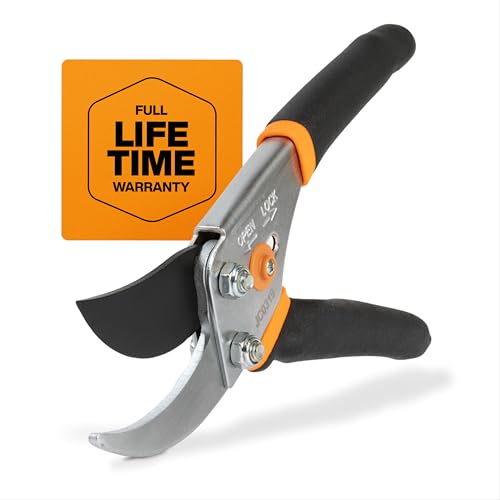 Fiskars 91095935JSap groove and coating
 Kynup V11 RedLight with 1 in capacity
Start with the right shears and a safe setup
Clean cuts begin with the tool. A bypass blade passes by the other blade like scissors, which is why it suits live stems and green wood. An anvil pruner presses a blade onto a flat surface and crushes more, so it is better kept for dead wood. If you are not sure which type you own, look at the head: two curved blades that slide past each other means bypass.
Before you cut, check that the blade is sharp, the pivot bolt is snug, and the spring snaps the handles open. A loose or dull pair tears bark instead of slicing it. Torn bark heals slowly and gives disease an easy way in.
Wear gloves and eye protection. A snapped twig can flick back toward your face, and thorny stems cause scratches that are easy to avoid. Keep your free hand well away from the blade path.
How to open pruning shears
Most pruners have a small safety lock near the handle end. Slide or press it to release the handles. On many models you can work the lock with your thumb while the tool stays in your cutting hand. Some models do not list a lock at all, so check how yours holds the blades shut.
Once unlocked, the spring pushes the handles apart and the blade opens. Open the jaws only as wide as the stem needs. A smaller opening gives you more control and less hand fatigue over many cuts.
After you finish, close the blades and engage the lock before you put the tool away. This keeps the edge protected and keeps fingers safe in a tool bag or drawer.
Pick the right cut point
Where you cut matters as much as how. On a stem with buds, cut about a quarter inch above an outward-facing bud, angled slightly so water runs away from it. This encourages new growth to head away from the center of the plant.
When removing a whole branch, cut just outside the swollen ring where it meets the trunk or a larger limb. That ring is the branch collar, and leaving it intact helps the wound close. Avoid leaving long stubs, because they die back and invite pests.
For dead or damaged wood, cut back to healthy tissue. Healthy wood is usually green or pale inside, while dead wood is dry and brittle.
Make the cut step by step
Follow this order each time and the cut will come out clean.
- Choose the stem and check its thickness against your shears' rated capacity.
- Hold the shears so the thin cutting blade is on the side of the stem you are keeping. The thicker hook sits on the waste side, so any crushing lands on the part you are discarding.
- Open the jaws and slide the stem as deep into the cutting zone as it will go, near the pivot, where you get the most leverage.
- Keep the blades square to the stem, not twisted. Twisting strains the pivot and can leave a ragged edge.
- Squeeze firmly in one steady motion with your whole hand. Do not saw back and forth.
- Release and let the spring reopen the blades before moving to the next cut.
Match the stem to your shears
Every pair has a maximum cut diameter. Pushing past it bends the blade and strains your wrist, and it is the most common reason cuts come out crushed. If a stem will not cut easily, switch to a larger tool rather than forcing it.
The numbers below come from published specifications on our best pruning shears page, so you can see how capacity, weight and extras vary across models.
Smaller capacity suits flower stems and light shrub work, while fruit trees and thicker woody growth call for a 1 in rating. If you are deciding between models, our pruning shears comparison lines up blade type, weight, length and safety features side by side.
| Model | Max cut | Weight | Notable features |
|---|---|---|---|
| Fiskars Bypass Pruning Shears | 0.625 in | 0.65 lb | Sap groove, safety lock, low-friction coating |
| VOTREK Bypass Pruning Shears | 0.8 in | 0.5 lb | Teflon-coated SK5 blade, safety lock |
| Decerk Professional Bypass Pruning Shears | 0.75 in | 0.55 lb | Titanium-coated blade, anodized aluminum handles |
| Felco F-2 | 1 in | 0.55 lb | Replaceable parts, non-slip grip |
| Kynup V11 Red | 1 in | 0.53125 lb | Safety lock, non-slip grip |
| Corona BP 3180D | 1 in | 0.85 lb | Replaceable parts, sap groove, safety lock |
Fix common cutting problems
Crushed or frayed ends usually mean a dull blade, a loose pivot, or a stem that is too thick. Sharpen or tighten first, then check the capacity.
If the blades stick on sappy stems, a sap groove or low-friction coating helps, but wiping the blade during the job helps on any tool. If you feel your hand tiring, reduce the opening, use your whole hand instead of just your fingers, and take short breaks.
Cutting at an awkward angle is another cause of poor cuts. Move your body so the shears approach the stem squarely, rather than reaching and twisting your wrist.
Clean and store after each session
Wipe the blades with a cloth after use to remove sap and moisture. If you cut diseased wood, wipe the blades with rubbing alcohol or a household disinfectant before moving to a healthy plant, so you do not carry problems between them.
Dry the tool, apply a light film of oil to the blade, and lock it shut. If your model has replaceable parts, swap a worn spring or blade rather than working with a weak one.
Safety note: always lock or close the blades before carrying the shears, and never cut toward your body or hold the stem with your free hand close to the blade. Do not prune near power lines, and use a proper pole pruner or call a professional for branches above shoulder height instead of climbing with a hand pruner.
Frequently asked questions
Which way should the blade face?
Point the thin cutting blade toward the part of the plant that stays. The thicker hook then faces the piece you are removing.
Can I cut dead wood with bypass shears?
Yes, for thin dead stems within the rated capacity. Thick, hard dead wood can damage a bypass blade, so use a pruning saw or a tool made for it.
When is the best time to prune?
It depends on the plant. Many shrubs and trees are pruned in their dormant season, while some flowering plants are best cut right after they bloom. Check the needs of each plant first.
How often should I sharpen my pruners?
Sharpen when cuts start to look crushed or you need extra force. Regular cleaning and a light oiling slow how fast the edge dulls.
Should I seal the cut with paint or wound dressing?
Generally it is not necessary. A clean cut at the right spot lets the plant seal itself naturally.