How to Use Loppers Correctly for Pruning and Trees
Open the jaws wide, seat the branch deep near the pivot, keep the thin cutting blade on the side of the plant you are keeping, and close the handles in one smooth squeeze. Stay within your lopper's rated cutting capacity, make thick cuts in stages, and wear eye protection and gloves. Loppers suit small to medium branches on shrubs and trees; larger limbs need a saw.
 Fiskars 391461-1003Best overall
 Fiskars 394801-1003Gear leverage for 2 in
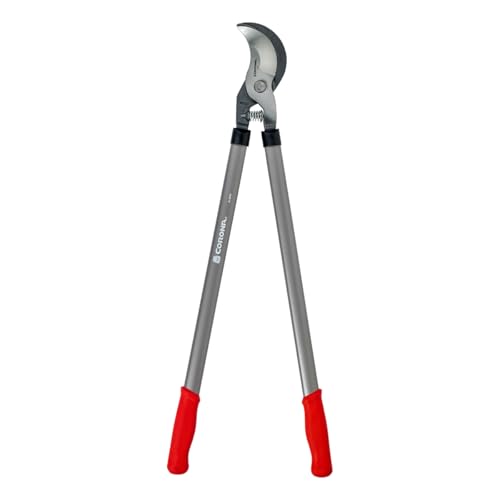 Corona Clipper SL 6500Highest cutting capacity
Start with the right lopper for the branch
Correct technique starts before the first cut. A lopper used on a branch that is too thick forces you to twist, bounce and strain, and that is how blades get bent and cuts get ragged. Check the cutting capacity first, then pick a lopper that covers your thickest branch with room to spare.
Blade type matters too. Bypass blades slide past each other like scissors and give clean cuts on live wood, which is why they suit most shrub and tree pruning. Anvil blades close onto a flat surface and are better for dry, dead wood. Our best loppers page lays out capacity, weight and blade type for each model so you can match the tool to the job.
Match the tool to the branch size
The numbers below come from the published specs on our comparison page. They show how much the capacity ceiling can differ between models.
Treat the rated capacity as a limit, not a target. For the best cuts, work on branches a little thinner than the maximum.
| Lopper | Cutting capacity | Weight | Cutting action |
|---|---|---|---|
| Fiskars Garden Bypass Lopper 28 in | 1.5 in | 2.9 lb | Bypass |
| Fiskars PowerGear2 Bypass Loppers | 2 in | 3.9 lb | Bypass, compound gear/cam |
| Corona Clipper SL 6500 | 3 in | 2.78 lb | Bypass |
Step-by-step: making a clean cut
The same basic motion works for shrubs, hedges and tree branches. Slow, controlled cuts beat fast, forceful ones.
If the branch does not cut with firm, steady pressure, stop. Forcing it is the most common way to damage the blades and the plant.
- Choose the branch. Decide what you are removing and why before you cut: dead, crossing, damaged or overgrown.
- Clear the area. Move people, pets and tools out from under the branch, and make sure you have stable footing.
- Open the handles wide. A wide opening lets you place the branch deep in the jaws, near the pivot, where you get the most leverage.
- Orient a bypass lopper correctly. Keep the thin cutting blade on the side of the plant that stays, and the hooked or thicker side toward the piece you are removing. This leaves a cleaner wound on the part that remains.
- Set the angle. Hold the blades square to the branch, not tilted, so the cut is straight and does not tear the bark.
- Squeeze the handles together in one smooth motion. Do not twist or rock the tool sideways, since that strains the blade and the pivot.
- Let the cut piece fall away, then step back and look at the shape before making the next cut.
Where to cut on a branch
Where you cut affects how well the plant heals. On a living branch, cut just outside the slightly swollen ring where the branch meets a larger limb or trunk, often called the branch collar. Cutting flush with the trunk removes tissue the tree needs to seal the wound, and leaving a long stub invites decay.
When shortening a branch rather than removing it, cut just above a bud or a side shoot that points the direction you want new growth to go. Make the cut at a slight angle so water runs off instead of pooling on the surface.
For dead wood, cut back to healthy tissue or to the point where the dead branch meets the live one. A lopper with anvil blades can handle dry wood well, but a bypass lopper works there too.
Handling thicker branches and trees
Loppers are best for branches up to their rated capacity, and trees often have limbs well beyond that. When a branch is too thick, a pruning saw is the right tool. Do not try to chew through a thick limb with repeated small bites from loppers, because the blades can twist and the cut will be rough.
For a branch near the top of your lopper's capacity, work in stages. Cut it back in shorter sections so each piece is lighter and falls cleanly, then make the final cut near the collar. Longer handles add reach and leverage, but they also add weight, so take breaks on long jobs.
Reach has limits as well. Telescopic models, such as the Ymachray with a 41 in maximum handle length, help with higher branches from the ground. Check the extension joints before each use, and never stretch overhead so far that you lose your balance.
Safety before you cut
Pruning looks gentle, but falling branches and sharp blades cause real injuries. A few habits cover most of the risk.
Heights and power lines deserve extra caution. Stay on the ground whenever you can. If a branch is near an electrical line, do not prune it yourself. Call a qualified arborist or the utility, because contact with a line can be fatal even through a wooden or metal handle.
- Wear safety glasses or goggles. Snapping twigs and flying bark can hit your eyes.
- Wear sturdy gloves to protect against thorns, blisters and pinched fingers between the handles.
- Keep your free hand clear of the blades and the branch you are cutting.
- Use a stable ladder only when needed, on firm level ground, and avoid cutting one-handed while on it.
- Do not cut a branch that is under tension, such as one bent by another fallen limb, without a plan. It can spring back.
- Keep blades sharp and the pivot bolt snug. Dull or loose blades make you push harder and slip.
Care and maintenance after pruning
Wipe the blades clean after each session, especially after cutting sappy wood. Many blades have a low-friction coating that reduces gumming, but residue still builds up. A light film of oil on the blades and pivot helps prevent rust.
If you cut diseased wood, clean the blades before moving to healthy plants so you do not spread problems. Store the lopper closed and dry, with the blades protected. Check bumpers, bolts and handle grips now and then, and replace or tighten anything that has worn.
Frequently asked questions
Can I use loppers on dead wood?
Yes. Anvil blades are made for dry, dead wood, and a bypass lopper can cut it as well. Keep dead branches within the rated capacity, since they can be brittle and split.
Why do my loppers crush the branch instead of cutting it?
Common causes are dull blades, a loose pivot bolt, a branch too thick for the tool, or a bypass lopper held with the blade on the wrong side. Check each, and try seating the branch deeper in the jaws.
When is the best time to prune trees?
It depends on the species and your climate. Many trees are pruned while dormant, but dead or hazardous branches can be removed any time. Check guidance for your specific tree.
Should I seal the cut with paint or wound dressing?
Generally not needed. A clean cut at the right spot lets the tree heal on its own, so focus on cutting correctly.