How to Use F Clamps Safely on Metal Projects
F clamps work well on metal for holding parts while you drill, fit, file or tack weld them. Use steady, moderate pressure, protect the surface, keep plastic parts away from heat, and wear eye protection. For welding, choose a clamp with a steel bar and avoid resin or nylon handles near the arc. Do not clamp a hydraulic hose with an F clamp.
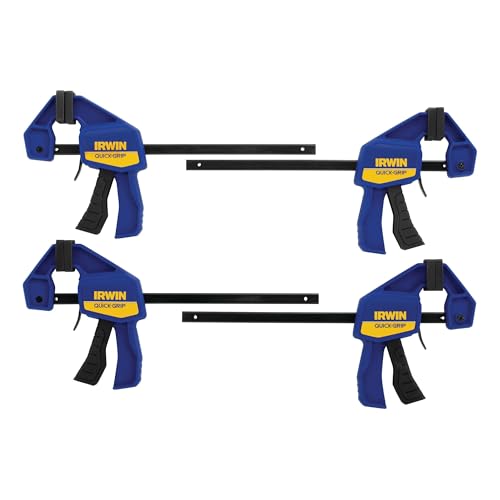 IRWIN 1964758Lightest listed clamp
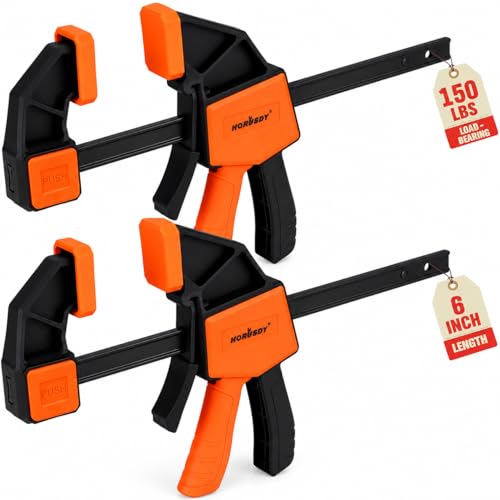 HORUSDY 88026Spreader in a two-pack
 Jorgensen 93424ALong reach, 24 in opening
What F clamps do well on metal
An F clamp holds two parts together or holds one part to a bench so your hands stay free. On metal, that means keeping a flat bar square against an angle, holding a plate still for drilling, or pressing a joint closed while you tack it.
F clamps are not vise grips or welding magnets, and they are not lifting tools. They give steady squeeze along one line. That is ideal for flat stock and edges, and less suited to round or odd shapes, which can slip out sideways.
Before you pick one up, decide what the clamp is for. Holding parts for cold work like drilling or filing is the easy case. Holding parts near a weld is harder on the clamp, and the sections below cover that.
Prepare the metal and the clamp
Dirt and metal chips on the jaws can scratch the work, and they can also let the clamp slip. Wipe the jaw faces and the metal before you tighten anything.
Bare steel jaws can mark soft metals such as aluminum or brass, and they can mar a finished or painted surface. Soft jaw pads help, and so does a scrap of wood or thick cardboard between the jaw and the part. Many clamps on our best f clamps page list soft or non-marring pads, which suit finished metal and thin sheet.
Clamp step by step
A good setup takes a minute and prevents most slips and dropped parts.
Work through these steps in order:
- Put on safety glasses. Add gloves if the edges are sharp, since cut metal often has burrs.
- Support the work on a stable bench. Do not let a heavy piece hang from the clamp.
- Place the fixed jaw on one side and bring the screw jaw to the other so both faces sit flat on the part.
- Position the clamp close to the joint or the spot you are working on, but out of the path of the drill bit, saw or torch.
- Tighten by hand until the parts are snug. Stop when the work no longer shifts. More turning adds stress and can bend thin sheet or bow the bar.
- Check that the parts are square and flat, then tighten a little more if needed.
- Test the hold by gently pushing the part before you start cutting or drilling.
- Loosen the clamp before you remove it so the parts do not spring free.
Using F clamps around heat and welding
Heat is the biggest difference between woodwork and metalwork. Resin and nylon handles, plastic pads and soft jaw faces can soften or melt from nearby heat or hot spatter. Even a clamp with a hardened steel bar may have a resin handle, as the IRWIN 6 in mini clamp on our list does.
For welding, pick a clamp built mostly from steel and keep any plastic parts well away from the weld zone. Check the spec sheet for bar material and handle material before you buy. Remove plastic pads if the clamp will sit near the arc.
Do not let welding current run through the clamp. An arc between the clamp and the work can pit the screw, the jaw face or the bar, and it can weaken the clamp over time. Attach your ground clamp directly to the work, not to the F clamp.
Let welded parts cool before you handle the clamp. Metal near a weld stays hot long after the glow fades. Wear a welding helmet, gloves and flame-resistant clothing, and keep flammable items clear of the work area. If you work indoors, make sure the space is ventilated, since welding fumes are harmful.
Choosing a clamp from the published specs
Metal work often needs more force and a sturdier bar than light trigger clamps provide. Our comparison page lists the published numbers. Here are several clamps from it, with notes that matter for metal. Some makers leave out specs such as throat depth, so we only show what is listed.
Remember that clamping force on a spec sheet is a maximum rating. It is not a target. Never go beyond what the clamp is rated for.
| Clamp | Listed force | Opening and throat | Notes for metal |
|---|---|---|---|
| IRWIN Quick-Grip 1964758 (6 in, 4 pack) | 140 lb | Not listed | Hardened steel bar, resin handle, soft pads. Light duty, keep away from heat. |
| Jorgensen E-Z Hold 24 in | 400 lb load limit (listing) | 24 in opening, 3.375 in throat | Plated high-carbon steel bar, glass-filled nylon handle. Keep the nylon away from heat. |
| IRWIN 1964720 (24 in) | 300 lb | 24 in opening | I-beam bar design, soft swivel pads, can convert to a spreader. |
| CRAFTZONE 36 in parallel | 1500 lb | 36 in opening, 3.875 in throat | Carbon steel bar, parallel jaw faces for even contact on flat stock. |
| Wilton GSM30 heavy-duty | 2660 lb | 12 in opening, 5.5 in throat | Highest force and deepest throat on our page. |
Do not clamp hydraulic hose
The short answer to a common question is no. An F clamp is not a safe way to pinch off or hold a hydraulic hose.
Hydraulic hose is built in layers, and crushing it can damage the inner tube or the reinforcement even if the hose looks fine afterward. A damaged hose can fail later under pressure. Hydraulic fluid under pressure can also pierce skin, and that is a serious injury that needs urgent medical care.
If you need to work on a hydraulic system, shut it down, relieve the pressure and follow the equipment maker's instructions. Replace a hose that has been crushed or kinked.
You can use an F clamp on a hydraulic fitting bracket or a mounting plate that is off the machine, because that is simply metal being held. The rule is about squeezing the hose itself.
Quick safety checklist
Keep this list in mind each time you clamp metal.
- Wear safety glasses for drilling, grinding, cutting and welding. Add hearing protection for loud tools.
- Use gloves for sharp edges, and use proper welding gloves for hot work.
- Do not stand a clamped part where it can fall on your feet.
- Unplug power tools before you adjust the clamp near the blade or bit.
- Discard any clamp with a bent bar, a stripped screw or a cracked handle.
Frequently asked questions
Do I need soft pads when clamping metal?
Not always. Pads help on aluminum, brass, painted or polished surfaces. For rough steel that will be ground or welded, bare steel jaws are fine, though a plastic pad should not be near the weld.
Can I use an F clamp as a spreader on metal?
Some clamps convert to a spreader by reversing the jaw. This works for gentle alignment, such as pushing a frame apart to fit. Do not use it to force heavy or rigid metal parts, because the bar can bend.
Why does my clamp slip on metal?
Smooth, oily or slanted surfaces reduce grip. Wipe the metal, make sure the jaws sit flat on parallel faces, and add a thin pad or a shallow punch mark to help the jaw seat.
How do I clamp round tube or pipe?
An F clamp tends to roll off round stock. Use a V-block or a clamp made for pipe, or tack the parts first so the shape stays put while you finish.