How to Use a Torque Wrench Correctly, Step by Step
Set the torque value on the wrench, seat the socket square on the fastener, and pull the handle in one smooth motion until the wrench clicks or signals. Stop right away at the signal and never keep pulling. Check the scale units first, because ft-lb and Nm look similar but are not interchangeable.
 SUERCUP BSM1-340Best overall
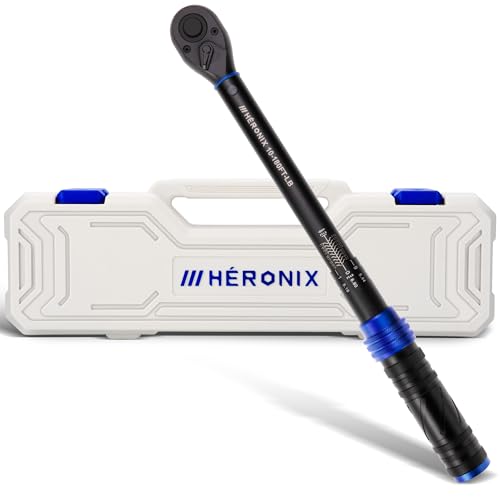 HERONIX HX9087USFine ratchet with case
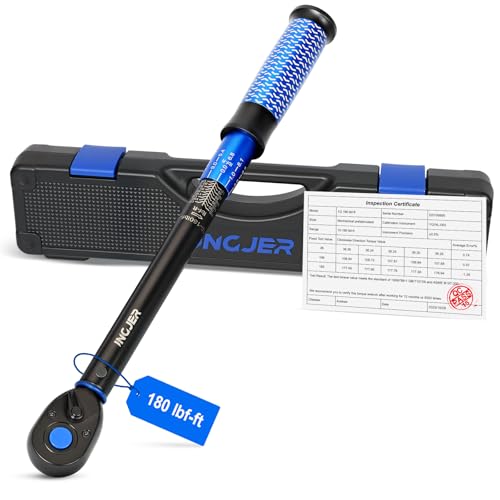 INGJER IJ12NEW180MLightest in the lineup
Before you start
A torque wrench tightens a fastener to a specific turning force, so the bolt is neither loose nor stretched. The target number comes from the manual for your vehicle, bike or machine, not from the wrench. Look that number up first and note its unit.
Then make sure the number fits your wrench. A wrench cannot work outside its scale. For example, the HERONIX 1/2 inch click model in our data covers 10 to 180 ft-lb, so a 6 ft-lb job needs a smaller wrench. Our best torque wrench page lists the range of each model so you can check this quickly.
- Find the torque value and unit in the service manual.
- Confirm the value sits inside your wrench's range.
- Clean the threads and the seat of the bolt or nut. Dirt changes how much force reaches the fastener.
- Match the socket to the fastener and make sure it is fully seated on the drive.
- Wear safety glasses. A slipped socket or a snapped bolt can send parts flying.
How to read the scale and set the value
Most click wrenches have two scales. A main scale runs along the barrel, and a fine scale wraps around the handle. Many models also print two units, ft-lb and Nm. The HERONIX listing, for instance, describes laser-etched dual scales for both.
To set a value, unlock the handle. On the HERONIX, the listing says to pull down the lock ring, turn to the number, then release the ring to lock. Other models use a twist knob or a lock nut, so follow your wrench's own instructions.
Reading works like a simple addition. Turn the handle until the zero line on the rotating scale sits on the barrel line for the main number, then add the fine marks. If you need 85 ft-lb, line up the 80 mark on the barrel and the 5 on the handle scale.
If your spec is in Nm but your wrench shows ft-lb, convert before you set it. One ft-lb is about 1.356 Nm. Never guess, because the numbers differ by about a third.
Step by step: tightening a fastener
Follow the same order each time. It takes a minute and keeps the result repeatable.
- Set the target torque and lock the handle.
- Check the ratchet direction switch. For tightening, it should be set to drive clockwise on a standard thread.
- Run the fastener down by hand or with a regular ratchet until it is snug. A torque wrench is for the final pull, not for running a bolt down the whole thread.
- Place the socket squarely on the fastener. Keep the wrench and socket in a straight line.
- Hold the handle at the grip's center point. Holding near the end changes the leverage on some designs.
- Pull in a slow, steady, smooth motion until you feel and hear the click.
- Stop immediately at the click. Do not keep pulling or give it a second tug.
- Release the load and remove the wrench.
Should you push or pull?
Pull whenever you can. Pulling toward you gives better control, and if the socket slips you are less likely to fall forward or hit your hand on something hard. Pushing makes it easy to jerk the wrench and overshoot.
If you must push, keep your palm open and push with the flat of your hand, not with a gripped fist. Keep your feet planted and your body balanced. This matters on wheel work, where a slip near a hot brake or sharp edge can hurt.
Whichever way you go, keep the motion smooth. A fast jerk can carry the wrench past the click point before the mechanism has time to release. If you have several fasteners in a pattern, such as wheel lug nuts, tighten them in a star pattern and in two or three passes. Our best torque wrench for lug nuts page covers models with the higher ranges that wheel work needs.
Click wrench versus digital wrench
A click wrench signals by sound and feel. A digital wrench shows a number on a screen and warns you with lights, vibration or a buzzer. The steps are the same, but the way you set and read them differs.
The SUERCUP digital model in our data lists a track mode, which shows the live torque value, and a peak mode, which holds the highest value reached. Its listing also says the load should not exceed 120% of the maximum torque value, so do not use it as a breaker bar.
| Feature | HERONIX click wrench | SUERCUP digital wrench |
|---|---|---|
| Drive size | 1/2 inch | 1/2 inch |
| Range | 10-180 ft-lb | 3.8-250.8 ft-lb |
| Accuracy | ±3% | ±1% |
| How it signals | Audible and tactile click | Vibration, flashing LED and buzzer |
| Ratchet | 72 teeth, 5° swing arc | Quick release ratchet head |
| Power | None needed | 2 AA batteries |
Care, accuracy and safety
A torque wrench is a measuring tool, so treat it like one. Do not drop it, do not use it to loosen stuck bolts, and do not slide a pipe over the handle for extra leverage. Any of these can throw off the reading or damage the mechanism.
When you finish a job with a click wrench, wind the handle back down to the lowest marked setting. Do not go past the minimum mark. The INGJER listing gives the same advice for keeping calibration. Store the wrench in its case if it came with one. Several models in our data include a case, and the HERONIX, INGJER and LEXIVON listings all mention one.
An impact wrench can run fasteners down quickly, but it is not a precision tool. If you use one, finish the job by hand with a torque wrench. Our best impact wrench for automotive use page shows models suited to that first stage.
Safety notes that matter most:
- Support a raised vehicle on jack stands, never on a jack alone, before working under it or on a wheel.
- Wear eye protection, and gloves if the job has sharp edges.
- Make sure your footing is stable before you pull, because a sudden release can throw you off balance.
- Keep the wrench within its range. Do not force it past the click.
Frequently asked questions
What does Nm mean on a torque wrench?
Nm stands for newton meters, the metric unit of torque. Many wrenches also show ft-lb, which is the US unit. Use the unit your manual lists, or convert with about 1.356 Nm per ft-lb.
Can I use a torque wrench to loosen bolts?
No. Loosening takes more force than the wrench is built to handle and can knock it out of calibration. Use a breaker bar or a regular ratchet instead.
What if the wrench does not click?
Stop and check that the handle is locked at your value and that the ratchet is seated. Do not keep pulling. If it still will not click, the wrench may need service or recalibration.
Do I need to tighten a bolt again after the click?
No. One smooth pull to the click is enough. Going again over a clicked bolt can push it past the target torque.
How do I read a digital torque wrench?
Choose your unit and mode, then watch the screen as you pull. When you reach the preset value, the wrench alerts you. On the SUERCUP listing, that alert is vibration, a flashing LED and a buzzer.