How to Use a Tool Backpack, Including the Straps
Pack the heaviest tools close to your back, tighten the shoulder straps until the bag sits high and snug, then clip the chest strap and waist belt so the weight rides on your hips and both shoulders. Keep the load under the maker's stated limit and carry only what the job needs. A few minutes of setup makes a loaded bag far easier to carry.
 LOKASS 8605Best overall
 KLEIN TOOLS 5541610-14Orange interior, tough nylon
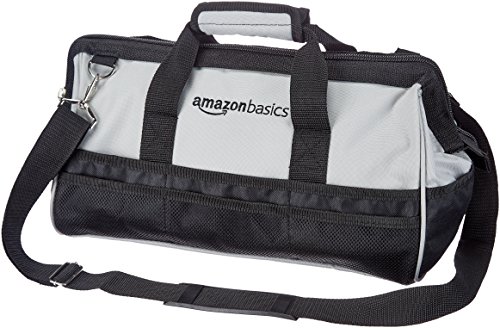 Amazon Basics TB002Open-top tote, 16 outside pockets
Start with the right kind of bag
A true tool backpack has two padded shoulder straps and a back panel. Many bags sold as tool backpacks are really totes with a single strap, and those do not spread weight the same way. Check your listing before you follow the steps below. Our best tool backpack comparison marks which products are real backpacks and which are totes.
If your bag has a chest strap and waist belt, you can use every step in this guide. If it only has one shoulder strap, the packing advice still helps, but you should switch shoulders often and keep the load lighter.
Pack it before you put it on
How you load the bag matters as much as how you wear it. A poorly packed bag pulls backward and makes the straps dig in, even if the total weight is modest.
Start by grouping your tools by how often you reach for them. Then load in this order:
- Put the heaviest items, such as a drill, a torque wrench or a battery pack, in the section closest to your back.
- Place daily tools like screwdrivers, pliers and meters in the outer pockets and loops where you can reach them fast.
- Keep sharp or greasy items in their own pockets, away from a laptop or paperwork.
- Use the laptop compartment, if your bag has one, only for the computer. Do not let loose tools press against it.
- Balance left and right so the bag does not lean to one side.
Put the bag on and set the straps
Loosen all the straps first. Then set the bag on a bench or the tailgate at about waist height, slide your arms through, and let it settle on your back before you tighten anything.
Work through the straps in this order:
- Shoulder straps: pull them until the bag sits high on your back, with the top of the bag near the top of your shoulders. The straps should hug your shoulders without lifting off them.
- Waist belt: if your bag has one, fasten it over your hips and tighten it so the hips carry part of the weight.
- Chest strap: clip it across your chest and tighten just enough to stop the shoulder straps from sliding outward.
- Fine-tune: walk a few steps, then loosen or tighten each strap a little until the bag stops swinging.
What each strap does
Knowing the job of each strap helps you fix problems fast. If your shoulders ache, for example, the answer is usually the belt, not the shoulder straps.
The LOKASS Heavy Duty Tool Backpack on our comparison page is a good example of a full setup. Its listing mentions padded shoulder straps, a cushioned back panel, an adjustable chest strap and waist belt, and a reinforced top handle for short moves between your vehicle and work area.
| Strap or handle | What it does | Common fix |
|---|---|---|
| Shoulder straps | Carry the load over both shoulders and keep the bag against your back | Shorten them if the bag sags low |
| Waist belt | Moves part of the weight to your hips | Tighten it if your shoulders tire first |
| Chest strap | Stops the shoulder straps from slipping outward | Move it up or down to sit across your chest, not your throat |
| Top handle | Handles short moves, like lifting the bag out of a trunk | Switch to the straps for any longer carry |
| Strap storage pocket | Hides the straps on wheeled packs when you pull the bag instead of wearing it | Tuck the straps away so they do not catch in the wheels or on stairs |
Tips for mechanics
Mechanics tend to carry heavy, dense tools like sockets, ratchets and wrenches. Dense items add up quickly, so check the max load your bag lists. The LOKASS lists 110 lb, while the DEWALT PRO Backpack on Wheels lists 55.12 lb. If a maker gives no load figure, treat the bag as a lighter-duty carry.
Wipe greasy tools before you stow them so oil does not soak into the fabric or onto a laptop. A molded base, which the LOKASS and several other bags list, helps keep the bottom of the bag off wet or dirty shop floors.
Wheeled packs like the DEWALT are handy when the kit is heavy, and that model stores its shoulder straps in a protected pocket. The empty bag weighs 7.94 lb, so more of your carrying limit goes to the bag itself. If you want to compare weights and loads across the lineup, see our tool backpack comparison.
Safety notes
A packed tool bag can be heavy, so take a few simple precautions every time you lift or climb with it.
Lift with your legs, not your back, and set the bag on a bench before you put it on. Never climb a ladder with a fully loaded backpack if you can raise tools another way, because the weight shifts your balance. Keep both hands free for the rails.
Cover sharp blades and bits before you pack them. Keep loose battery packs and metal tools in separate pockets so terminals cannot touch metal and short out. Unplug corded tools and remove batteries from tools before you stow them. Do not exceed the max load the maker lists.
Keep the bag working well
At the end of the day, empty the bag, shake out dirt and let damp fabric dry before you close it. Check zippers and stitching often, and look at the straps for fraying where they join the bag.
Re-pack every so often. Tools drift over time, and the heaviest ones tend to end up wherever they were dropped last. A quick reset keeps the weight against your back and the pockets matched to your actual kit.
Frequently asked questions
Should the waist belt be tight?
Snug, not crushing. You should be able to breathe normally, and the belt should rest on your hip bones rather than your stomach.
Can I wear a tool backpack on one shoulder?
It is better to use both straps. One shoulder concentrates the weight and tires you faster, and the bag can slip off while you work.
How do I stop the straps from slipping?
Tighten the shoulder straps first, then clip the chest strap. Also check that the buckles are fully seated and the loose ends are tucked away.
What do I do if the bag pulls backward?
Move the heaviest tools toward your back and shorten the shoulder straps so the bag rides higher. Tightening the waist belt also helps.