How to Use a Spark Plug Socket Wrench
Slip a spark plug socket that matches your plug size straight down over the plug, attach a 3/8 in drive ratchet, and turn counterclockwise to loosen it. Keep the ratchet in line with the plug, pull it out straight, and work on a cold engine. To install, thread the new plug in by hand first, then snug it with the ratchet.
 DURATECH DT401280Best overall
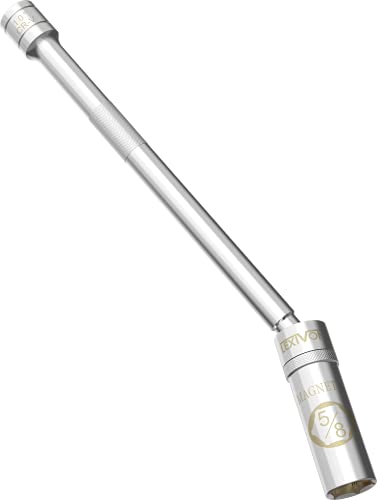 LEXIVON LX-122Lifetime warranty listed
 QWORK CA8329Two sizes in one pack
What a spark plug socket does differently
A spark plug socket looks like a regular deep socket, but it has a few extra features. The inside is built to hold the plug by its hex while leaving room for the ceramic insulator and the terminal at the top. Many also have a rubber insert or a magnet that grips the plug so it does not fall into the engine bay.
The socket works with a ratchet or a breaker bar on its drive end. Every product we list on our best spark plug socket page uses a 3/8 in drive. So a 3/8 in ratchet, plus an extension if the plug sits deep, is the usual setup.
Check the size and style before you start
The most common mistake is using the wrong size. Plug hex sizes in our lineup are 14mm, 16mm and 5/8 in. A socket that is too loose can round the hex or damage the plug seat, and one that is too tight will not seat all the way down. Confirm the size in your owner's manual before you reach into the engine.
Length and joint style matter too. Deep wells call for a longer socket, and angled plugs are easier with a swivel joint. Here is how a few sockets from our lineup compare on published specs.
| Socket | Size | Total length | Swivel | Rubber insert listed |
|---|---|---|---|---|
| DURATECH DT401280 | 14mm | 12 in | Yes | Yes |
| LEXIVON LX-122 | 5/8 in | 10 in | Yes | No |
| GEARWRENCH 80546 | 5/8 in | 6 in | Yes | Yes |
| Salior 14mm & 16mm set | 14 mm and 16 mm | 3.77 in | Yes | No |
Get the engine and workspace ready
Preparation prevents most damage. Let the engine cool fully, because plugs threaded into a hot aluminum head are easier to strip, and hot parts can burn you. Wear safety glasses, since dirt and debris often fall from around the plug wells when you pull a coil or boot.
Disconnecting the negative battery terminal is a sensible extra step if your manual recommends it. It reduces the chance of an accidental short while you work near ignition parts.
- Cool engine, parked on level ground with the parking brake on.
- Safety glasses on, and gloves if you like the grip.
- Ignition coil or plug wire removed, following your manual.
- Compressed air or a clean brush ready to clear debris from around each plug before you loosen it.
- Your 3/8 in ratchet, any needed extension, and a torque wrench for the final tightening.
How to remove a spark plug
Work on one cylinder at a time. That keeps the wires and coils in the right order and helps you avoid mixing up parts.
First, clean around the plug so nothing falls into the cylinder when it comes out. Then follow these steps.
- Lower the socket straight down over the plug until it seats fully on the hex. If it stops short, do not force it.
- Attach the extension if needed, then the ratchet. Keep the handle in line with the plug as much as you can.
- Turn counterclockwise with steady pressure. A stuck plug may need a firmer pull, but stop if it feels gritty or binds.
- Once it breaks free, spin it out slowly. A magnetic core or rubber insert will hold the plug inside the socket.
- Pull the socket and plug up and out in a straight line, without tilting the ratchet.
Using a swivel joint and extensions properly
A swivel joint lets you reach plugs that sit at an angle. The catch is that a joint can bend under load. If you pull with the ratchet far off the plug's axis, the joint may bind, and the socket can tilt against the ceramic. Keep the socket aligned while you break the plug loose, and use the angle only to reach.
Extensions add reach and keep your hand away from hot or tight areas. Add one at a time, and check that everything is square before you pull. Long sockets, such as the 12 in DURATECH listed in our data, can replace an extension in deep wells.
How to install the new plug
Check the gap on the new plug against the value in your manual, and adjust it only if the plug is meant to be adjusted. Do not bend the electrode more than needed, since fine-tip plugs can be fragile.
Start the plug by hand. Hold it in the socket (the magnet or rubber insert helps), lower it into the hole, and turn clockwise by hand until it stops. If it resists early, back out and restart, because cross threading is the main way to ruin a cylinder head.
Once the plug is hand tight, use the ratchet for the final snug, ideally with a torque wrench set to the value in your manual. Overtightening can crack the plug or damage threads, and undertightening can let the plug work loose. Then refit the coil or wire and move on to the next cylinder.
Should you use an impact wrench?
Generally, no. Spark plugs thread into soft aluminum heads, and the force of an impact tool is hard to control. A hand ratchet gives you the feel you need to catch a stuck or cross threaded plug before it does damage. If you are shopping for power tools for other automotive jobs, our best impact wrench for automotive use page covers options for lug nuts and suspension bolts, which are better jobs for that kind of tool.
Also keep in mind that eye protection matters with any power tool, and hearing protection is wise if you use one for other work in the same session.
Frequently asked questions
Do I need a magnetic spark plug socket?
No, but it helps. A magnet or rubber insert keeps the plug from dropping into the engine bay, which makes deep or angled wells less frustrating.
What if my socket does not seat all the way down?
Stop and check the size and whether debris is in the well. Forcing a socket that does not seat fully can crack the ceramic or round the hex.
Is a 5/8 in socket the same as a 16mm socket?
They are very close in size, but they are listed separately. Use the size your plug and manual call for, and check that the socket sits snugly on the hex.
What should I do with a plug that will not budge?
Let the engine cool, make sure the socket is square, and apply steady pressure rather than jerking. If it still will not move, a shop can often free it without damaging the head.