How to Use a Snow Blower Safely and Effectively
Use a snow blower by checking the machine and the area first, wearing eye and hearing protection, then making steady, overlapping passes while aiming the chute away from people, cars and windows. If the machine clogs, shut it off and clear it with a clean-out tool, never your hands. Snow blowers are not hard to run once you know the controls, and lighter electric models are the easiest place to start.
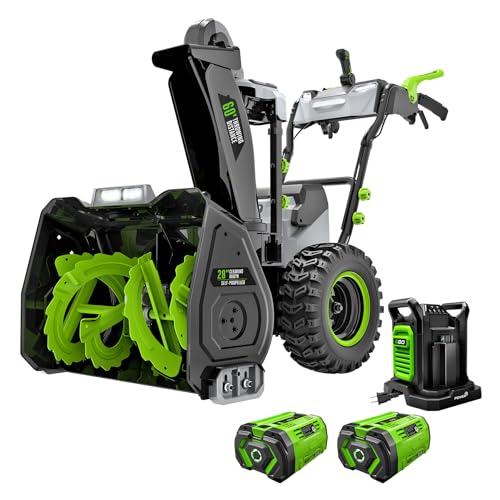 EGO Power+ SNT2807Best overall
 PowerSmart 101010648Wide gas two-stage
 PowerSmart 101010644Smaller gas two-stage
Check the machine and the area first
A few minutes of prep prevents most problems. Read the owner's manual so you know where the throttle, drive control, auger control and chute controls are. Controls differ between brands, and this is the quickest way to feel comfortable on your first use.
Then walk the area you plan to clear. Snow hides doormats, hoses, toys, newspapers, rocks and the edges of landscaping. Any of these can jam the auger or be thrown by it. Move what you can, and mark fixed objects such as curbs or sprinkler heads with stakes so you can steer around them.
- Look over the auger and chute for ice or debris from the last use.
- Check that the controls move freely and that guards and shields are in place.
- Confirm tire condition and that the skid shoes are set for your surface.
- For gas models, check the fuel and oil levels before you start, with the engine off and cool.
- For battery models, check the charge. For corded models, check the cord for cuts or damage.
Wear the right gear and follow the core safety rules
Wear safety glasses or goggles, because snow, ice and small stones can be thrown back at you. Gas models are loud, so add hearing protection. Choose boots with good grip, warm gloves and snug clothing. Loose scarves and dangling drawstrings can catch in moving parts.
The most important rule is simple: never put your hands or feet near the auger or chute while the machine is running. A clog can look harmless, but the parts can still hold tension and move. Keep children and pets well away, and never aim the chute at people, cars or windows.
- Stop the engine or motor and wait for all moving parts to stop before clearing a clog.
- Use the clean-out tool that came with the machine, or a sturdy stick, never your hand.
- Refuel gas models outdoors with the engine off and cool. Never run a gas engine in a closed garage, because exhaust contains carbon monoxide.
- With corded models, use an outdoor-rated extension cord and keep the cord behind you and away from the intake.
- Take extra care on slopes, and do not rush on slick surfaces.
Your first pass, step by step
If this is your first time, practice on a short, flat, open stretch before you tackle the whole driveway. That lets you learn how the machine responds before you are worried about where the snow lands.
- Position the machine on a cleared spot, such as the garage apron, and set the chute to throw downwind or toward an open area.
- Start it. Use the pull cord or push-button electric start on gas models (the PowerSmart models on our page list push-button start), or the key or button on battery models, or plug in a corded unit.
- Set the skid shoes. Lower them for pavement, and raise them a bit on gravel so stones are not picked up and thrown.
- Engage the auger, then the drive on self-propelled models, and walk at a steady pace. Let the machine do the work instead of forcing it.
- Make your first pass along one edge, then turn and overlap the last path by a few inches.
- Adjust the chute as you go so snow always lands where you want it, away from the cleared area.
How the type of snow blower changes the job
The basic technique is the same, but weight, power source and width change how it feels in your hands. Our best snow blower page lists these specs side by side, and the table below uses figures from it.
Gas two-stage models are heavy and self-propelled, so you steer more than you push. The PowerSmart 26 in. gas model, for example, lists 142 lb with 6 forward and 2 reverse speeds. Cordless units avoid fumes and pull-starting. Corded units are light, but you manage a cord the whole time.
| Type (example from our page) | Width | Weight | Throw distance | What to expect |
|---|---|---|---|---|
| Cordless two-stage (EGO Power+ SNT2807) | 28 in | 250 lb | 60 ft | Self-propelled, 200 degree chute, heated grips, no fumes |
| Gas two-stage (PowerSmart 26 in.) | 26 in | 142 lb | 45 ft | Self-propelled, electric start, 180 degree chute |
| Corded electric (Westinghouse WSnow20) | 20 in | 29.3 lb | 25 ft | Light, tied to an outlet, suited to short paths |
| Cordless shovel-style (VOLTASK 24V) | 13 in | 11.9 lb | 23 ft | Very light, best for small walkways and light snow |
Technique for deep, wet or drifted snow
Work in a pattern that keeps throwing snow away from the area you have already cleared. On a rectangular driveway, many people start in the middle and work outward, throwing snow to both sides. On a narrow path, clear in one direction and throw to the downwind side.
If snow is deeper than the intake height, take it in layers. Lift the front slightly or clear the top portion first, then make a second pass at the lower level. Our buying guide notes that a wider path with a taller intake handles deep snow better than a narrow, shallow one, so your machine's intake height is a real limit. Wet, heavy snow is harder on any machine, so slow your walking speed and take narrower bites.
Clear snow soon after it falls when you can. Fresh snow is lighter than snow that has been packed down by cars or refrozen into ice.
Clearing clogs, finishing up and storing
Clogs happen, especially in wet snow. When one does, release the controls, shut off the engine or motor, and wait for the auger to stop completely. On battery models, remove the key or battery if your manual says to. Then use the clean-out tool to knock the snow out of the chute and auger housing.
When you finish, let the machine run for a minute or so with the auger disengaged on models where the manual allows it, so melting snow can clear out. Wipe off moisture, check for damage, and store it dry. Gas owners should follow the manual for fuel and storage at the end of the season, and battery owners should follow the maker's charging and storage guidance.
If you are still choosing a machine, it helps to compare width, intake height and weight before you buy, because those numbers decide how hard the machine is to run and store.
Frequently asked questions
Are snow blowers difficult to use?
Not usually. Corded and cordless models are simple to start and light to handle. Heavy gas models take a little practice with steering, the chute and the drive control, but self-propelled drive does most of the pushing.
Can I use a snow blower on a gravel driveway?
Yes, with care. Raise the skid shoes so the housing sits higher off the surface, and take slower passes. This helps keep stones from being picked up and thrown.
Should I walk fast or slow?
Slow to moderate. A steady pace lets the auger and impeller keep up with the snow. Going too fast is a common cause of clogs and uneven clearing.
Can I leave a snow blower running while I answer the door or move something?
No. Release the controls and shut it off first, especially if you need to go near the chute or intake.
Do I need to warm up a gas model?
Many manuals suggest letting the engine run for a short time after starting in cold weather. Follow the starting steps in your own manual for the exact routine.