How to Use a Self-Propelled Lawn Mower
To use a self-propelled mower, start the engine or motor first, then squeeze the drive bar, lever or handle control to make the wheels pull you forward. Walk at the pace the mower sets, or adjust the speed dial if your model has one. Release the drive control and the mower stops pulling, which also answers whether you can turn self-propel off: on most models you can, and you simply push it like a regular mower.
 EGO Power+ LM2134SP-2Best overall
 Greenworks MO60L427Widest cutting path
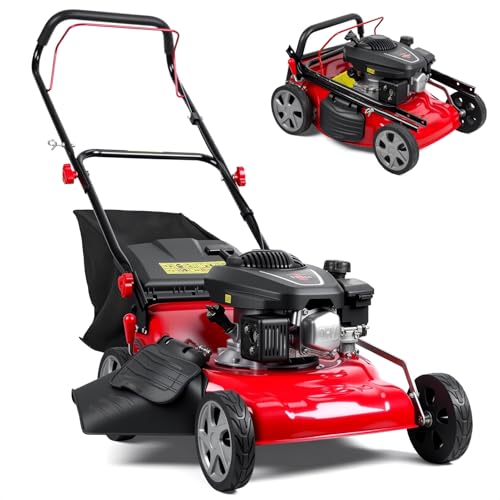 Rodiuiu 6981B6981B8999F706Biggest lawn per tank
Get the mower ready
A few minutes of prep makes the first mow smoother. Read the manual for your exact model, because drive controls differ from brand to brand. Then walk the lawn and pick up sticks, toys, stones, hoses and dog chews. A mower can throw hard objects at high speed.
Set the cutting height before you start. Higher is better for a first pass on tall or dry grass. You can lower it for a second pass later. Many models adjust all four wheels with a single lever, and the number of height positions varies. Among the products on our spec sheet, the lists run from 6 to 8 positions.
Wear closed-toe shoes with good grip, long pants, safety glasses and hearing protection. Gas mowers are loud enough to call for earplugs or earmuffs. Never mow barefoot or in sandals.
Start a battery or gas model
Starting depends on the power source. Battery mowers are simpler, while gas mowers need a few extra checks. In both cases, the self-propel system is separate from the start, so the mower should not drive until you engage it.
- Battery models: insert the charged battery or batteries and make sure they click into place. Hold the safety bar or key as your manual describes, then press the start button. Some models, such as the Skil PWR CORE 40 listing, use a push-button start.
- Gas models: check the oil and fuel before you start. Hold the safety handlebar against the handle and pull the starter cord with a firm, steady motion. Some models skip the choke and primer. The Rodiuiu listing, for example, describes a no-choke, no-primer design.
- Let a gas engine run for a few seconds to settle before you move.
- With the engine running, pull or squeeze the drive control to engage self-propel. Walk forward as the wheels begin to pull.
Control the drive and your speed
Self-propelled drive systems come in a few styles. On many mowers, a bar on the handle is the drive control. Squeeze it toward the handle and the wheels turn. Others use a lever or a grip that senses your hand pressure. The EGO Power+ LM2134SP-2 listing describes a Touch Drive system, where pressure from your palm engages the drive and a dial at your fingertips sets the speed.
Some mowers offer variable speed and some have a single speed. If your mower has one speed, you walk at its pace. If it has a dial, start at the slow end and raise it as you get comfortable. Here is how a few listed models compare:
| Model | Drive details from the listing | Speed |
|---|---|---|
| EGO Power+ LM2134SP-2 | Touch Drive with a speed dial | 0.9 to 3.1 mph |
| Greenworks MO60L427 | Rear-wheel drive, variable speed | 3.5 to 4.5 mph |
| SENIX LSSG-H4 | Rear-wheel drive, single speed | Single speed |
| Skil SM4910C-11 | Variable speed self-propel | Speed range not listed |
Mow with a steady pattern
Walk at a pace where you can keep the mower in a straight line without jogging. If the mower feels like it is dragging you, slow the speed or release the drive for a moment. If you are walking faster than the cut can keep up with, the grass may look ragged.
Mow in straight, slightly overlapping rows. Overlap each pass by a few inches so you do not leave thin strips of uncut grass. Alternate the direction every time you mow, since this helps the grass stand up straighter and keeps ruts from forming.
Wider decks cover more ground per pass, while narrower ones turn more easily around beds and trees. Our cutting widths run from 18 in to 25 in, so match the deck to your yard. If you are still choosing, our best self propelled lawn mower page lines up the published specs side by side.
Turn self-propel off, turn and stop
Can you turn off self-propel? On most mowers, yes. Release the drive bar or lever and the wheels stop pulling, though the blade keeps spinning while the engine or motor runs. You can then push the mower by hand. That is handy in tight corners, when backing up, or when you want to trim close to an obstacle.
To turn, release the drive, then lift or pivot the front slightly if your model is rear-wheel drive. Rear-wheel drive pushes from the back, so the front wheels are free to steer. Take wide, smooth turns rather than sharp pivots, since they put less strain on the drive and are easier on the lawn.
To stop for any reason, such as emptying the bag, clearing a clog or crossing a driveway, release all the controls and wait for the blade to stop completely. Then remove the key or battery, or on a gas model pull the spark plug boot if the manual says to.
Slopes, wet grass and other safety notes
Self-propel helps on hills, but it does not make a steep slope safe. Mow across slopes with a push mower and up and down with a ride-on, unless your manual says otherwise. With a walk-behind self-propelled model, many manuals recommend mowing up and down a slope rather than across it, so check yours. Never mow on wet, slick grass, since you can slip.
Keep hands and feet away from the deck and discharge chute at all times. Never reach under a running mower. Keep children and pets indoors while you mow.
For gas models, refuel only when the engine is off and cool, outdoors and away from flames or sparks. Store fuel in an approved container. Never run a gas mower in a closed garage, since the exhaust contains carbon monoxide.
For battery models, keep batteries and chargers dry. Do not use a damaged battery or charger. If you are thinking about going cordless, our best cordless lawn mower page compares battery specs in one place.
Put it away the right way
Once the blade has stopped, remove the battery or let the engine cool. Brush off clippings from the deck and wheels, and use the washout port if your mower has one. Many models also fold the handle for upright storage in a garage or shed.
Keep the mower dry and store it out of reach of children. Check the blade, the drive cable or controls and the tires every so often, and follow your manual for service.
Frequently asked questions
Why won't my self-propelled mower drive forward?
First check that the engine or motor is running and that you are holding the drive control fully. If it still will not pull, check the manual for the drive cable, belt or control, and stop the mower before you inspect anything.
Do I need to push a self-propelled mower at all?
Not on flat ground. The drive pulls the mower forward, and you steer and set the pace. You will still push it by hand when the drive is off or when you are turning in tight spots.
Can I use self-propel while bagging or mulching?
Usually yes, since the drive works separately from the cutting mode. Self-propel can feel slower to move when the bag is full, so empty it as needed.
Should I walk faster or slower in thick grass?
Slower. A slower pace lets the blade cut cleanly and reduces the chance of clogging. If you can set the speed, lower it. You can also raise the cutting height for the first pass.