How to Use a Pressure Washer for the First Time
Connect the water first, squeeze the trigger until water runs steadily to clear the air, then power the washer on. Start with a wide-angle nozzle, stand a few feet back, and move in even, overlapping passes. Wear eye protection, keep the spray away from people and pets, and switch the machine off before you change nozzles.
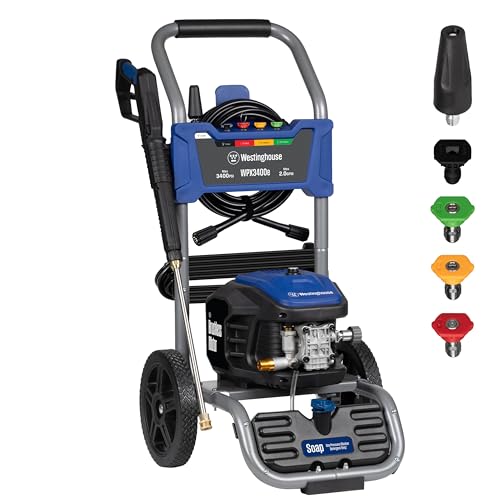 Westinghouse WPX3400eHighest rated PSI
 Westinghouse ePX3500Light with full accessories
 Imdot JX12Top max flow, light body
Check safety and gear before you start
A pressure washer is a tool, not a toy. The water jet can cut skin, and a stream at close range can force water under the skin, which needs a doctor. Never point the wand at anyone, including yourself, and never test the spray with your hand or foot.
Electric models add a shock risk because water and power sit close together. Plug into a GFCI outlet, or use a GFCI cord, and keep plug connections off wet ground. If you need an extension cord, use one rated for outdoor use. The washers on our best power washer for home use page mostly list a 35 ft cord, so you often will not need one.
Gas models need extra care. Run them outdoors only, well away from doors, windows and vents, because the exhaust contains carbon monoxide. Let the engine cool before you refuel, and wear hearing protection.
- Safety glasses or goggles
- Closed-toe shoes with good grip, or boots
- Long pants, since stray spray and debris sting
- Hearing protection for gas models
- Gloves if you will handle detergent
Set up an electric pressure washer, step by step
Set up on level ground close to a water tap and an outlet. Read the manual for your model first, since connection points vary slightly. The order below is what matters most.
- Attach the spray wand to the trigger gun and tighten the fitting by hand.
- Connect the high-pressure hose to the gun, then to the pump outlet. Most home units use quick-connect or M22 fittings, so listen for a click or snug it down.
- Connect a garden hose to the water inlet. Use a hose that can supply enough flow for your machine, and check for leaks.
- Turn the tap on fully. The pump should never run without water.
- Squeeze the trigger, with the washer still off, until water flows steadily. This purges trapped air. Some makers warn that air in the line keeps pressure below spec.
- Plug in, switch on, and test the spray on a patch of ground before aiming at your target.
Pick the right nozzle
Nozzles set the spray angle. A smaller angle focuses the same water into a tighter, harder stream. Beginners do best starting wide and moving narrower only if the dirt will not budge. Many washers on our list ship with four or five quick-connect tips, usually 0°, 15°, 25°, and a soap nozzle, and some add 40°. If you want to compare tips or buy extras, see our best pressure washer nozzle page.
Always release the trigger and switch the machine off before swapping a nozzle.
| Nozzle | Spray | Typical use |
|---|---|---|
| 0° (red) | Narrow pencil jet | Stubborn spots on hard masonry only. Can etch or gouge most surfaces. |
| 15° | Tight fan | Concrete, brick, and heavy grime. |
| 25° | Medium fan | General cleaning on decks, fences, and patio furniture. |
| 40° | Wide fan | Windows, cars, and delicate or painted surfaces. |
| Soap | Low pressure | Applying detergent from the tank or foam cannon. |
How to use detergent
Detergent works best when it sits on the surface for a few minutes, so let the soap do part of the job. Pressure washers apply it at low pressure through the soap nozzle, which is usually the widest and has the largest opening.
Onboard tanks vary. The Westinghouse ePX3500 has a 20 ounce tank, while the Westinghouse WPX3400e has a half gallon tank. Other units, such as the Imdot JX12, list a foam cannon instead, which attaches to the gun and makes thick foam.
- Use a detergent made for pressure washers, and check that it suits your surface. Do not use anything your manual warns against, and never mix cleaners.
- Fill the tank or foam cannon, then fit the soap nozzle.
- On walls and siding, apply from the bottom up so streaks do not form. Leave it for the time on the label, and do not let it dry.
- Switch to a rinse nozzle and rinse from the top down.
- Run clean water through the system afterward to flush leftover soap.
Technique: how to clean without damage
Begin with the wand about two to three feet from the surface and the 25° or 40° nozzle. Move closer slowly only if needed. If you see the surface roughen, fuzz up, or lose paint, back off right away.
Hold the wand at a slight angle rather than straight on, and sweep in steady overlapping strokes. Stopping in one spot leaves marks. Wood is softest, so work with the grain and keep your distance on decks and fences.
For big flat areas like driveways and patios, a surface cleaner attachment gives more even results than a bare wand. Our best pressure washer surface cleaner page compares the options. Hose reach matters too. If you find yourself dragging the washer around, a longer high-pressure hose helps, and our best pressure washer hose page covers that.
Never stand on a ladder with the wand running. The trigger kicks back when you start, and a fall from height is a far bigger risk than a dirty second story. Use an extension wand instead, and clean high areas from the ground.
Electric or gas: what to expect as a beginner
For a first machine, corded electric is simpler. There is no fuel, oil, or pull cord, and most listed models are lighter. On our home-use list the weights run from 16.58 lb to 51.8 lb, so check weight if you need to carry it up steps or into a shed.
Gas units are stronger and can run longer without a cord, which suits large jobs, but they need fuel and engine upkeep. If you lean that way, see our best gas pressure washer page.
When you compare specs, look at rated PSI and rated flow rather than the biggest number on the box. Max PSI is a peak figure, and the Westinghouse WPX3400e shows how the two can differ, with 3400 max PSI against 3000 rated PSI.
Shut down and store it
When you finish, release the trigger and switch the machine off. Turn off the water, then squeeze the trigger to release the pressure left in the hose before you disconnect anything.
Drain the pump and hoses, coil them without sharp kinks, and unplug the cord. Store the washer somewhere that will not freeze, since trapped water can crack the pump. Rinse the soap tank if you used detergent.
Frequently asked questions
Why does my washer pulse or lose pressure at the start?
Usually there is air in the lines or the water supply is too weak. Turn the tap fully on and squeeze the trigger with the machine off until the flow is steady. Also check for a kinked hose or a clogged inlet screen.
Can I wash my car with a pressure washer?
Yes, with care. Use the 40° or soap nozzle, stay well back, and avoid trim, seals, and loose paint. Never use the 0° nozzle on a vehicle.
What does auto stop do?
Auto stop shuts the pump off when you release the trigger and restarts it when you squeeze again. It reduces pump wear and noise. Several washers on our list include it, including the Westinghouse models and the Imdot JX12.
Do I need to wear anything special?
Eye protection and closed-toe shoes are the minimum. Add hearing protection for gas engines and gloves if you handle detergent.