How to Use a Power Lawn Edger Step by Step
To use a power lawn edger, put on eye and hearing protection, clear the border, set a shallow depth, then walk the blade along a guide line at a slow, steady pace. Make a first pass, check the trench, and deepen only if you need to. Always keep the blade guard in place and let the tool cut without forcing it.
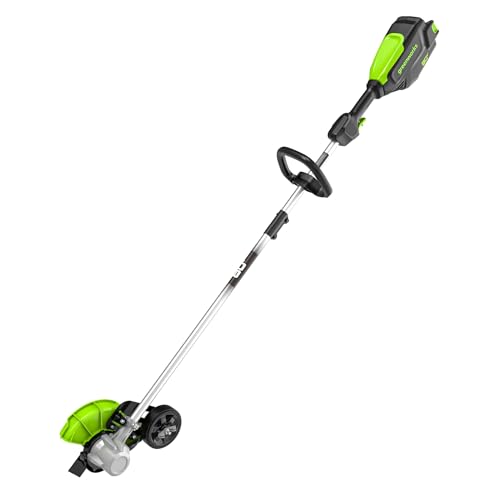 Greenworks ED80L02Deepest cut, most settings
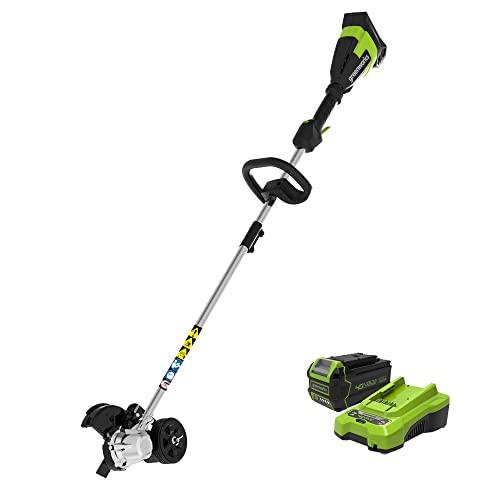 Greenworks ED40L410Battery and charger included
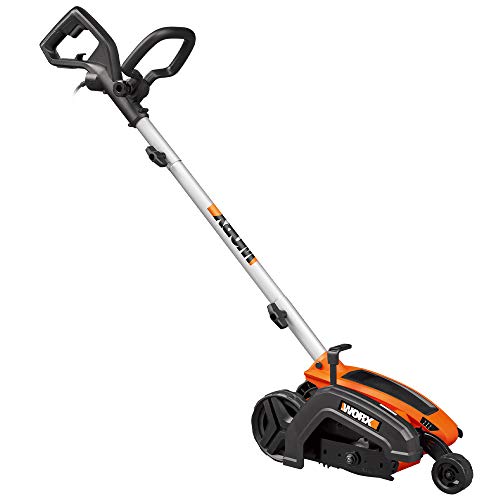 WORX WG896Corded with trenching mode
Get ready before you edge
Good edging starts before you press the trigger. Walk the whole border first and pick up sticks, stones, toys, wire and sprinkler parts. A spinning blade can throw small debris, so a clear path protects you and the tool.
Check the lawn, too. Edging works best when the soil is slightly moist but not muddy. Bone-dry, compacted soil makes the blade bounce and wander, while soggy soil clogs the guard and tears the turf. If you plan to cut a new border, mark the line first with a garden hose or a string stretched between stakes.
Before cutting a new trench, find out where buried lines run. In the US you can call 811 to have utility lines marked, and sprinkler lines and low-voltage lighting cable are worth tracing yourself. Most edgers cut only a couple of inches deep, but shallow cables and irrigation pipes do exist.
Wear the right gear
Edgers are small, but they throw grit and make real noise. Dress for the job, not for the heat.
Safety note: never edge barefoot or in sandals, and never remove or prop open the blade guard.
- Safety glasses or goggles that fit snugly, to block flying dirt and stones
- Hearing protection, especially for gas or corded models used for a long session
- Sturdy closed-toe shoes with good grip
- Long pants, so debris does not hit bare legs
- Work gloves for a better grip and less vibration on your hands
Set up your edger
Set up depends on the power source. A corded edger needs an outlet and an extension cord rated for outdoor use. For example, the WORX WG896 has a built-in 1 ft power cord and requires an extension cord. Keep the cord behind you and over the already-edged side so you never cut it.
A battery edger moves freely, but check what is in the box. Some models ship without a battery or charger, so charge a compatible battery before you start. Our best lawn edger page shows which models include one and which do not.
Next, adjust the shaft and handle so the tool sits comfortably at your natural stance. Some models, such as the WORX WG896, have an adjustable shaft and D-grip handle. If your edger has tool-free depth adjustment, set the depth now. Start at the shallowest setting you will need. You can always go deeper on a second pass, but you cannot put soil back.
Edge step by step
Follow these steps the first time you edge a border. Slow and steady beats fast and uneven.
Do each step in order, and stop the blade completely before you move the tool to a new spot.
- Pick your starting point at one end of the border, such as the corner of a driveway or the start of a walkway.
- Set the depth to a shallow position and make sure the blade guard is secure.
- Plant your feet, keep both hands on the handles, and hold the edger so the blade is lifted slightly off the ground.
- Start the motor. Many models use a two-step start or safety lock to prevent accidental starts, so follow your manual.
- Wait for the blade to reach full speed, then lower it into the soil along your guide line.
- Walk forward at a slow, steady pace. Let the blade do the work and do not push hard.
- Follow the cutting line indicator or edge guide if your model has one, and keep your eyes a few feet ahead, not on the blade.
- Release the trigger at the end of the run and wait for the blade to stop before lifting the tool.
- Look at the trench. If the edge is not crisp, raise the depth one setting and go over it again.
Handling curves, curbs and tough spots
Straight runs are easy. Curves take a lighter touch. Slow down, make wide, smooth arcs, and move the edger a few inches at a time instead of forcing a tight turn. A lighter tool is easier to steer here. The WORX 20V 7in edger weighs 7.06 lb without its battery, while the corded WORX WG896 is listed at 14 lb.
Along a driveway or sidewalk, a curb wheel helps you track straight. The Greenworks 80V 8in and Greenworks 40V 8in models both list a curb wheel. Run the wheel against the hard edge and keep the blade tracking steadily beside it.
If the blade bogs down in hard or root-filled soil, back off. Raise the depth, lift the tool, and try again. Forcing the blade can stall the motor, damage the blade and kick the tool sideways. If you hit a stone or root, stop the motor and check the blade before continuing.
When you finish, sweep or blow clippings and dirt off the hard surface. If the soil and grass left behind make the driveway look dull, our best power washer for home use page can help you pick a tool to clean it.
What differs by edger type
The steps above apply to most power edgers, but the details change by model. This table uses published specs for the models on our comparison page.
Depth matters most. Deeper cuts leave a sharper border, but only go as deep as your soil and design need.
| Model | Power | Blade | Max depth | Depth settings | Weight |
|---|---|---|---|---|---|
| Greenworks 80V 8in | Battery (not included) | 8 in | 2.25 in | 5 | 10.3 lb |
| Greenworks 40V 8in | Battery (included) | 8 in | Not listed | Not listed | 11.9 lb |
| WORX WG896 | Corded electric | 7.5 in | 1.5 in | 3 | 14 lb |
| WORX 20V 7in | Battery (not included) | 7 in | 2 in | 3 | 7.06 lb |
| worksky cordless | Battery (not included) | 9 in | 1.75 in | 3 | 7.2 lb |
Finish up and care for the tool
When you are done, turn off the motor and let the blade stop. Then remove the battery or unplug the cord before touching the blade. Never clear grass or dirt from the blade while the tool is connected to power.
Wipe off dirt and wet grass, check the blade for chips or bending, and store the edger dry. A dull or damaged blade tears the grass instead of cutting it, so follow your manual for replacement. Rake the cut sod and soil into a pile and dispose of it, or add it to a compost pile or low spot.
Edging once or twice a season keeps borders sharp. Re-cut lightly whenever grass starts creeping over the line. Regular, shallow passes are easier than one deep cut after months of growth.
Frequently asked questions
Should I edge before or after mowing?
Many people mow first, then edge, because the shorter grass makes the line easy to see. Others edge first and mow after. Either order works. Just make sure to clear clippings from walkways when you finish.
Can I use a lawn edger on wet grass?
It is better to wait. Wet grass clumps in the guard and the ground gets slippery, which raises the chance of slipping. Slightly damp soil is fine, but avoid standing water and, with corded tools, any wet conditions near cords.
How often should I edge my lawn?
Edge when the grass starts to spill over the border, which is often every few weeks in the growing season. Once a clean trench is established, light maintenance passes are quick and need very little depth.
What is trenching mode on an edger?
Trenching mode lets the blade cut a wider or deeper groove, useful for garden beds or for making a channel for edging material. The WORX WG896 and WORX 20V 7in both list a trenching mode.