How to Use a Pole Saw With Rope, Step by Step
Extend the pole to the height you need, hook the head over the branch from a safe spot outside the drop zone, then work the saw or pull the rope in steady strokes. Keep the pole angled away from your body, wear eye and head protection, and stay far from power lines. Cut small and medium limbs first, and leave anything too thick or too close to wires to a professional.
 Craft911 PS-11Best overall
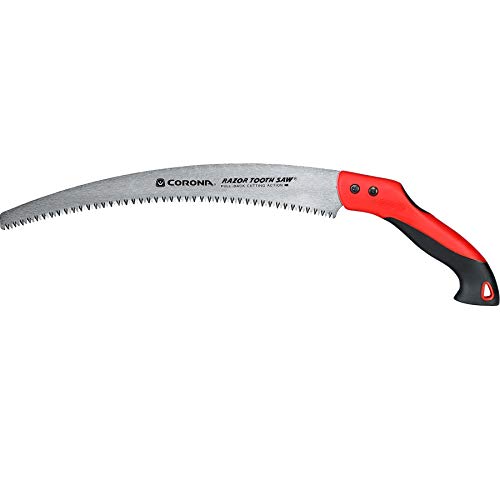 Corona Clipper RS 7395Longest blade, highest limit
 REXBETI REX025Rubber-coated folding grip
What the rope actually does
A rope pole saw is a manual tool. It has a telescoping pole, a head with a curved saw blade, and usually a rope that runs down the pole to a cutting blade or lever. On many models the rope drives a lopper-style blade for thin twigs, while the fixed saw handles thicker wood. Designs vary, so read the manual that came with yours before the first cut.
The rope gives you leverage from the ground. Instead of pushing a blade upward at an awkward angle, you pull down and let the head do the work. That keeps your arms lower and your body out from under the branch.
Before you start: safety and setup
Most pole saw injuries come from falling branches, not from the blade. Take a few minutes to set up the area before you lift the pole.
Never use a pole saw near power lines. Metal, wet wood and even dry fiberglass poles can be dangerous around electricity. Stay well back from any line and call the utility company or a certified arborist if a branch is close to one.
- Wear safety glasses or goggles, a hard hat and sturdy gloves. Sawdust and bark fall straight toward your face.
- Wear closed-toe shoes with good grip, and check that the ground is firm and level.
- Clear the area below the branch of people, pets, cars and breakable items.
- Plan an escape path at a 45 degree angle away from the branch, not straight back.
- Check the head, blade and rope for cracks, fraying or loose bolts.
- Skip the job in wind, rain or poor light.
Step by step: making the cut
Follow these steps for a branch you can safely reach from the ground. Work slowly. A pole magnifies every small movement at the tip.
- Extend the pole. Open the locking collars one at a time and slide out only as much length as you need. Lock each one firmly, then tug on it to confirm it holds. A shorter pole is easier to control.
- Find the branch collar. Look for the slightly swollen ring where the branch meets the trunk or a larger limb. Plan your final cut just outside it, not flush with the trunk.
- Position yourself. Stand to the side of the branch, not directly under it. Hold the pole with both hands, one near the base and one a bit higher, and keep the tip angled away from your face.
- Hook the head over the branch. Lift the head until the blade sits against the wood at your cut point. Let the hook or guide rest on the branch so the blade does not skate sideways.
- Start a shallow groove. Make one or two short strokes to seat the teeth. A curved blade with triple-cut teeth cuts on the pull stroke, so pull firmly and use a lighter return stroke.
- Use steady strokes. Let the blade do the cutting. Pushing hard bends the pole and makes the blade bind. If your saw has a rope-operated blade, give the rope smooth, full pulls rather than quick jerks.
- Watch the branch. As the cut deepens, ease off. When the limb starts to sag or crack, step back along your planned path and let it fall.
- Lower the pole. Bring the head down before you walk around or check the cut.
Cutting thicker branches: the three-cut method
A long, heavy limb can tear a strip of bark down the trunk as it falls. The three-cut method prevents that damage and keeps the branch from pinching your blade.
Start with an undercut about a foot out from the trunk, cutting a third of the way up from the bottom. Next, make a top cut a little farther out so the limb breaks away and drops. Finally, remove the remaining stub just outside the branch collar. If the branch is thicker than your saw is meant to handle, stop. Do not force it.
Troubleshooting common problems
Most problems have a simple cause. This table covers the ones you are likely to see.
| Problem | Likely cause | What to try |
|---|---|---|
| Blade skips or slides | Not seated in the wood | Make a shallow starter groove and keep the hook against the branch |
| Blade binds in the cut | Branch is pinching shut | Stop, make a relief cut on the other side, or use the three-cut method |
| Rope will not pull smoothly | Tangled rope or a stuck pulley | Lower the pole, untangle the rope and check the pulley for debris |
| Pole bends or wobbles | Extended too far | Shorten the pole and move closer to the branch |
| Slow, ragged cutting | Dull or dirty blade | Clean off sap and replace or sharpen the blade as the maker directs |
Care, and when a hand saw is the better choice
After each job, wipe sap off the blade with a rag and a little solvent, dry it, and store the saw with the blade covered. Check that the pole sections slide freely and that the rope is not worn. A clean, sharp blade needs less force, which means fewer slips.
A pole saw is for branches you cannot reach safely by hand. If the limb is within reach from the ground or a stable stepladder, a hand pruning saw gives you more control for less effort. Our best pruning saw comparison lists blade lengths, tooth types and weights side by side.
If you cut a mix of high and low branches, it can help to own both. Longer blades make fuller strokes and clear thicker limbs in fewer passes, which is worth comparing on the pruning saw page before you decide. Whatever you choose, never climb a ladder with a pole saw in your hands. Work from the ground, or hire a professional for jobs that call for height.
Frequently asked questions
Can I use a pole saw with rope on wet branches?
You can, but wet wood is slippery and the blade may skip. Wait for dry conditions if you can, and never work in rain or around anything electrical.
How high should I extend the pole?
Extend it only as far as the job needs. A shorter pole gives you better control and puts less strain on the locking collars.
Should I cut flush with the trunk?
No. Cut just outside the branch collar, the slight ridge at the base of the limb. This helps the tree seal the wound.
Is it better to pull or push the blade?
Many curved pruning blades are built to cut on the pull stroke. Pull with steady pressure and keep the return stroke light.