How to Use a Mechanic Tool Set for Car Repairs
Use a mechanic tool set by matching the socket to the fastener, choosing the drive size that fits the job, and pulling steadily on a well-seated ratchet or wrench. Support the car properly, wear eye protection, and keep the right size within reach so you never force a poor fit. A full set with 1/4, 3/8 and 1/2 in drives covers most routine repairs.
 DEWALT DWMT75049Best overall
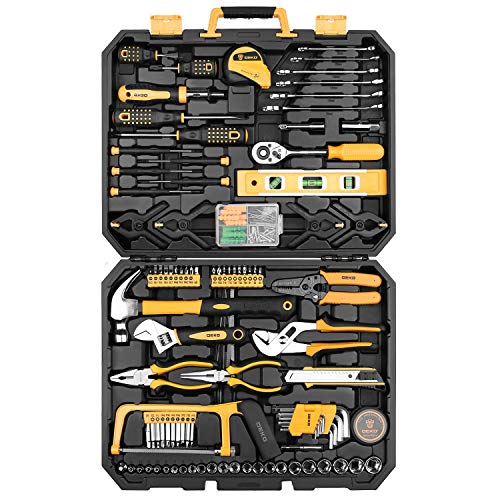 DEKOPRO ET00654
 DEKOPRO DKMHTK094BMC-OrangeBasic home kit
Start by Reading the Fastener
Most trouble with a mechanic tool set comes from using the wrong size. Before you reach for a ratchet, look at the bolt head and decide whether it is metric or SAE. Most modern cars use metric fasteners, while some older and American vehicles use SAE. A set with both gives you room to switch without a trip to the store.
If a socket slips on easily with a little play, it is probably close but not right. Try the next size up or down. A socket that fits snugly with no rocking is the one to use. Forcing a nearly right size is how bolt heads get rounded.
Also check whether the bolt sits on a flat surface or deep on a stud. Shallow sockets suit open bolts. Deep sockets reach a nut on a long threaded stud, such as some wheel studs and exhaust hardware.
Pick the Right Drive Size
The drive size is the square opening on the ratchet that holds the socket. A full mechanics set has 1/4, 3/8 and 1/2 in drives, and each one has a job. Small sets that focus on 1/4 in will not handle large bolts, so know what you plan to work on before you rely on one.
Our best tool set for mechanics page compares sets that cover all three drives, and the table below shows how the sizes are typically used.
| Drive size | Typical car jobs | Why it fits |
|---|---|---|
| 1/4 in | Interior trim, sensors, small engine bay bolts | Compact head and light turning force for small fasteners |
| 3/8 in | Brackets, covers, general engine and brake work | A middle ground for most everyday repairs |
| 1/2 in | Suspension bolts, lug nuts, large crankshaft or axle hardware | Handles the higher turning force big fasteners need |
Step-by-Step: Loosening and Tightening a Bolt
Here is a simple routine that works for most fasteners on a car.
- Clean the bolt head with a brush or rag so dirt does not stop the socket from seating fully.
- Choose a 6-point socket when you can. It grips the flats of the head and reduces the risk of rounding, compared with a 12-point socket.
- Push the socket all the way onto the fastener before you apply any force.
- Attach the ratchet and check the direction switch. Righty-tighty, lefty-loosey applies to nearly all bolts.
- Pull toward you with steady pressure rather than jerking. Keep your body out of the path of a sudden slip.
- Use an extension bar when a bolt is recessed or blocked, and keep the ratchet square to the fastener so the socket does not tilt.
Work in Tight Spaces
Engine bays and dash areas leave little room to swing a tool. A fine-tooth ratchet helps here. A 72-tooth ratchet needs only a 5 degree swing to engage the next tooth, so you can keep turning in a cramped spot where a coarse ratchet would hit a hose or bracket.
Extensions, adapters and wrenches fill the gaps. Combination wrenches reach bolts that a ratchet head cannot clear, and hex keys handle the socket-head screws common on calipers and some covers. Keep these within reach before you start, so you are not hunting through the case with greasy hands.
Safety Before You Start
Car repair has real hazards, and a few habits prevent most injuries. Put the vehicle on level ground and set the parking brake. If you need to lift it, use jack stands rated for the weight. Never rely on a jack alone, and never work under a car held only by a jack.
Wear safety glasses, because rust flakes, fluid and sudden tool slips can send debris toward your eyes. Gloves protect your hands from sharp edges and hot parts. Let the engine and exhaust cool before you touch them.
For any job near the battery or wiring, disconnect the negative terminal first to avoid shorts and sparks. If you are working with fuel lines or anywhere fuel vapor may collect, keep open flames and sparks away and work in a ventilated space. If a repair involves airbags, brake systems or other safety-critical parts, follow the vehicle's service manual and stop if you are unsure.
Choosing and Caring for Your Set
Size and weight matter if you will move the set often. The sets on our comparison page range from 57 to 205 pieces and from 7.25 to 39.19 lb. The 192-piece DEWALT set weighs 39.19 lb, so it suits a garage shelf or rolling cart. The 57-piece CRAFTSMAN set is the lightest at 7.25 lb and easier to carry, though it focuses on a 1/4 in drive.
Piece count alone does not make a set better. What matters is whether it has the sizes and drives your car needs. If you mostly do oil changes, brake jobs and basic maintenance, you may not need the largest set. If you want fewer limits, our best socket set for mechanic comparison is a useful place to look at socket coverage in more detail.
A few care habits keep tools working well:
- Wipe oil and grime off each piece after use.
- Return every socket to its slot so a missing size shows up right away.
- Keep the case dry, since moisture speeds up corrosion even on finished steel.
- Do not use a ratchet as a hammer, and do not slip a pipe over the handle for extra leverage.
When a Tool Set Is Not Enough
A mechanic tool set handles the physical work of turning fasteners. It does not tell you why a warning light is on. For that you need a scan tool that reads trouble codes from the car's computer. Our best professional car diagnostic tool page compares options, and pairing one with a good set lets you find the problem and then fix it.
You may also want a torque wrench for fasteners that have a specified tightness, such as wheel lugs and some engine parts. A basic socket set does not control how tight you go, so check your service manual for torque values and use the right tool.
Frequently asked questions
Do I need both SAE and metric sockets?
Not always, but it helps. Most modern cars are metric, while some older or American vehicles use SAE. A set with both covers more cars and saves you from stopping mid-job.
What should I do if a bolt head starts to round?
Stop and switch to a better-fitting 6-point socket or a combination wrench. Soak a stuck fastener with penetrating oil and let it sit. Forcing it will usually make the rounding worse.
Is a bigger set always better for car repairs?
No. Extra pieces only help if they fill gaps in your needs. Check the drive sizes, the sockets in both measuring systems and the case quality before you worry about piece count.
How do I tell which direction the ratchet will turn?
Look for the small switch or lever on the ratchet head. Its position sets whether the ratchet turns the fastener in one direction or the other. Test it with a light turn before you apply real force.