How to Use a Jigsaw Without a Table
You don't need a table to use a jigsaw. You need a stable surface that holds the workpiece firmly and leaves open space under the blade, such as a pair of sawhorses, a workbench edge or a sheet of rigid foam on the floor. Clamp the material down, keep the cut line over open air, and let the blade stop completely before you lift the saw.
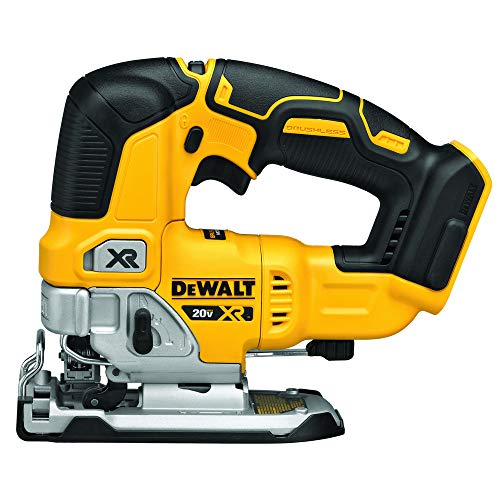 DEWALT DCS334BBest overall
 FLEX FX2231-ZFastest with long stroke
 DEKOPRO JigsawBest corded value
What a jigsaw actually needs
A jigsaw is a handheld saw. The tool itself never sits in a table, so the real question is how to support the wood. Your setup has to do three things: hold the workpiece still, let the blade pass fully through the material, and keep the offcut from pinching the blade or dropping early.
Many people think they need a bench with a slot in it. You don't. Any setup that meets those three goals works, and most of them can be built from things you already have in a garage or driveway.
Choose a support that fits the job
The best support depends on the size of the piece and where the cut sits. Here is a quick comparison of the common options.
| Support | Best for | Watch out for |
|---|---|---|
| Two sawhorses | Long boards and full sheets of plywood | Keep the blade path between the horses, not over a rail |
| Workbench edge | Small to medium pieces, cuts near an edge | Clamp the piece so the cut hangs past the bench |
| Foam board on the floor | Large sheets and quick rough cuts | Blade will cut into the foam, which is fine, but never cut into concrete |
| Scrap 2x4s on the ground | Heavy panels and wide cutouts | Space the strips so the blade falls between them |
| Folding work stand | Jobs that move around a yard or a room | Check that it is level and does not rock |
Set up the workpiece step by step
Whatever support you choose, the setup routine is the same. Take a few minutes here and the cut itself gets much easier.
- Mark your cut line clearly with a pencil. Put painter's tape over the line if the wood tends to splinter.
- Lay the workpiece across the supports so the line sits over open space, with room for the blade to travel below the material.
- Clamp the piece to the support with at least two clamps. Place them so they stay clear of the saw's path and the saw's base plate.
- Check where the offcut will fall. For a big piece, support it with a third sawhorse or a block so it does not snap off and tear the edge.
- Make sure the cord, or your battery pack and hand, stays out of the line of the blade.
Make the cut
Set the saw's base plate flat on the wood, with the blade just clear of the edge or the pilot hole. Squeeze the trigger and let the blade reach full speed before it touches the material. Starting with the blade in contact can make the saw jump.
Guide the saw forward steadily and let the blade do the work. Pushing hard bends the blade and sends the cut off the line. If the saw bogs down, back off and slow your feed rate instead of forcing it.
For inside cutouts, drill a hole inside the waste area first, large enough for the blade. Start the saw outside the hole, then lower the blade into it and follow the line. Always keep both hands on the saw and your eyes on the line, not the blade.
Pick settings and features that help
Without a table, your own hands do the steadying, so saw features matter more. Our best jigsaw for woodworking page lists the specs worth comparing, including orbital settings, variable speed, LED lights and dust control.
Orbital action is a good place to start. Use a higher setting for fast, rough cuts in softwood and a low or zero setting for clean curves and plywood. Variable speed lets you slow down on tight curves, which is when a handheld saw is most likely to wander.
Weight matters when you work overhead or at an awkward angle. In our data, the RIDGID R86345B weighs 4.2 lb and has a dust blower, while the DEWALT DCS334B weighs 5.07 lb and has an LED light and four orbital settings. A dust blower or vacuum port keeps the pencil line visible, and an LED helps in a dim garage.
Cordless or corded is a practical choice here. A cordless saw is easier to move around a large panel on sawhorses because you have no cord to snag. A corded saw gives steady power for long sessions. You can see how specific models stack up on the jigsaw comparison page.
Safety notes you should not skip
A jigsaw is smaller than a circular saw, but it can still cause injuries. Treat it with the same respect.
Wear safety glasses every time, since chips and broken blade pieces fly. Wear hearing protection for long cuts, and a dust mask when cutting plywood, MDF or treated lumber. Keep fingers well clear of the area under the base plate.
Unplug a corded saw or remove the battery from a cordless one before you change a blade or adjust the bevel. A used blade can be hot, so let it cool or use a tool that ejects the blade. Never set the saw down while the blade is still moving, and never carry it with your finger on the trigger.
If you are working outdoors, keep the power cord dry and out of the cut path. If you work from a ladder or a raised surface, do not cut at arm's length. Move the workpiece down to a stable height instead.
Common mistakes to avoid
Most problems come from poor support, not from the saw. Cutting over a surface you care about will chew it up. Clamps that sit in the blade's path will either get cut or stop you halfway through the line.
Another frequent issue is cutting a piece that is not supported on both sides of the line. The offcut drops, the kerf closes on the blade and the saw kicks. A third support, or a small block under the offcut, prevents this.
Finally, remember that a jigsaw blade cuts on the upstroke in most settings, so the top face can splinter. Mark and cut with the good face down if the finish matters.
Frequently asked questions
Can I use a jigsaw on the floor?
Yes, if you place a sheet of rigid foam or scrap boards under the workpiece and clamp it. Never cut over concrete or tile, because the blade will break or the saw will kick.
Do I need a special blade to cut without a table?
No. Choose the blade for the material, such as a fine-tooth blade for plywood or a coarser one for softwood. The work surface does not change the blade type.
How many clamps should I use?
Use at least two, placed on opposite ends of the workpiece. For long cuts, move a clamp as you go so the piece never shifts under the saw.
Is a cordless jigsaw better when you have no table?
It can be, because there is no cord to catch while you move around a panel. Corded saws are still fine if you keep the cord behind you and clear of the cut.