How to Use a Jigsaw for Woodworking Furniture
Mark your line, clamp the board so the cut sits clear of the bench, and match the blade and orbital setting to the wood. Let the blade do the cutting while the shoe rides flat on the surface, and stay slightly outside the line so you can sand or plane to it. A jigsaw is best for curves, cutouts and rough shaping, not for joints that must be perfectly square.
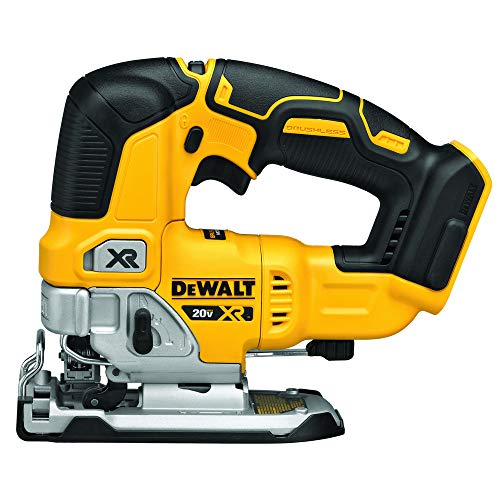 DEWALT DCS334BBest overall
 FLEX FX2231-ZFastest with long stroke
 DEKOPRO JigsawBest corded value
What a jigsaw does well in furniture making
A jigsaw cuts with a thin blade that moves up and down, which lets it turn tight corners that a circular saw or table saw cannot. In furniture work that means curved table aprons, shaped chair parts, scrolled legs, handle cutouts and the openings for sinks or cable pass-throughs in desks and cabinets.
It also handles quick crosscuts in plywood and other sheet goods when you need to break a large panel down before final trimming. What it does not do well is produce a flawless square edge. Treat the jigsaw as a shaping tool: cut close to the line, then refine the edge with a plane, rasp, sander or router.
Choose the blade, orbit and speed
Most problems with jigsaw cuts come from a mismatched blade or a setting that is too aggressive. Blades are sold by tooth count and shape. Fewer, larger teeth cut fast but leave a rough edge. More, finer teeth cut slower and leave a cleaner surface.
Orbital action swings the blade forward on each upstroke so it bites harder. That speeds up cutting in softwood but tears more of the surface. Our best jigsaw for woodworking page explains the trade-off: use high orbit for rough cuts in softwood and low or zero orbit for clean curves and plywood. The table below turns that into a quick guide.
| Job | Orbital setting | Speed | Blade choice |
|---|---|---|---|
| Rough cut in softwood | High | Fast | Coarser, wider blade |
| Clean curve in hardwood | Low or zero | Medium, then slow in tight turns | Fine-tooth, narrow blade |
| Plywood panel for a cabinet | Low or zero | Medium | Fine-tooth blade, ideally with a clean-cut tooth design |
| Tight scroll cut | Zero | Slow to medium | Narrow scrolling blade |
| Thick hardwood, straight section | Low to medium | Medium, steady feed | Sharp, stiff blade |
Prepare and secure the workpiece
Good prep takes a few minutes and saves a ruined board. Draw your line with a sharp pencil, and for fine veneered plywood, put painter's tape over the line and mark on the tape. The tape helps reduce chipping on the top face.
Clamp the board firmly to a bench or a pair of sawhorses so the section you are cutting hangs past the edge. The blade must have clear space below it, otherwise it will cut into your bench or bounce the board. If the offcut will fall away and pinch the blade near the end of the cut, support it with your free hand or a second clamp.
Step-by-step: making the cut
Follow this sequence for a smooth, controlled cut on most furniture parts.
- Fit the blade fully into the clamp with the teeth pointing forward, then give it a tug to confirm it is locked.
- Set the orbital dial and speed for the material, using the table above as a starting point.
- Rest the front of the shoe flat on the board with the blade clear of the wood. Never start the saw with the blade pressed against the work.
- Squeeze the trigger and let the blade reach full speed before it touches the line.
- Feed the saw forward steadily and let the blade cut. Pushing hard bends the blade, so the cut drifts out of square.
- Cut about 1/16 in outside the line when you can, then trim back to the line with a sander or plane.
- Slow down in tight turns. If the blade binds, release the trigger, wait for it to stop and back out gently.
- Let the blade stop completely before lifting the saw from the board.
Common furniture cuts
Curves: Look ahead of the blade, not at it. Make gentle sweeping turns and let the saw follow your hand. For tight inside curves, make relief cuts through the waste toward the line so offcuts fall away and the blade does not bind.
Inside cutouts: Drill a hole inside the waste area large enough for the blade, then start the cut from there. Some jigsaws can also make a plunge cut by tilting the saw forward and lowering the blade into the wood at speed, but that takes practice. Try it on scrap first.
Bevels: Angled edges are useful for tabletops and decorative panels. Many saws have a shoe that tilts, and several on our comparison list reach 45 degrees. Always make a test cut on scrap and check the angle with a square or bevel gauge before cutting the real part.
Straight cuts: A clamped straightedge or the saw's parallel guide keeps the shoe running true. This is fine for rough sizing, but use a table saw, track saw or circular saw for edges that become joints.
Features that make furniture cuts easier
A saw that is comfortable and easy to see around helps more than raw power. The DEWALT DCS334B on our list offers 4 orbital settings, a 45 degree bevel, an LED light, variable speed and an integrated dust blower, and it weighs 5.07 lb. The RIDGID R86345B is lighter at 4.2 lb and adds a 1 in stroke, up to 3,000 SPM, a dust blowing switch and vacuum attachment compatibility.
If you prefer a top-handle design with a lot of control, the Bosch JS470E is a corded saw with a 1 in stroke, a speed range of 500 to 3,100 SPM and a blade ejection lever so you do not touch a hot blade. Weight, stroke and speed ranges are listed side by side on the jigsaw comparison page, which makes it easier to match a saw to the kind of furniture you build.
Cordless saws are easier to move around large panels, while corded saws give steady power at the bench. Pick whichever suits your shop and the batteries you already own.
Safety notes
A jigsaw is smaller than most saws, but it can still cause cuts, kickback and flying chips. Build a few habits before you start.
- Wear safety glasses, and use hearing protection for long sessions.
- Wear a dust mask or connect a vacuum, since sawdust from hardwoods and sheet goods can irritate lungs.
- Keep both hands and loose sleeves away from the blade, and never reach under the workpiece while the saw runs.
- Unplug a corded saw or remove the battery before changing blades.
- Let a used blade cool before touching it, since it can get hot.
- Make sure the cord is clear of the cutting path.
Frequently asked questions
Why does my jigsaw blade wander off the line?
The usual causes are a dull or bent blade, too much feed pressure and a blade that is too wide for the curve. Switch to a sharp, narrow blade, slow your feed and let the saw cut without forcing it.
How do I stop splintering on the top face of plywood?
Use a fine-tooth blade, a low or zero orbital setting and tape over the cut line. A slower feed also helps. If the veneer is delicate, cut with the good face down.
Can a jigsaw cut thick hardwood for furniture legs?
Yes, but cut slowly and use a sharp blade made for the job. Thick stock makes the blade flex, so consider cutting from both faces or roughing the shape with the saw and finishing with other tools.
Should I use a jigsaw or a band saw for curves?
A band saw usually gives a straighter, smoother cut in thick stock, but a jigsaw is portable and handles cutouts and large panels that do not fit on a band saw table.