How to Use a Hedge Trimmer Safely and Correctly
Wear eye, hand and hearing protection, inspect the trimmer, and keep both hands on it whenever the blades move. Cut with the blade tilted slightly, in smooth sweeping passes, and never trim above shoulder height or from a ladder. Corded, cordless and gas trimmers all cut the same way, but each has its own power and fuel precautions.
 EGO Power+ HT2601Best overall
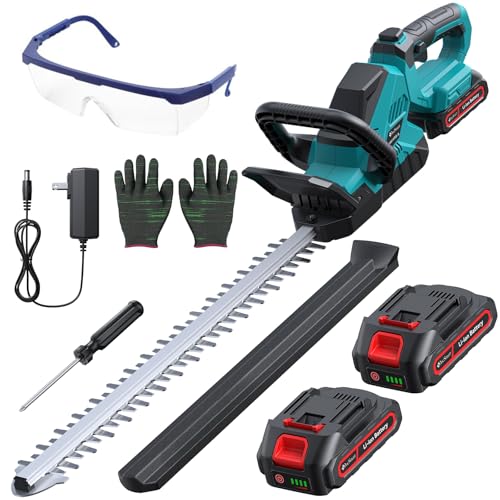 DocSmart HT02-BLongest listed runtime
 BLACK+DECKER BEHT150Corded and lightweight
Get your gear and your work area ready
A hedge trimmer cuts fast, and the blades can injure you in a fraction of a second. Good preparation prevents most accidents, so start before you touch the switch.
Wear the right protective gear, then walk the area. Look for hidden hazards inside the hedge, such as wire fencing, bird nests, garden stakes and irrigation lines. Remove anything that could jam the blades or fly out. Keep children and pets well away from the work zone.
- Safety glasses or goggles to stop wood chips and leaf bits
- Sturdy gloves with a good grip
- Hearing protection, especially with a gas trimmer
- Long pants and closed-toe shoes with non-slip soles
- Long sleeves to protect against scratches
Inspect the trimmer before every use
Take two minutes to check the tool each time. Look for cracked housings, loose handles, bent or chipped blades and damaged guards. A dull or damaged blade tears branches instead of cutting them, which leaves a ragged hedge and makes the trimmer work harder.
Make sure the blade guard and any safety lock are in working order. Some listings describe a safety lock that prevents accidental starts, and others mention safety baffles that stop clippings from spraying back. Those features are helpful, but they do not replace careful handling.
If anything looks wrong, do not use the trimmer. Repair or replace damaged parts first.
Start it up: corded, cordless or gas
How you power up depends on the type of trimmer. Our best hedge trimmer page compares corded and cordless models by their specifications. Gas models are not listed there, but many people still use them, so the table below covers all three.
Whatever the type, start the trimmer on the ground or with it held firmly, with the blade pointed away from your body, your legs and anything else. Never carry a running trimmer or set it down while the blades are moving.
| Power source | Before you start | Key safety point |
|---|---|---|
| Corded electric | Check the cord for cuts and use an outdoor-rated extension cord | Keep the cord behind you and away from the blades; use a GFCI-protected outlet |
| Cordless battery | Confirm the battery is charged and seated firmly | Remove the battery before clearing jams, cleaning or changing anything on the blades |
| Gas | Mix fuel as the manual directs and fuel on level ground | Refuel only when the engine is cool, outdoors, away from sparks; the muffler stays hot |
Hold it and cut step by step
Good technique protects you and gives a cleaner hedge. Most trimmers have a two-hand control system, so keep a firm grip on both handles and stand with your feet shoulder-width apart. Stay balanced and avoid leaning or overreaching.
Follow these steps for a reliable result:
- Start with the sides. Work from the bottom up, with the blade tilted slightly away from the hedge so the top ends up a little narrower than the base.
- Use smooth, sweeping arcs. Let the blade do the cutting and do not force it into thick growth.
- Trim the top last. Keep the blade flat and work in one direction. A string line stretched between two stakes helps if you want a level top.
- Cut small amounts at a time. You can always trim more, but you cannot put a branch back.
- Stop and switch off before you reach into the hedge or free a jammed branch. Wait for the blades to stop fully.
Match the job to the trimmer's limits
Every trimmer has a stated cutting capacity, and pushing past it can stall the blades or cause kickback. On our ranked page, branch capacity runs from 0.625 in to 1.2 in. A 0.625 in model suits soft new growth, while older, woody stems call for a capacity of 1 in or more. Anything thicker than the rated limit belongs to loppers or a pruning saw.
Blade length also affects control. Ranked blades run from 17 in to 26 in. Longer blades cover more hedge per pass, but they are harder to control around corners and small shrubs.
Weight matters for safety as well. Ranked models run from 3.9 lb to 8.42 lb. A heavy trimmer tires your arms, and tired arms lead to mistakes. If you have a long or tall hedge, our hedge trimmer comparison shows weight, blade length and handle design side by side. A rotating handle can help you cut the sides and top at a natural angle, which reduces strain.
Work safely at height and around power
Never use a hedge trimmer on a ladder. You need both hands on the tool, and a fall with a running blade is a serious risk. For tall hedges, use a stable platform designed for the task, or choose a pole-style trimmer that lets you stay on the ground.
Keep the cutting area dry. Do not use a corded trimmer in rain or on wet grass. Watch the cord at all times, because cutting through it is one of the most common electric trimmer accidents. If the cord is damaged, unplug it and replace it before using the tool again.
Take breaks. Fatigue and vibration are real concerns on long jobs, and dual-action blades are one design feature that can reduce vibration.
Clean up and store the trimmer
When you finish, switch off the trimmer, wait for the blades to stop, then unplug it, remove the battery or let a gas engine cool. Brush off sap and clippings, and wipe the blades with a light coat of oil to prevent rust. Some listings recommend lubricating after each use, so check your manual for the right oil.
Fit the blade cover and store the trimmer in a dry place out of reach of children. Charge cordless batteries as the manual directs, and drain or stabilize fuel in gas models if you will not use them for a while.
Frequently asked questions
Can I use a hedge trimmer on wet hedges?
It is best to wait. Wet leaves are slippery, clippings clog the blades, and moisture adds shock risk with electric models. Trim when the hedge and the ground are dry.
How often should I trim a hedge?
It depends on how fast your hedge grows. Many hedges do well with a light trim once or twice during the growing season. Check local advice for nesting season rules before you cut.
What should I do if the blades jam?
Switch the trimmer off and wait for the blades to stop. Then unplug it, remove the battery or shut off the gas engine before you clear the branch. Never pull at a jam while the tool is connected to power.
Is a cordless trimmer easier for beginners?
Many first-timers find cordless models simpler because there is no cord to manage and no fuel to mix. Choose a lighter model, check that a battery and charger are included, and follow the same safety steps as with any trimmer.