How to Use a Fire Extinguisher Step by Step in Your Garage
Use the PASS method: Pull the pin, Aim at the base of the fire, Squeeze the handle, and Sweep side to side. Do this only if the fire is small, you have a clear exit behind you, and someone is calling 911. If the fire spreads or the room fills with smoke, leave and close the door.
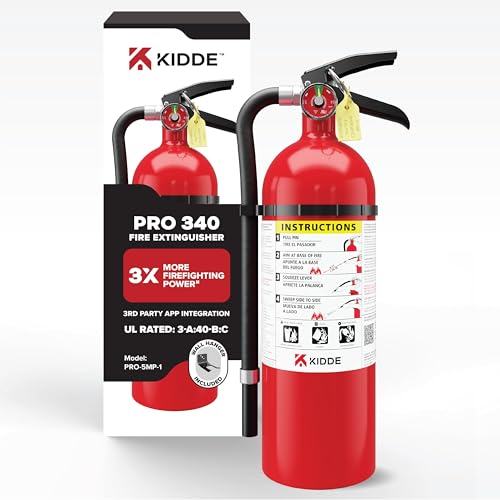 Kidde PRO-5MP-1Best overall
 Kidde FA110GLightest in the lineup
 Kidde KD143-210ABC12-year life with mount
Decide first: fight the fire or leave
A portable extinguisher is for small, early fires, such as a trash can fire, a smoldering rag or a flame at a power strip. It is not meant for a fire that has reached the walls, ceiling or a vehicle's engine bay.
Before you pick it up, make sure someone is calling 911 or that you will do it the moment you step outside. Then check the basics. Everyone else should be heading out, and you should be able to stand with your back to the garage door or another exit.
- The fire is small and not growing fast.
- You have a clear path out behind you.
- Smoke is light and you can still see and breathe.
- Your extinguisher is rated for this type of fire.
- If any of these is a no, leave. Property can be replaced.
Know what you are holding
Most garage extinguishers are ABC dry chemical units. The letters stand for the kinds of fire they can handle. A is for ordinary materials like wood, paper and cloth. B is for flammable liquids such as gasoline, oil and grease. C is for live electrical equipment.
The label on the cylinder shows the rating, for example 3-A:40-B:C. A unit rated only 10-B:C, like the First Alert Garage model, covers liquids and electrical fires but not wood and paper. If your garage holds lumber, cardboard or stored boxes, you want the A as well.
Read the label and the short instructions on it before you ever need them. Then look at the pressure gauge. If the needle is in the green zone, the unit is charged. If it is not, the unit may not work and needs replacing or professional service.
The PASS method, step by step
PASS is the four-step method taught for portable extinguishers. Say it in your head as you go, because stress makes people forget the order. Hold the unit upright and keep your eyes on the fire, not on the extinguisher.
Start a few feet back from the fire. Most home units throw their stream a good distance. The Kidde Pro 340 in our lineup lists a discharge range of 12 to 18 feet, and the Amerex B500 lists the same range, so you can begin well back and move closer only as the flames drop.
- Pull: Hold the unit with the nozzle pointing away from you and pull the pin out. It breaks any tamper seal, which is normal.
- Aim: Point the nozzle at the base of the fire, where the fuel is. Aiming at the flames above does very little.
- Squeeze: Press the handle firmly and evenly to release the agent. Release the handle to stop the flow.
- Sweep: Move the nozzle slowly from side to side across the base of the fire. Cover the whole area, then keep watching it.
Be quick: the discharge is short
An extinguisher empties faster than most people expect. The Kidde Pro 340 lists a discharge time of 13 to 15 seconds, and the Amerex B500 lists about 14 seconds. That is not much time, so aim carefully and do not waste it spraying at smoke.
If the flames are knocked down, do not walk away. Keep the extinguisher in hand and watch the spot for several minutes. Dry chemical fires can flare back up, especially with fuel or hot metal involved. If the fire returns and your extinguisher is empty, get out.
Common garage fires and what to do
Garages are tricky because several kinds of fuel sit side by side. This table covers the usual cases. In every case, call 911 and keep your exit behind you.
| Situation | Rating you need | What to do |
|---|---|---|
| Burning gasoline or oil on the floor | B | Aim at the base of the puddle and sweep. Never use water, which can spread the fuel. |
| Wood, paper or cardboard burning | A | Sweep across the base, then check for hidden embers in the pile. |
| Power strip, tool or outlet fire | C | If you can do it safely, cut power at the breaker first. Then discharge at the base. |
| Car engine or fuel tank fire | Leave | Move away from the vehicle and wait for the fire department. |
After the fire and after any use
Once the fire is out and the fire department gives the all clear, ventilate the garage. The powder is a fine dust that can irritate your eyes, nose and throat, so avoid breathing it and keep it away from children and pets until it is cleaned up.
Treat any extinguisher that has been used, even briefly, as spent. A partly used unit may not hold enough pressure for next time. Rechargeable models, such as the Kidde Pro 340 and the Amerex B500, are designed to be serviced by a professional after use. Disposable models are replaced instead.
Replace or service the unit as soon as you can, so the garage is never without protection.
Set up your garage so you can act fast
Most of success with an extinguisher is where it hangs. Mount it near the garage door or exit, at a height you can reach, so you can grab it on your way out and keep the exit behind you. A second unit near the workbench makes sense in a larger garage.
Choose a unit you can lift and aim with one hand. Agent weight and unit weight matter here. In our lineup, unit weights run from 3.9 lb for the Kidde Basic 110 up to 9.5 lb for the OYEEICE 5 lb. Agent weight runs from 2.5 lb to 5.5 lb among the models listed here, and more agent gives you more time on the fire.
Temperature matters too, since garages get cold and hot. The OYEEICE lists an operating range of -22°F to 140°F, and the Ougist lists storage temperatures from -40°F to 120°F. Check the label on any unit you buy.
Our best fire extinguisher for garage page puts ratings, weights and mounts side by side. If you are still choosing, start there and look for a Class A, B and C rating plus a wall mount. Once you have your unit, you can use the same page to see where it falls on weight and range.
Practice the routine, not the discharge
Do not set off your extinguisher to practice. Instead, walk through the steps with everyone in the household. Locate the extinguisher, read the label, find the pin, and talk about which door you would use.
Check the gauge once a month and look for dents, rust, a missing pin or a blocked nozzle. Keep a clear path to the extinguisher so nothing is stacked in front of it. If you want to compare mounted options again, our garage extinguisher comparison lists which models include a mount.
Safety note: stay low if there is smoke, never turn your back on a fire, and never let a fire block your only way out. If you use the extinguisher, protect your hearing and eyes where you can. The discharge is loud and the powder can sting, so squint, look away from the spray and keep your face back.
Frequently asked questions
What are the 4 steps in using a fire extinguisher?
They are Pull, Aim, Squeeze and Sweep, known as PASS. Pull the pin, aim at the base of the fire, squeeze the handle, and sweep side to side.
What is the 5th step people add?
Many guides add a step before PASS, which is to call 911 and make sure everyone is leaving. Some add a last step to keep watching the area after the flames go out.
Can I use water on a garage fire?
Not on gasoline, oil or live electrical fires. Water can spread burning liquid and conduct electricity. Use an extinguisher rated for the fire.
Do I need training to use one?
No formal training is needed for a home unit, but you should read the label ahead of time so the steps feel familiar.
Where is the best place to hang it?
Near the exit door, at a height you can reach, so you can grab it while leaving and keep your escape route behind you.