How to Use a Drill Press for Metal Safely
Clamp the metal firmly, wear eye protection, pick a sharp bit, and run a slow speed with steady pressure and cutting fluid. Never hold the workpiece by hand, and keep loose clothing, gloves, and jewelry away from the spindle. The same routine works for steel, aluminum, and brass on a benchtop drill press, with speed and feed adjusted to the metal.
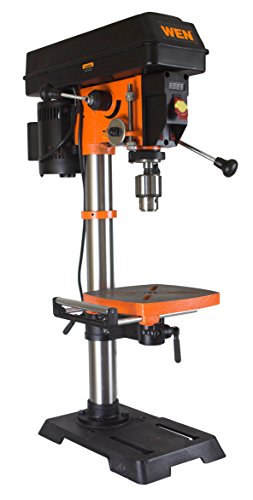 WEN DP1263VBest overall
 BACHIN BG-5156E
 Garvee 01Largest swing and travel
Gear up and prepare the space
Metal drilling throws sharp chips and can grab clothing quickly, so preparation matters as much as technique. Put on safety glasses or goggles every time, even for a single hole. Add hearing protection if the work is loud, which it often is with thick steel or a bit that is chattering.
Skip gloves, ties, watches, rings, and bracelets. Anything that can wrap around a spinning chuck or bit can pull your hand in faster than you can react. Tie back long hair and roll up or button loose sleeves. Closed shoes are a good idea, because hot chips and dropped parts happen.
Check that the machine sits on a stable bench or is bolted down, and that the cord is in good shape. Unplug the drill press before you change belt positions, swap bits, or adjust the table. Keep the area around the press clear so you can step back or reach the power switch without stretching.
- Safety glasses or goggles on
- Hearing protection for loud cuts
- No gloves, jewelry, ties, or loose clothing
- Long hair tied back
- Machine unplugged for any bit, belt, or table change
Choose the right bit and mark the hole
For metal, use a sharp twist bit made for metal, such as high speed steel. A dull bit rubs instead of cutting, creates heat, and can grab when it breaks through. If a bit squeals, smokes, or produces dust instead of curled chips, stop and replace or resharpen it.
Mark the hole location with a scribe or marker. Then tap a center punch at the mark to make a small dimple. That dimple gives the bit tip a place to start so it does not wander across the surface.
For larger holes, drill a smaller pilot hole first, then step up to the final size. A pilot hole reduces the force needed and helps the larger bit stay on target. This is a general rule of thumb for any metal, and it makes the job calmer and safer.
Secure the workpiece
This is the most important safety step. A spinning bit can catch the metal and whip it around with the drill, and a sheet or flat bar can spin fast enough to cut a hand. Never hold the piece with your fingers, and do not rely on your hand to keep it from turning.
Use a drill press vise, clamps, or hold-downs bolted or clamped to the table. Place a scrap of wood under the metal so the bit has something to exit into and does not damage the table. Line the punch mark up under the bit before you tighten everything down.
With the machine off, lower the bit to the dimple and confirm it lines up. Then lock the quill or table height so the setup cannot shift. Spin the chuck by hand once to confirm nothing is in the way.
- Clamp the work in a vise or to the table
- Put scrap wood or a backer under the hole
- Align the bit tip with the punch mark
- Remove the chuck key before powering on
Set the speed and drill the hole
Metal generally calls for slower spindle speeds than wood, and larger bits need slower speeds than small ones. Harder metals such as steel need slower speeds than softer metals such as aluminum or brass. Check your drill press manual or the bit maker's guidance for the exact speed for your bit size and material, then move the belt to the matching pulley step.
Start the machine, let it reach full speed, and lower the bit with steady, even pressure. You want a continuous ribbon or small curls of metal coming off the bit. Fine dust means too little feed, and blue or smoking chips mean too much speed or heat.
Apply cutting oil to the bit and the hole as you go, especially on steel. The oil keeps the bit cooler and helps it last. Back the bit out every so often to clear chips and add more oil. Ease off the pressure as the bit is about to break through, because that is when it is most likely to grab.
| Metal | Speed | Cutting fluid | Watch for |
|---|---|---|---|
| Mild steel | Slow | Yes, apply often | Heat and blue chips |
| Stainless steel | Slowest | Yes, apply often | Work hardening if the bit rubs |
| Aluminum | Faster than steel | Yes, light oil or lubricant | Chips that gum up the flutes |
| Brass | Moderate | Often optional | Bit grabbing on breakthrough |
Handle chips, heat, and burrs
Metal chips are sharp and the freshly drilled metal can be hot. Never brush chips away with your bare hand, and do not blow them off, since they can fly into your eyes. Turn the machine off, wait for the spindle to stop, and use a brush or a hook tool.
After drilling, the hole edge will have a sharp burr. Remove it with a deburring tool, a larger drill bit turned by hand, or a file. Treat the piece with care until the burr is gone, because those edges cut skin easily.
Keep oily rags in a closed metal container, and clean the table before the next job. Chips left on the table can lift a workpiece slightly and spoil your alignment.
Picking a drill press that suits metal work
If you plan to drill metal often, look for a drill press with a stable base, a table that clamps firmly, and a wide range of speeds so you can slow down for steel. Our best benchtop drill press comparison lines up benchtop models side by side using published specifications, which helps you match speed range and capacity to your projects.
A drill press is not always the right tool. For holes in parts that cannot move to a bench, a hand drill is the better choice, and our best drill comparison covers those options. Whichever you use, the same rules apply: eye protection, secure work, sharp bits, and patience.
Frequently asked questions
Can I use a drill press on a hot piece of metal?
Let it cool first. Hot metal can burn you, and the bit can lose its edge faster when the part is already hot.
Why does my bit keep wandering off the mark?
Usually the center punch dimple is missing or too shallow, or the bit is dull. Punch the mark more firmly and try a pilot hole.
Should I use the same speed for every bit size?
No. Smaller bits can run faster and larger bits need slower speeds. Check the speed chart in your manual for the size and metal you are drilling.
Is it safe to drill without a vise?
It is risky. If a vise will not fit the part, clamp it directly to the table and keep your hands well clear of the bit.