How to Use a Concrete Mixer at Home Step by Step
Set the mixer on firm, level ground near a GFCI-protected outlet, add about three quarters of the water first, then the dry mix, then the rest of the water a little at a time. Let the drum turn for about three to five minutes until the batch looks like thick, even oatmeal, then tilt it into a wheelbarrow or form. Wear eye, dust and hand protection, and wash the drum right after the last batch.
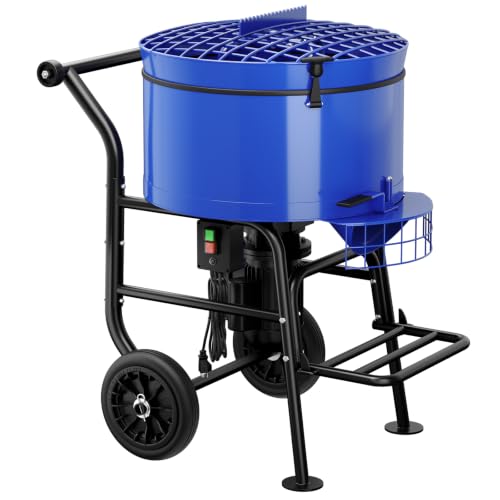 Dkenicor KF100368US-01LHC-001-YIH
 Dkenicor KF100248-02-YH-OBest compact steel drum
 Dkenicor KF100322US-02MLHC-001Best overall
Set up before you mix
Most mixing problems start with a poor setup. Pick a flat, firm spot close to where the concrete will go, so you do not have to haul heavy wheelbarrow loads far. Put the mixer on level ground. A tilted base makes the drum fill unevenly and can let it slip while it runs.
Gather everything first: the bags of mix, a clean bucket or jug for measuring water, a hose, a shovel, a wheelbarrow and your forms. Concrete starts to stiffen soon after water goes in, so you want no pauses once you begin.
Read the manual that came with your mixer and the directions on the bag. Water amounts differ between products, and the bag is the best source for how much to add.
Safety first
Wet cement is caustic and can irritate or burn skin and eyes. Dry mix is very fine dust that you should not breathe. Electric motors and water are also a risky mix, so treat the setup with care.
- Wear safety glasses or goggles, a dust mask or respirator rated for fine dust, waterproof gloves, long sleeves and closed shoes.
- Plug the mixer into a GFCI-protected outlet. If you need an extension cord, use an outdoor-rated one with a heavy enough wire gauge for the motor, and keep connections off wet ground.
- Never reach into a turning drum, and never use a shovel inside it while the motor is running. Switch off and unplug first.
- Keep kids, pets and bystanders away from the work area.
- Use hearing protection if the mixer is loud when loaded, especially for long jobs.
- Lift with your legs and ask for help moving the mixer. Models in our comparison weigh roughly 90 to 125 lb.
Step by step: mixing a batch
Here is the routine most homeowners follow. Adjust the details to your mixer and the bag instructions.
- Measure the water. Use the amount on the bag for the number of bags you plan to load, and set it aside in a bucket.
- Tilt the drum to a comfortable loading angle and start the motor. Mixing with the drum turning helps the material move freely instead of caking on the walls.
- Pour in about three quarters of the water. This first water is often called the head water, and it keeps dry powder from sticking to the bottom.
- Add the dry mix gradually, one scoop or part of a bag at a time. Do not dump a whole bag at once, which can stall the motor and throw up dust.
- Let it mix for a minute, then add the remaining water slowly until the batch looks uniform. Stop adding water once it looks right. Too much water weakens the finished concrete.
- Keep mixing for about three to five minutes in total. The result should be thick, evenly colored and free of dry pockets, similar to thick oatmeal.
- Tilt the drum and pour into the wheelbarrow or form. Scrape the drum edge so you get the whole load out.
- Place the formed concrete right away, then compact and finish it as the project requires.
How much to load
Do not fill the drum to the brim. A mixer needs room for the material to fold over itself, and an overloaded drum mixes poorly and strains the motor. Check your mixer's stated load limit and stay under it. The models on our spec sheet list their capacity in different ways, so compare the numbers below with your own manual.
The BILT HARD 4 cu ft poly drum, for example, lists a 235 lb maximum load, which its listing describes as up to two 80 lb bags of mix and up to 2 gallons of water. The larger BILT HARD 6 cu ft model lists a 375 lb capacity, which its listing describes as three 80 lb bags plus water.
| Mixer | Drum | Motor | Drum speed | Stated load |
|---|---|---|---|---|
| Dkenicor 5.3 cu ft | 5.3 cu ft steel | 750W | 30 RPM | Not listed |
| Dkenicor 4.3 cu ft | 4.3 cu ft steel | 450W | 28 RPM | Not listed |
| BILT HARD 4 cu ft | 4 cu ft poly | 500W | 24 RPM | 235 lb |
| YARDMAX YM0115 | 4 cu ft steel | 507W | Not listed | 275 lb |
| BILT HARD 6 cu ft | 6 cu ft poly | 746W | 24 RPM | 375 lb |
Pouring, finishing and cleaning up
Both Dkenicor models list a 360 degree rotating drum, and the BILT HARD 4 cu ft lists a tilting drum for emptying toward a wheelbarrow. However your drum moves, pour slowly and keep your feet clear of the rim and the wheels.
Mix the next batch while you place the last one, but only if the first load is already handled. Concrete left sitting in the drum gets harder to remove with each minute.
Clean the drum as soon as you finish. Put a little water and some gravel or a scoop of clean stones in the drum, run it for a minute or two, then empty and rinse. Unplug the mixer before you reach in with a brush to scrub out leftover material.
Spray the outside with a hose, and keep water away from the motor housing and switch unless the manufacturer says the motor is rated for wash-down. The YARDMAX YM0115 lists an IP45 wash-down certified motor and gearbox, but check your own manual for what it allows.
Let the drum dry upright, then store the mixer under cover. A poly drum resists rust, and a steel drum should be dried so any chips in the coating do not rust.
Common problems and quick fixes
If the motor stalls, switch off, unplug and check for a stuck lump. The BILT HARD 4 cu ft lists overload protection, and its listing says to let the motor cool before restarting if the protection trips. Next time, add the dry mix in smaller scoops.
If the batch looks dry and crumbly, add a small splash of water and give it another minute. If it looks soupy, add a little more dry mix to bring it back. Small changes work better than big ones.
If the mix has dry lumps stuck to the drum wall, stop, unplug and scrape them loose. Then restart and add water slowly.
Choosing a mixer for your jobs
For fence posts and small repairs, a drum of about 4 cu ft is usually enough. Patios, steps and footings call for a larger drum so you can place concrete before it stiffens. Our guide to the best concrete mixer for home use compares drum size, motor power, weight and wheels side by side.
If you want a wider view that includes more mixer types, see our overview of the best concrete mixer. Whichever one you pick, the steps above stay the same.
Frequently asked questions
Can I mix concrete in a mixer without water first?
Yes, some people add dry mix first, but starting with part of the water helps stop powder from caking at the bottom of the drum. Follow your mixer manual and the bag directions.
How long can mixed concrete sit in the drum?
Not long. Concrete begins to set soon after water is added, so plan to pour each batch promptly. Check the bag for working time and keep the drum turning slowly if you must wait briefly.
Do I need gravel in the mix?
It depends on the product. Many bagged concrete mixes already include gravel, while mortar mixes do not. The label tells you what is inside and what each is meant for.
Can I use a concrete mixer for mortar or other materials?
Many mixers handle mortar, grout and stucco too, and some listings mention feed or seed. Check your manual first, and clean the drum well between different materials.