How to Use a Bench Grinder Safely and Correctly
To use a bench grinder safely, wear eye and hearing protection, check the wheel for damage, set the tool rest close to the wheel, and grind only on the face of the wheel with light pressure. Stand to the side when you switch it on, let it reach full speed, and keep steel cool by taking short passes. The steps below walk through setup, technique, and the mistakes that cause most injuries.
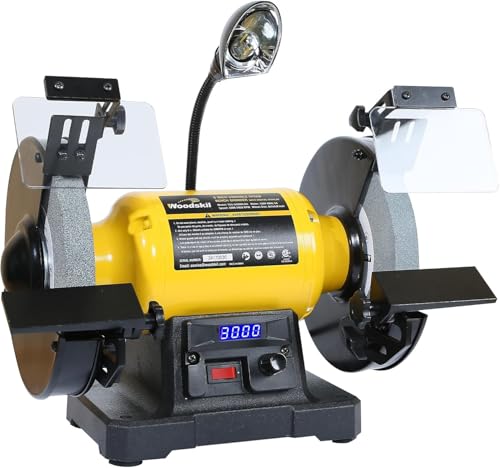 Woodskil TDS-G200VLGABest overall
 WEN BG625VVariable speed with warranty
 Greteefor NS-SLJ-01-3Cast iron variable speed
Gear up before you plug in
A bench grinder throws sparks, metal dust, and sometimes pieces of a failing wheel. Your protective gear matters more than any technique tip.
Wear safety glasses or, better, a full face shield over glasses. Add hearing protection, since grinding steel is loud. A dust mask helps with fine abrasive and metal dust. Tie back long hair, remove loose sleeves, jewelry, and dangling cords, and keep rags away from the wheels.
Skip loose gloves. A glove can catch on a spinning wheel and pull your hand in. If you need to protect your hands from heat, hold small parts with locking pliers instead.
- Safety glasses plus a face shield
- Hearing protection
- Dust mask for dust-heavy work
- Close-fitting clothing, no loose cuffs or jewelry
- Closed-toe shoes
- A fire extinguisher or bucket of water nearby, since sparks can ignite sawdust and solvents
Inspect the grinder and wheels
Before every session, unplug the grinder and look at both wheels. Check for chips, cracks, gouges, or uneven wear. A damaged wheel can break apart at speed, so replace it rather than hoping it holds.
You can also do a ring test on a wheel you have just mounted or are unsure about. Hang the wheel from a finger and tap it gently with a plastic or wooden handle. A sound wheel gives a clear ring. A dull thud suggests a hidden crack. Never use a wheel that thuds.
Confirm that the wheel's maximum speed rating is at least as high as the grinder's rated speed. Both numbers are printed on the wheel label and the grinder's nameplate. Also make sure the wheel fits the shaft snugly, with the flanges and nut tightened firmly but not cranked. If you are shopping for a new machine, our best bench grinder comparison lists the published specifications side by side so you can match wheel size and speed to your work.
Set up the tool rest, spark guard, and eye shields
The tool rest supports your workpiece and keeps it from being pulled between the wheel and the rest. Set it close to the wheel, about 1/8 inch, and check the gap again as the wheel wears down. Adjust it only with the grinder unplugged and the wheel stopped.
The spark guard sits at the top of the wheel and should also be kept close to the wheel surface. The clear eye shields on the grinder are a backup, not a replacement for your own eyewear.
Place the grinder on a sturdy bench and bolt it down if it has mounting holes. A grinder that walks across the bench is hard to control. Make sure the area has good light and a clear floor, and plug into a properly grounded outlet. Keep the cord away from the wheels.
Start it up and grind step by step
Follow the same routine each time. It keeps you safe and gives better results.
Grinding steel and other metals takes patience. Light pressure and short passes do more good than force.
- Put on your eye, face, and hearing protection.
- Unplug and recheck the wheel, tool rest gap, and spark guard.
- Plug in, stand to the side of the wheel (not in line with it), and switch on.
- Let the wheel reach full speed and wait about a minute before working, watching for wobble or odd noises. If anything seems wrong, switch off and unplug.
- Rest the workpiece on the tool rest and bring it to the face of the wheel gently, at the angle you want.
- Move the piece lightly across the wheel face. Use the full width of the wheel to help it wear evenly.
- Take short passes of a few seconds, then lift off and let the metal cool.
- When finished, switch off and let the wheel stop on its own. Do not slow it by pressing a workpiece against it.
Tips for steel and other metals
Steel heats up fast. Too much heat can discolor the edge and soften it, which ruins the temper on a chisel or knife. If the metal turns blue or dark, you have gone too far. Keep passes brief and dip mild steel in water between passes. Do not dip hot steel and then keep grinding on a wheel that has become soaked, and never quench carbide tools in water, since the shock can crack them.
Use the right wheel for the job. Coarser grit removes material quickly for shaping and rough cleanup. Finer grit gives a smoother edge for sharpening. Many grinders ship with one of each. A wire wheel is useful for cleaning rust and scale, but it throws bristles, so keep your face shield on.
Avoid grinding soft metals like aluminum on a standard abrasive wheel. They clog the surface, which makes it grab and overheat. Wheels made for general steel work are the usual choice. If you plan to grind a variety of metals, our best bench grinder page can help you compare wheel sizes, motor ratings, and included accessories.
Common mistakes to avoid
Most grinder injuries come from a few repeat errors. Knowing them helps you avoid them.
| Mistake | Why it is a problem | What to do instead |
|---|---|---|
| Grinding on the side of the wheel | Wheels are built to take load on the face, and side pressure can crack them | Grind only on the outer face |
| Large gap at the tool rest | The workpiece can jam between rest and wheel | Keep the gap small and recheck often |
| Pressing too hard | Overheats metal and can break the wheel | Use light pressure and short passes |
| Wearing gloves or loose clothing | Can be caught by the wheel | Use pliers to hold small parts and wear fitted clothing |
| Using a damaged or wrong-speed wheel | Risk of wheel failure | Inspect, ring test, and match the speed rating |
| Standing in line with the wheel at startup | Debris from a faulty wheel flies along that line | Stand to the side for the first minute |
Maintenance and wheel dressing
Over time a wheel can glaze (go smooth and shiny) or load up with metal. It then cuts poorly and heats the work. A wheel dresser is a simple tool that cleans and reshapes the face. Use it with the tool rest in place, eye protection on, and light contact.
Unplug the grinder when cleaning it or changing wheels. Replace wheels that have worn down close to the flanges. Keep the machine free of dust and oil, and store spare wheels flat and dry so they do not chip.
Frequently asked questions
Can I use a bench grinder to sharpen knives and lawn mower blades?
Yes, with care. Keep the blade moving, use short passes, and cool it often so the edge does not overheat. Match the original bevel angle and always clamp or brace the work against the tool rest.
Why does my grinder vibrate?
Common causes include a worn or out-of-round wheel, a loose nut, an unbolted base, or a wheel that is damaged. Switch it off, unplug it, and inspect the wheel and mounting before using it again.
What should I do if a wheel starts to crack or wobble while running?
Switch off the power, step back, and let the wheel stop fully. Unplug the grinder and replace the wheel before further use.
Is it safe to use a bench grinder indoors?
It can be, if the area is well ventilated and free of flammable materials like solvents and sawdust. Keep a fire extinguisher nearby and clean up dust regularly.