How to Trim a Hedge Properly as a Beginner
To trim a hedge properly, cut the sides first from the bottom up, shape the hedge slightly wider at the base than the top, and trim the top last. Use sharp blades, wear eye, hand and hearing protection, and take off a little at a time. Beginners get the best results by working slowly along a guide line and stopping to check the shape often.
 EGO Power+ HT2601Best overall
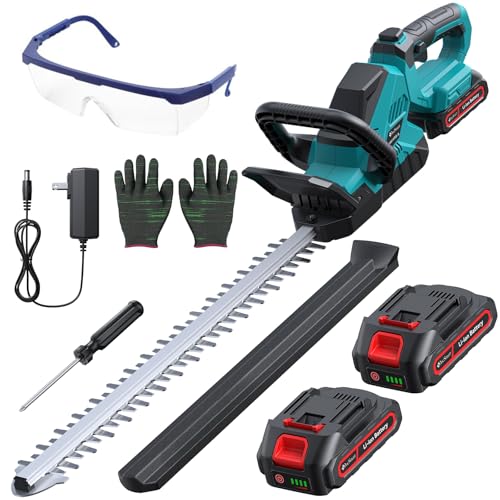 DocSmart HT02-BLongest listed runtime
 BLACK+DECKER BEHT150Corded and lightweight
What hedge trimming actually means
Hedge trimming is the regular cutting of a hedge's outer growth to keep its shape, size and density. You are removing the soft, leafy tips, not cutting the hedge back hard. Done a little at a time, it makes the hedge fill in and look neat.
It is different from heavy pruning or renovation, which removes thick, older branches. Beginners should start with light trimming. It is forgiving, and you can always cut more next time.
Pick the right time and check the hedge first
Trim on a dry day. Wet leaves clump, cut unevenly and make the ground and your footing slippery. Avoid very hot, sunny afternoons too, because freshly cut leaf edges can scorch.
Before you start, look through the hedge for nesting birds and wildlife. Birds often nest in hedges in spring and summer. If you find a nest, leave that section alone until the young have left.
Also walk the length of the hedge and pick up any wire, fencing or hidden objects. Blades hit these without warning, and that is how many trimmers get damaged.
Choose a tool that matches the job
Hand shears work well for a small, young hedge and for fine finishing. For anything longer, a powered hedge trimmer saves a lot of effort and gives a cleaner line. Our best hedge trimmer page puts corded and cordless models on one spec sheet so you can compare them by the numbers.
Three specs matter most to a beginner: blade length, branch capacity and weight. Among the ranked models, blade length runs from 17 in to 26 in, branch capacity from 0.625 in to 1.2 in, and weight from 3.9 lb to 8.42 lb. Pick the blade length that suits your largest hedge, not your smallest one.
| Your hedge | What to look for | Why |
|---|---|---|
| Small, young or soft growth | Shorter blade, around 17 in to 20 in; 0.625 in capacity is fine | Easier to control around corners, and lighter to hold |
| Long, flat sides | Longer blade, up to 24 in to 26 in | Covers more hedge in each pass |
| Older, woody hedge | 1 in or more of branch capacity | Thicker stems cut cleanly instead of stalling or tearing |
| Tall hedge | A lighter tool, or a telescopic pole model | Holding a heavy trimmer overhead tires your arms quickly |
| Sides and tops | Rotating handle | Lets you cut at a natural angle |
Safety gear and rules before you start
A hedge trimmer is a fast, sharp tool. Take a minute to set up safely before you switch it on.
- Wear safety glasses or goggles to protect against flying clippings.
- Wear sturdy gloves, long trousers and closed shoes with good grip.
- Wear hearing protection, especially with a louder or longer job.
- Keep both hands on the trimmer while the blades move, and never reach into the blades.
- With a corded model, keep the cord behind you and away from the blades. Use an outdoor-rated extension cord and a protected outlet, and never trim in wet conditions.
- With a cordless model, remove the battery before clearing a jam, changing settings or carrying the tool.
- Use a stable ladder or platform for tall sections. Never stretch from a ladder while holding a running trimmer.
Step-by-step: how to trim the hedge
Follow this order for a neat, even result. Each step is simple, and the key is to move steadily rather than quickly.
- Set a guide. For a straight top, stretch a string between two stakes at the height you want. For the sides, you can use a second string or just check by eye as you go.
- Start with the sides. Begin at the bottom and work upward, keeping the blades roughly parallel to the face of the hedge.
- Use smooth, sweeping arcs. Move the trimmer in a gentle curve rather than stabbing at the hedge. Let the blades do the cutting and do not force them.
- Shape a slight taper. Leave the bottom a little wider than the top so light reaches the lower leaves. A hedge that is wider at the top tends to go bare at the base.
- Trim the top last. Cut along your string line, then step back and check the overall shape.
- Clean up. Rake the clippings, then wipe the blades and add a little blade oil to protect them.
Common beginner mistakes to avoid
Cutting too much at once is the most common problem. Many hedges, especially evergreen conifers, do not regrow well from bare, old wood. Keep your cuts in the green, leafy growth and take off a little each time.
Another frequent mistake is working with dull blades. They tear stems instead of slicing them, which leaves brown, ragged edges and invites disease. If the cut looks chewed, sharpen or replace the blades.
Finally, avoid rushing the top. Because it is hard to see, the top often ends up uneven. A string guide and an occasional step back fix this.
Tool choice matters here as well. A heavy trimmer causes tired arms, and tired arms make wobbly lines. If your hedge is long or tall, consider a lighter option on our hedge trimmer comparison, and check whether a battery and charger are included before you decide.
How often to trim
Fast growers need trimming a few times in the growing season, while slower hedges may need only one tidy-up a year. A good rule is to trim when the new growth has visibly spoiled the shape.
Regular light trims keep the hedge dense and make each job quicker. If a hedge has become overgrown, bring it back over several seasons rather than in one drastic cut.
Frequently asked questions
Should I trim a hedge wet or dry?
Dry is better. Dry leaves cut more cleanly, and you are safer on the ground. This matters even more with a corded electric trimmer, which should never be used in wet conditions.
Can a beginner use a cordless trimmer?
Yes. Cordless models are easy to move around because there is no cord to manage. Check the battery details, the listed runtime, and whether the battery and charger come in the box.
Do I need a pole trimmer for a tall hedge?
Not always. A pole model lets you reach the top from the ground, which avoids ladder work, but the kit on our page is heavier. If the hedge is only a little above your reach, a lighter standard trimmer and a stable platform can do the job.
How do I keep a hedge from going bare at the bottom?
Trim it so the base is slightly wider than the top. This lets light reach the lower branches so they keep their leaves.