How to Tell If a Well Pump Pressure Switch Is Bad
A bad well pump pressure switch usually shows up as a pump that will not start, will not stop, or cycles on and off too fast, often with pressure that swings or stays low. To confirm it, rule out the tank and the pump first, then check the gauge, the switch port and the contacts with power off and locked out. If the contacts are burned, stuck or the port is clogged, replace the switch.
 YSD mc-1Best overall
 Square D FSG2J24CPBest known brand
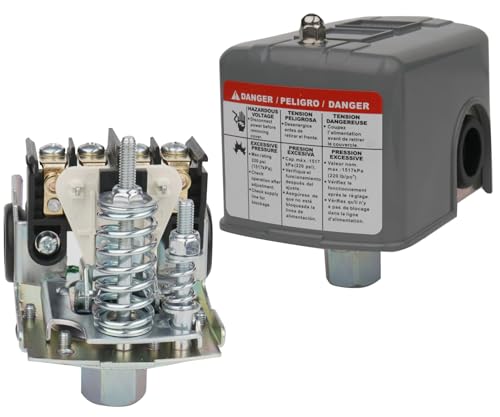 WHK WHK-PS01(40-60PSI)Best wiring flexibility
What the pressure switch does
The pressure switch is the pump's on and off control. When tank pressure falls to the cut-in setting, the switch closes its contacts and the pump starts. When pressure climbs to the cut-out setting, the contacts open and the pump stops. A common pair is 40/60 psi, meaning the pump starts at 40 and stops at 60.
Inside, a diaphragm senses pressure and pushes a spring-loaded contact set. Because the contacts carry the full motor current every cycle, the switch is a wear part. It can fail slowly, so the symptoms often start small.
Common signs the switch is going bad
Most failures fall into a few patterns. Keep in mind that other parts of the system can cause the same symptoms, so treat this list as clues, not proof.
- The pump will not start even though the gauge reads below the cut-in setting.
- The pump keeps running past the cut-out pressure, or never shuts off.
- The pump cycles rapidly, turning on and off every few seconds.
- Water pressure swings up and down or stays lower than it used to.
- The pump starts and stops at pressures that no longer match the settings.
- You hear buzzing or chattering from the switch, or see pitted, black or melted contacts inside.
Rule out the tank and pump first
Rapid cycling is the symptom most often blamed on the switch, but a tank that has lost its air charge is a very common cause. With too little air in the tank, the pressure rises and falls quickly and the switch is simply following it. Check the tank before you spend money on a switch.
To do that, turn off and lock out power, then open a faucet to drain the tank to zero. Check the air valve on the tank with a tire gauge. The tank's air pressure should sit 2 psi below the cut-in setting, so about 38 psi for a 40/60 switch. If it is low, add air and see whether the cycling stops.
Also check for a leaking foot valve, a leaking pipe or a running toilet. Any of these can make the pressure drop and restart the pump without the switch being at fault.
How to check the switch step by step
Work through these in order. Stop at the first step that finds a problem.
Safety first: the switch carries line voltage, 115 or 230 V depending on your pump. Turn off the breaker, lock it out, and confirm with a non-contact or meter voltage tester that the wires are dead before you remove the cover. If you are not comfortable working with wiring, call a licensed electrician.
- Watch the gauge. With power on and the cover closed, note the pressure when the pump starts and stops. Compare it with the switch's rated range, such as 40/60.
- Look for a clogged port. With power off and the tank drained, remove the switch from the 1/4 in NPT tee and look at the inlet. Scale, sediment or rust can block it and make the switch read wrong.
- Inspect the contacts. With the cover off and power confirmed dead, look for pitting, burning, welded contacts, corrosion, water stains or insect nests.
- Test continuity. With the wires disconnected, use a multimeter on the contact terminals. The contacts should read closed when pressure is below cut-in and open when pressure is above cut-out. A switch that does not change state is bad.
- Check the adjustment. If the settings have drifted, a small turn of the pressure nut may help. If the switch will not hold the setting, replace it.
Symptoms, likely causes and what to check
This table helps you sort out whether the switch or something else is the likely culprit.
Wiring a switch is not a place to guess. If a contact is stuck closed, the pump can run dry or overheat, so shut the breaker off if the pump will not stop.
| Symptom | Likely switch problem | Other causes to rule out |
|---|---|---|
| Pump will not start | Burned or open contacts | Tripped breaker, failed capacitor or pump, no power |
| Pump will not stop | Welded contacts, clogged port | Large leak, broken pipe, worn pump |
| Rapid cycling | Drifted settings, clogged port | Low tank air charge, waterlogged tank |
| Low or swinging pressure | Cut-out set too low | Failing pump, clogged filter, leaks |
| Buzzing or chattering | Worn contacts | Low voltage, loose wiring |
What causes a pressure switch to fail
Contacts wear every time the pump starts. Heavy short cycling speeds this up because each start creates a small arc that pits the metal. Over the years, the contacts can burn or weld together.
Hard water and sediment can clog the small port that feeds the diaphragm. Moisture and corrosion in the housing can damage the contacts and terminals. Power surges and loose wiring also take a toll.
A mismatched switch can fail early too. If the motor's voltage or horsepower exceeds the switch rating, the contacts overheat. Some Merrill models on our list are rated to 2 HP, while the Square D FSG2J24CP lists a 1 HP maximum, so check your motor before you buy.
Choosing a replacement
If your tests point to a bad switch, replace it with one that matches your system. Match the pressure range, the motor voltage and horsepower, and the 1/4 in NPT connection on your tank tee. Most switches on our list use that same thread.
You can see the options side by side on our best well pump pressure switch comparison. It covers 30/50, 40/60, 50/70 and 60/80 psi models, plus materials such as stainless wetted parts, which resist rust and clogging at the inlet.
If you are unsure which range you have, read the label on your current switch before you remove it. For a closer look at ratings and materials, our pressure switch comparison page lists the published specs for each model. After you install the new switch, set the tank's air pressure 2 psi below cut-in and recheck the cycle on the gauge.
Frequently asked questions
Can a bad pressure switch damage my pump?
Yes. A switch that fails to shut off can let the pump run dry or overheat, and one that cycles rapidly adds wear to the motor. If the pump will not stop, switch off the breaker.
How is a bad switch different from a bad tank?
A tank with a lost air charge makes the pump cycle fast, but the switch is working. A bad switch fails to open or close its contacts at the right pressure, or not at all.
Can I clean the contacts instead of replacing the switch?
Light surface dirt may be cleaned, but pitted or burned contacts will keep failing. Because the part carries motor current, replacing the switch is the safer choice.
Do I need to drain the tank before replacing the switch?
Yes. Turn off and lock out power, then open a faucet to release the pressure. The switch sits on a pressurized line, so removing it under pressure can spray water.