How to Sharpen and Oil a Pruning Saw or Pole Saw
You can sharpen some pruning saws, but not all. Blades with hardened teeth usually cannot be filed and are replaced instead, while softer blades can be touched up with a small triangular file. Oil a hand saw blade with a light coat after cleaning and drying it, and oil a chain-type pole saw through its bar and chain oil reservoir before each use.
 Craft911 PS-11Best overall
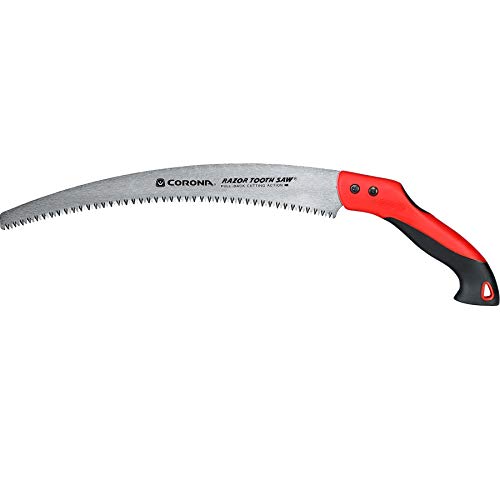 Corona Clipper RS 7395Longest blade, highest limit
 REXBETI REX025Rubber-coated folding grip
First, work out which kind of saw you have
Sharpening and oiling depend on the saw. A hand pruning saw has a rigid or folding blade with fixed teeth. A pole saw is either a pruning blade mounted on a pole, or a small chain saw on a pole that runs on a bar and chain.
Check the listing or manual for your model. Some blades have impulse-hardened teeth. Our best pruning saw page lists this feature for the Corona RazorTOOTH models, which also have a chrome-plated blade. Teeth hardened this way are meant to stay sharp longer, but they are generally too hard for a hand file. Plan to replace the blade when they dull.
Folding saws with swappable blades, like the Mossy Oak 3-in-1 on that page, make this easy. It lists three blades that change without tools, so a dull blade can be swapped instead of sharpened.
What you can sharpen and what you should replace
Use this table as a starting point. Always follow the maker's guidance if it differs.
A good rule: if a file skates across the tooth without cutting a shiny line, the steel is too hard to file. Stop and replace the blade rather than forcing it.
| Saw type | Sharpen by hand? | Oiling method |
|---|---|---|
| Hand saw with hardened teeth | Usually no, replace the blade | Light oil wipe on the blade |
| Hand saw with softer, filable teeth | Yes, with a small triangular file | Light oil wipe on the blade |
| Folding saw with swappable blade | Swap the blade when dull | Light oil on blade and pivot |
| Chain-type pole saw | Yes, sharpen the chain with a round file | Bar and chain oil in the reservoir |
| Pole saw with a pruning blade | Same as a hand saw blade | Light oil wipe on the blade |
How to sharpen a filable pruning saw blade
Triple-cut teeth have three ground faces, which is why they cut quickly in green wood. They are fiddly to sharpen, so go slowly and keep the angles you see on the tooth.
Before you start, wear cut-resistant gloves and safety glasses. Saw teeth are sharp, and metal filings can fly.
- Clamp the blade in a vise, with the teeth just above the jaws and the blade padded to avoid bending it.
- Clean off sap and grit with a rag and a little solvent, then dry the blade.
- Pick a fine triangular or diamond file sized for the tooth pitch. Smaller teeth need a thinner file.
- Match the angle of each original face. File only on the push stroke and lift the file on the return.
- Use the same number of strokes on every tooth so they stay even. Three or four light strokes is often enough.
- Work along the blade, then flip it and finish any teeth that need it.
- Wipe away filings and run a fingertip along the side of the blade, away from the teeth, to feel for burrs.
How to sharpen a chain-type pole saw
A pole saw that uses a chain is sharpened like a small chain saw. Unplug it or remove the battery first. Never work on the chain with power connected.
Clamp the bar if you can, or hold the saw steady on a bench. Use a round file that matches the chain pitch printed in your manual. Keep the file at the angle marked on the cutter and stroke from the inside of the cutter outward.
Sharpen every cutter the same amount. Then check the depth gauges, the small hooks in front of each cutter, and lower them with a flat file only if your manual says to. If the chain is badly damaged or the teeth are worn short, replace the chain.
Wear gloves and eye protection. Work at ground level, not on a ladder, and never sharpen a chain while it sits on a pole that is raised or held overhead.
How to oil a pruning saw or pole saw
For a hand pruning saw, the goal is to stop rust and cut friction. Wipe the blade clean after use, dry it fully, then apply a thin film of light machine oil or a similar protective oil with a rag. Do not leave drips that can attract dirt.
If sap has built up, wipe it off with a little solvent or cooking-oil-soaked rag first, then oil. Folding saws also need a drop of oil on the pivot so the blade opens and closes smoothly. Always check the lock works before you cut.
For a chain-type pole saw, including battery models such as Ryobi, use the oil the manual names, usually bar and chain oil. Unplug or remove the battery, set the saw on its side with the cap up, and fill the reservoir. Check the level before each use and top it up as needed.
Keep oil away from the brake, switch and battery contacts. If the saw leaks oil while stored, check the cap seal and store it with the cap up.
Keep the blade sharp for longer
Cleaning after each job does more than sharpening. Sap and grit dull the edge and raise friction. Wipe the blade, avoid cutting into soil or stone, and store the saw with a sheath or cover over the teeth. Several saws on our best pruning saw list come with a sheath or a folding lock for this reason.
Cut with the right blade for the job. Among the models that list it, branch limits run from 2.76 in to 8 in, so check the limit before you take on a thick limb. Forcing a short blade through wood beyond its limit wears the teeth fast.
Store the saw dry. A light oil film on the blade, plus a dry spot, helps stop rust between uses.
Frequently asked questions
Can you sharpen a pruning saw?
Sometimes. Blades with softer teeth can be touched up with a small triangular file, but impulse-hardened teeth usually cannot, so replace those blades.
What oil should I use on a pole saw?
For a chain-type pole saw, use bar and chain oil as your manual directs. For a hand blade, a light machine oil on a rag is enough.
How often should I oil the blade?
Oil a hand saw blade after cleaning and drying it, especially before storage. Check a chain saw reservoir before each use.
How do I know the saw needs sharpening?
You will push harder, the cut will wander, and the teeth will leave rough or crushed wood instead of clean chips.