How to Set Up and Organize a Tool Backpack
Sort your tools by how often you reach for them, then give each group a fixed home: daily tools in the outer pockets, specialty items inside, and heavy gear low and close to your back. Put electronics in their own compartment, keep sharp edges covered, and stay under the bag's stated load limit. A dedicated pocket for every tool means you stop digging and start working.
 LOKASS 8605Best overall
 KLEIN TOOLS 5541610-14Orange interior, tough nylon
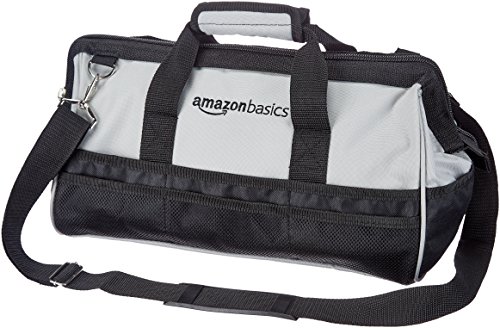 Amazon Basics TB002Open-top tote, 16 outside pockets
Start by sorting your kit
Before you fill a single pocket, dump everything on a workbench or floor. Sort it into piles. This step takes ten minutes and saves you from rearranging the bag every week.
Think about the jobs you do most. A tool you use on every call belongs in a different spot than one you use twice a year. If you are still building your kit, our best tool set comparison shows what ships in common sets, so you can see what you already own and what is missing.
- Daily tools: screwdrivers, pliers, a tape measure, a knife, a flashlight.
- Job-specific tools: meters, gauges, wire strippers, specialty wrenches.
- Heavy items: a drill, a hammer, large wrenches, spare batteries.
- Fragile items: a laptop, a tablet, test meters, a phone.
- Consumables: fasteners, tape, wire nuts, markers, gloves.
Match each group to a zone in the bag
Most tool backpacks follow the same basic layout: outer pockets, an interior with loops and organizers, a main cavity, and a separate padded compartment for electronics. Your job is to match your piles to these zones.
The rule of thumb is simple. What you grab most goes where you can reach it without opening the whole bag. What you grab rarely goes deeper. What is heavy goes low and tight to your back so it does not pull you backward.
| Zone | Best for | Why |
|---|---|---|
| Outer pockets | Tape measure, flashlight, pliers, pens | Reach them without opening the bag |
| Interior pockets and loops | Screwdrivers, strippers, small wrenches | Each tool gets its own spot, so you see what is missing |
| Main cavity, bottom | Drill, large wrenches, battery packs | Low weight keeps the pack stable |
| Padded laptop compartment | Laptop, tablet, paperwork | Keeps electronics away from metal edges |
| Zippered small pocket | Fasteners, wire nuts, small parts | Stops small items from scattering |
Set it up step by step
Work from the back of the bag to the front. Heavy gear goes in first, and the quick-grab items go in last.
Follow this order the first time, then adjust to your habits.
- Place the heaviest tools at the bottom, against the back panel.
- Slot long tools, such as screwdrivers and pry bars, vertically in loops so they do not shift.
- Fill interior pockets by tool type: all drivers together, all pliers together, all measuring tools together.
- Put your daily tools in the outer pockets.
- Load the laptop or tablet into its own compartment, away from the tool cavity.
- Zip the bag, lift it, and walk around. If it leans or one side drags, move the heavy items.
- Take a photo of the finished layout so you can restore it after a messy job.
Mind the weight and carry it safely
A backpack only works as a hands-free carry if the load is balanced. Check the max load capacity before you pack. Our best tool backpack page notes that only 8 of 26 products list a capacity, so if your bag does not state one, pack conservatively.
Remember that the empty bag counts too. The DEWALT wheeled pack in our data weighs 7.94 lb empty and lists a 55.12 lb max load. The LOKASS 8605 lists a 110 lb max load. Those are very different ceilings, so match the bag to how heavy your kit really is.
Use both shoulder straps, snug the chest strap and waist belt if the bag has them, and use the top handle only for short moves. Lift with your legs and avoid twisting while the pack is loaded.
Safety notes before you load up
Cover or sheath sharp blades and keep them in a dedicated pocket so you never reach into the bag blind. Store cutting tools with the edges pointing away from your hand.
Keep batteries away from loose metal such as screws, keys and bare wire, which can bridge the terminals. Do not store test leads or live-tested gear wet. If you work around electrical panels, keep the bag on the floor, not on top of energized equipment.
Keep eye and hearing protection in an outer pocket so you actually put it on. Be careful on ladders and roofs: a heavy backpack shifts your balance, so hoist tools up separately when you can rather than climbing with a full load.
How real bags map to this layout
Published specs show how much organizing room different bags give you. The LOKASS 8605 lists 56 pockets and loops, front and rear compartments that open to 90 degrees, a laptop compartment and a molded base, in a 13 x 7 x 18.5 in body. That kind of layout suits a split between daily tools in front and specialty tools in back.
The DEWALT PRO Backpack on Wheels lists 46 pockets, including dedicated compartments for a drill and batteries, plus an IP54 water-resistant compartment. The Klein Tradesman Pro lists 40 pockets and an orange interior, which makes small tools easier to spot, though it is a bag with a shoulder strap rather than a true backpack.
If your work is mostly auto repair, check what your wrenches and sockets look like first. Our best tool set for mechanics page can help you decide what belongs in the bag and what should stay in a rolling chest.
Keep it organized over time
A good layout drifts within a few weeks. Build a small habit to stop that.
At the end of each job, return every tool to its own pocket before you zip up. Once a week, empty the main cavity, wipe off dust and moisture, and check for tools that live in the wrong place. Replace anything that no longer earns its spot, and move rarely used items to a shelf at home.
If you keep finding tools piled loosely at the bottom, you probably have more tools than pockets. That is a sign to trim your kit or move to a bag with more dedicated spots.
Frequently asked questions
Should I keep my laptop in the same compartment as my tools?
No. Use a separate padded compartment if the bag has one. Hand tools can scratch or dent a laptop, and metal parts can press against the screen.
How many pockets do I actually need?
Count your hand tools, meters and batteries, then add a few spares. If the number of pockets is lower than the number of tools, items will end up piled together.
Is a molded base worth looking for?
Usually yes. A molded base keeps the bottom of the bag off wet or dirty floors and helps the bag stand upright while you work.
Can I use a tote with a shoulder strap instead of a backpack?
You can, but a tote puts the weight on one shoulder and leaves one hand busy. For heavy kits or long walks, a backpack spreads the load better.