How to Set Up a Mechanic Tool Set and Toolbox
Start with a socket and ratchet set in 1/4, 3/8 and 1/2 in drives, with both metric and SAE sizes. Add combination wrenches, pliers, screwdrivers and a few leverage tools, then store everything in a case or drawer where each piece has a fixed spot. A boxed mechanics set gives you the core in one purchase, and you can fill the gaps over time.
 DEWALT DWMT75049Best overall
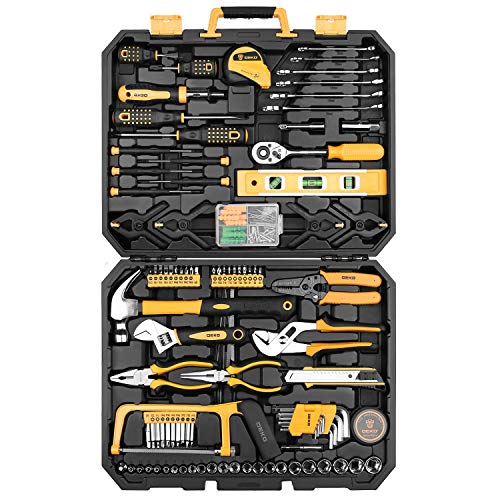 DEKOPRO ET00654
 DEKOPRO DKMHTK094BMC-OrangeBasic home kit
Start with the core: sockets, ratchets and wrenches
Most car work comes down to turning fasteners, so the socket set is the center of any mechanic setup. You want ratchets in three drive sizes, a range of sockets in shallow and deep lengths, extension bars, and a set of combination wrenches for places a socket will not fit.
Our page on the best tool set for mechanics compares full kits that bundle these pieces. If you would rather focus on sockets first and add other tools later, the best socket set for mechanic page narrows the field.
Pick your drive sizes and fastener types
Drive size is the square fitting on the ratchet. Each size suits a different range of work, and a full set covers all three. A small set built around 1/4 in drive is handy for light jobs but will not handle large bolts.
Fastener type matters too. Most modern cars use metric fasteners, while older and American vehicles may use SAE (inch) sizes. A set with both saves you from buying a second one later.
| Drive size | Typical use | Notes |
|---|---|---|
| 1/4 in | Small fasteners, interior trim, tight spots | Good for light work, limited on large bolts |
| 3/8 in | General engine bay and suspension work | The most versatile all-around size |
| 1/2 in | Large bolts, wheel hardware, heavy loosening | Pairs well with a breaker bar |
Add the tools a socket set does not include
Even a large kit leaves gaps. Once the sockets are covered, build outward with the items below. Many are small additions, and you can pick them up as jobs call for them.
A breaker bar or pry bar gives extra leverage for stuck fasteners. A ratchet alone is not meant for that kind of force.
- Combination wrenches in metric and SAE
- Screwdrivers, including Phillips and flathead
- Pliers: needle-nose, slip-joint and diagonal cutters
- Hex keys and Torx bits
- A breaker bar and a pry bar
- A torque wrench for fasteners with a specified tightness
- A flashlight or headlamp for dark engine bays
Choose a boxed set or build piece by piece
A boxed set is the faster route. The sets on our spec sheet run from 57 to 205 pieces and from 7.25 to 39.19 lb, so size and weight vary a lot. Think about where the case will live and whether you will carry it between a garage and a driveway.
Building piece by piece costs more effort but lets you skip tools you will never use. A common approach is to buy a mid-size set, then add specialty items as projects demand them.
| Set | Pieces | Weight | Worth noting |
|---|---|---|---|
| DEWALT DWMT75049 | 192 | 39.19 lb | 1/4, 3/8 and 1/2 in drives, SAE and metric, hard case |
| DEWALT DWMT73803 | 168 | 27.27 lb | 72-tooth ratchets, metal-latch case |
| DEWALT DWMT81534 | 205 | 26.78 lb | Highest piece count, 72-tooth ratchets |
| CRAFTSMAN CMMT99447 | 57 | 7.25 lb | 1/4 in drive, lightest and most compact |
Organize the toolbox so you can find things
A good layout saves time on every job. Group tools by function and keep the most-used items within easy reach. Sockets and ratchets usually go in the top drawer or the main case. Wrenches and pliers can sit in a shallow drawer below.
Hand-stamped or clearly marked sizes help you spot the right piece at a glance. If your set uses a molded case, return each socket to its slot after use. A missing 10 mm socket is the usual reason a job stalls halfway through.
- Keep metric and SAE sockets on separate rails or rows
- Store deep sockets apart from shallow ones
- Put rarely used tools at the bottom or back
- Wipe tools down after greasy jobs to limit rust
- Do a quick count when you close the case
Safety notes before you start
Wear safety glasses whenever you use hand tools on a vehicle. Rust flakes, spring-loaded parts and slipping wrenches can send debris toward your face. Gloves protect your knuckles but should not be loose enough to catch on moving parts.
Never work under a car held only by a jack. Use properly rated jack stands on level ground. Disconnect the battery before working near wiring, and keep open flames and sparks away from fuel lines and fuel vapor. If you use a powered impact tool, add hearing protection.
Maintain the set so it lasts
Chrome vanadium steel with a polished chrome finish resists corrosion, but it still benefits from care. Dry tools after exposure to moisture, and put a light wipe of oil on ratchet mechanisms only if the maker recommends it.
Check the warranty before you buy. Tools used weekly take wear, and some makers, such as DEWALT and CRAFTSMAN in our data, list lifetime coverage on mechanics tools. Read the terms for what is included.
Frequently asked questions
Do I need both SAE and metric sockets?
Usually yes. Newer cars lean metric, but older and American models may need SAE. Buying one set that holds both is simpler than matching two.
Is a 6-point or 12-point socket better?
Six-point sockets grip the flats of a bolt head more fully and are less likely to round it. Twelve-point sockets are easier to slip onto a fastener in awkward spots.
What does a 72-tooth ratchet do for me?
It needs only a 5 degree swing to engage the next tooth, which helps in cramped engine bays and under dashboards.
Can a home tool kit work for car repairs?
For basic jobs, yes. A kit with 1/4 in sockets only will not cover large bolts, so a true mechanics set with several drive sizes is the better fit for regular auto work.