How to Set Garage Lights on a Timer or Motion Sensor
The easiest way is to match the control to how your lights connect. Plug-in fixtures work with a plug-in timer or smart plug, screw-in fixtures work with a socket-style timer or motion adapter, and hardwired lights need a wall switch timer or motion switch. For lights that come on when the door opens, use the opener's built-in light or a door sensor. Always check that the control's load rating covers your fixture's wattage.
 POLARPRA JP-CKD-1Best overall
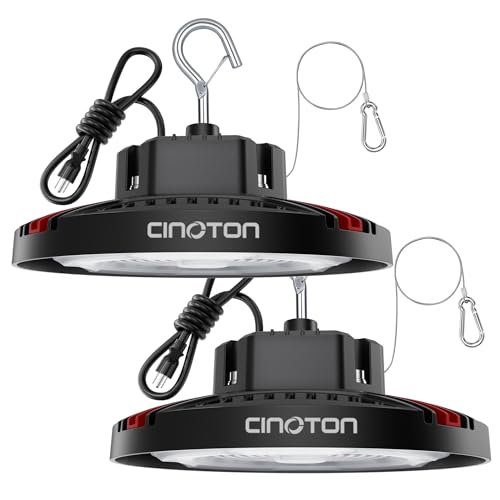 CINOTON KING-HR150EBrightest and most efficient
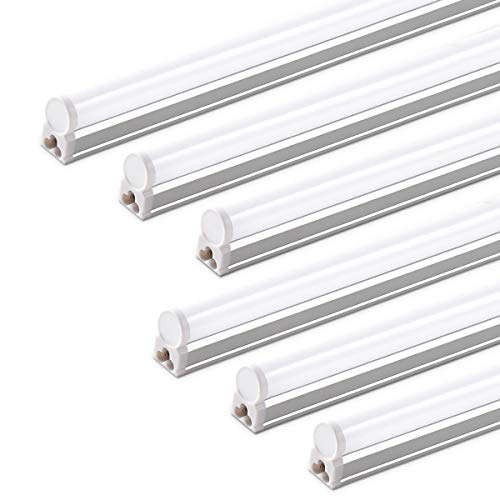 Barrina AAL20Truest colors, longest chain
Start with how your lights connect
Before you buy a timer or sensor, look at how your garage lights get power. That one detail decides which control will work and how much effort the setup takes.
Most garage lights fall into three groups: plug-in cord fixtures, screw-in fixtures that thread into a standard light socket, and hardwired fixtures that connect to a wall switch. The table below shows a simple match for each.
| Your lights | Good control option | Wiring needed |
|---|---|---|
| Plug-in fixture with a cord | Plug-in timer, smart plug, or plug-in motion outlet | None |
| Screw-in fixture (E26/E27 base) | Socket-style timer or motion adapter, or a motion-sensing fixture | None |
| Hardwired ceiling light | Wall switch timer or motion sensor switch | Yes, replaces the switch |
| Opener light | Built-in opener settings | None |
Check the load rating first
Every timer, adapter, and sensor has a maximum load printed on the label or box. Your lights must stay under that number. Add up the wattage of every fixture on the control, then compare.
Garage lights vary a lot here. In our specs, the Barrina T5 tube lists 20 W per fixture, while the CINOTON UFO high bay lists 160 W and the POLARPRA 8-panel lists 200 W. A small adapter built for a few watts may not be rated for a 200 W fixture. If the label does not clearly cover your total, pick a higher-rated control.
If you are still choosing fixtures, our best garage lights page lists wattage, lumens, and certification for each product, so you can plan the control at the same time.
How to put garage lights on a timer
A timer is the simplest option when you want lights on at set hours, such as every evening until bedtime. Here is the basic process for a plug-in or socket timer.
- Turn the light off and unplug it or let the bulb cool before handling it.
- Plug the timer into the outlet, or screw the socket timer into the fixture base.
- Plug the light into the timer, or screw the bulb into the timer's socket.
- Set the current time on the timer.
- Set your on and off times. Digital models let you choose different schedules by day.
- Switch the light itself to on, so the timer is the only thing controlling power.
- Test by moving the clock forward to your on time and checking that the light responds.
How to set up a motion sensor
A motion sensor turns the light on when it detects movement and off after a delay. Most sensors let you adjust three settings: sensitivity, how long the light stays on after motion stops, and a light level setting so it only works in the dark.
Start with the delay. A few minutes works well for a quick trip to the car. A longer delay suits a workshop where you may stand still while you work. If the light shuts off while you are busy, raise the delay or the sensitivity.
Mount the sensor where it can see the door and the main work area. Avoid pointing it at a window, a vent, or a heater, since heat and sunlight changes can set off some sensors.
One important caution: not every light likes being switched on and off often. The Barrina T5 listing says it is not compatible with motion sensors and that using one will shorten its lifespan. Read the maker's notes before pairing any fixture with a sensor.
How to turn on garage lights when the door opens
Most garage door openers have a built-in light that turns on when the door moves and stays on for a set time. That is the easiest way to get door-triggered lighting, and it needs no extra parts.
Many openers let you change the delay, and some have a lock or learn button that you press and hold to adjust it. The steps differ by brand and model, so check your opener's manual for the exact method.
If you want your main ceiling lights to come on instead, you have two common choices. You can add a door or tilt sensor to a smart switch, or use a motion sensor near the entrance. Either one can trigger the lights without touching the opener.
Why a garage light stays on, and how long it should
The time a light stays on depends on the device. Timers follow your schedule, motion sensors follow their delay setting, and opener lights follow the opener's own timing. If you are unsure, test it by triggering the light and watching how long it takes to shut off.
When a light will not turn off, the cause is usually simple. Common ones include:
- A sensor aimed at a spot with constant movement or heat
- A delay setting that is too long
- A manual override or "always on" mode on the timer
- A wall switch left on while a timer is also in line
- A light level setting that never lets the sensor sleep
- A wiring fault, which needs an electrician
Safety notes before you start
Electricity and ladders are the two main risks in this job. Take your time and keep these rules in mind.
Turn off power at the breaker before replacing a wall switch or touching any hardwired light. Use a voltage tester to confirm that it is dead. If you are not comfortable with wiring, hire a licensed electrician.
Let bulbs cool before you unscrew them. Use a stable ladder on level ground, and have someone nearby if the ceiling is high. Also look for a recognized safety listing on any plug-in control. Our spec table shows that the CINOTON lists ETL or UL, while the POLARPRA and Aoretic list none, so it is worth checking the control itself as well.
Finally, do not overload an outlet or an extension cord. For more on picking fixtures that work well with controls, see our garage light comparison.
Frequently asked questions
Can I use a smart plug for garage lights?
Yes, if the lights plug in and the smart plug's rating covers their total wattage. It lets you set schedules and control the light from your phone.
Do motion sensors wear out LED lights faster?
They can with some fixtures, because frequent switching adds stress. Check the maker's notes, as some listings warn against sensors.
Where should I mount a garage motion sensor?
Place it where it covers the entry door and the main walking path, away from windows and heat sources that could trigger it by mistake.
Do I need an electrician to install a motion switch?
If it replaces a wall switch, you are working with household wiring. Turn off the breaker and test the wires, or hire an electrician if you are unsure.