How to Set a Torque Wrench to the Right Nm Value
Find the Nm value in your service manual, unlock the handle, turn it until the scale reads that number, and lock it again. If your wrench only shows ft-lb, multiply by 1.3558 to get Nm. Pull smoothly until the wrench clicks, then stop.
 SUERCUP BSM1-340Best overall
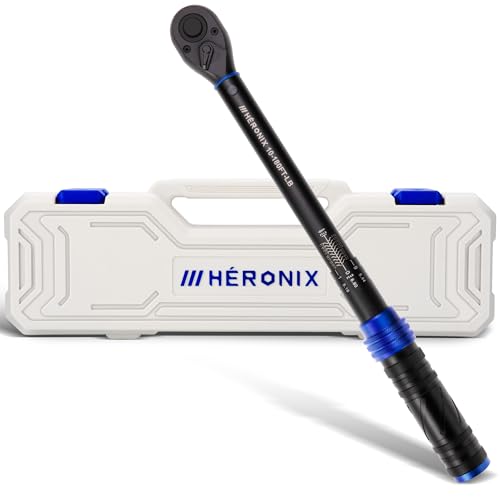 HERONIX HX9087USFine ratchet with case
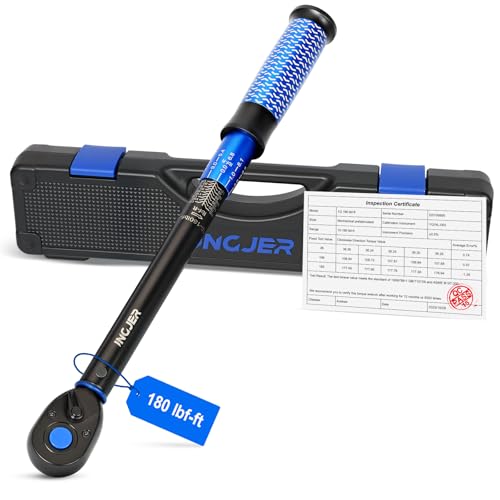 INGJER IJ12NEW180MLightest in the lineup
Start with the right number
Before you touch the wrench, get the torque value from the source that matches your fastener. For a car, bike or appliance, that is the service manual or the maker's spec sheet. Torque specs are written for a specific bolt, thread and condition, so a number from a different part is not a safe substitute.
Check the unit next. Many specs are given in Nm, while some tools and older manuals use ft-lb. Also note whether the spec assumes clean, dry threads or lightly oiled ones, because lubricant changes how much clamping force a given torque produces.
Check that your wrench can reach the value
Every wrench has a working range, and it cannot be set reliably outside it. For example, the HERONIX 1/2 inch click wrench in our data covers 10 to 180 ft-lb, which is 13.6 to 244 Nm. The LEXIVON LX-184 covers 25 to 250 ft-lb, or 33.9 to 338.9 Nm. A bolt that needs 20 Nm falls below the LEXIVON's range, so it would need a lower-range wrench.
Aim for a value that sits inside the range, not right at the bottom edge, where small errors matter more. Our best torque wrench page lists the range for each model so you can match it to your jobs before you buy.
Convert ft-lb to Nm if you need to
If your wrench has a dual scale, you can read Nm directly. If it only shows ft-lb, or your spec is in ft-lb and the wrench shows Nm, convert with this rule: 1 ft-lb equals about 1.3558 Nm. To go the other way, divide Nm by 1.3558.
The ranges from the models above show how the numbers line up:
| ft-lb | Approx. Nm | Where it appears in our data |
|---|---|---|
| 10 | 13.6 | Low end of the HERONIX range |
| 25 | 33.9 | Low end of the LEXIVON range |
| 180 | 244 | High end of the HERONIX range |
| 250 | 338.9 | High end of the LEXIVON range |
Set a click-type wrench step by step
Most mechanical click wrenches work the same way. The handle has a main scale along the shaft and a finer scale on the rotating grip. Layouts differ between brands, so skim your manual too.
Here is the usual process:
- Unlock the handle. Some wrenches have a lock ring you pull down, as on the HERONIX. Others have a knob at the end of the handle that you loosen.
- Turn the handle until the zero mark on the fine scale lines up with the main-scale value closest to your target. This sets the big part of the number.
- Keep turning to add the remainder. If the spec is 65 Nm and the main scale is marked in 10 Nm steps, set 60 and then use the fine scale to add the last 5.
- Check the reading with the scale facing you and your eye level with it, so you do not misread the line.
- Lock the handle again by releasing the ring or tightening the knob. An unlocked handle can drift while you work.
Use the wrench correctly once it is set
Fit the right socket, seat it fully on the fastener, and hold the wrench by the handle grip, not the end of a cheater pipe or extension. Pull in one smooth motion at a steady pace. Jerking the handle can overshoot the setting.
Stop as soon as you feel and hear the click. One click is the signal. Pulling again after the click tightens the bolt past the value you set. Click wrenches are made for tightening, so do not use them to break bolts loose.
Many fasteners need several steps, such as snugging first and then tightening in a pattern. Follow the sequence in your manual, especially for wheels and cylinder heads.
Digital wrenches work a little differently
With a digital model you do not turn a scale. You pick the target and watch the display. The SUERCUP digital wrench in our data lets you switch between five units with a U button, including N.m and lb.ft, and it offers nine preset modes, P1 to P9. Its listing says it vibrates, flashes and beeps when the preset value is reached.
Its listing also warns that the applied torque should not exceed 120% of the maximum value. That is a good habit for any wrench: never push a tool past its rated top end. Our torque wrench comparison shows which models list a digital readout and which list calibration certificates.
Store it and keep it accurate
After you finish, set a click wrench back to the lowest value on its scale. The INGJER listing gives this exact advice to maintain calibration, because leaving the spring compressed over time can affect accuracy. Do not go below the lowest mark, and do not force the handle past its stop.
Keep the wrench in its case if it came with one. Do not drop it, and do not use it as a breaker bar. A wrench that has been dropped or overloaded may no longer click at the right value, so have it checked against its calibration. If the bolt is hard to reach and you also need the right wrench for the job, our best crowfoot wrench set page covers attachments that fit tight spots, though they change the effective length of the wrench and can shift the real torque, so read the manual before combining them.
Safety notes
Wear safety glasses when working under or around a part that could release suddenly. Make sure a socket and extension are fully seated before you pull, because a slip can skin your knuckles or throw you off balance.
For wheels, brakes and suspension, use jack stands, not just a jack, and never rely on a torque wrench as the only check on a safety-critical part. If the spec is unclear, ask a qualified mechanic.
Frequently asked questions
Can I use a torque wrench to loosen bolts?
It is best not to. Loosening can apply more force than the wrench is built for and may knock it out of calibration. Use a breaker bar or regular wrench to loosen, then the torque wrench for final tightening.
What if my target value falls between two marks on the scale?
Set the nearest main-scale mark and use the fine scale to add the difference. If your wrench cannot show that exact step, round to the closest value and avoid rounding up on small or delicate fasteners.
Why does the wrench not click when I pull?
The handle may not be locked, the socket may not be seated, or the setting may be above what the wrench can hold. Check the lock and the range. If it still will not click, have it checked.
Do I need a different wrench for small bolts?
Often yes. A wrench with a high minimum is not reliable for low values. Small fasteners usually need a lower-range model, such as a 3/8 inch drive with a low minimum.
Do ratchet teeth change the Nm I set?
No. The tooth count only affects how far you must swing the handle in tight spaces. The torque value is set by the scale.