How to Seal and Stop Leaks in Air Compressor Fittings
Yes, most air compressor fittings with tapered NPT threads need thread sealant, and PTFE (Teflon) tape is the usual choice. Wrap the male threads, thread the fitting in by hand, then snug it with a wrench. If it still leaks, depressurize the system, find the exact leak with soapy water, and replace any worn coupler, plug or washer instead of cranking harder.
 Ailbiuko aircoupler_plug-iron-45pcsBest overall
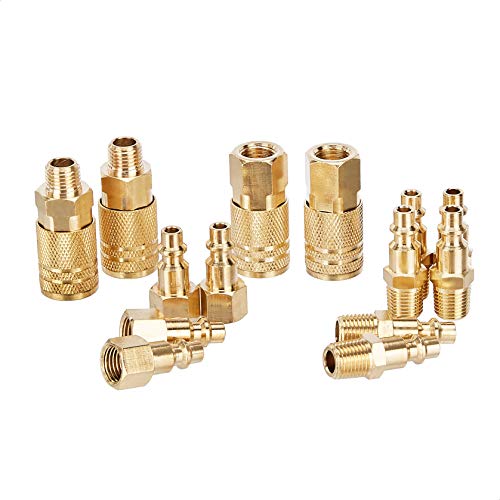 Amazon Basics A140001Brass starter set
 SOKOSEY 20SMmutou2packsReplacement M/D couplers
Do air compressor fittings need Teflon tape?
Threaded joints on tapered pipe threads do. NPT threads are tapered, so they wedge together and need a little sealant to fill the tiny gaps in the metal. PTFE tape is the simplest way to do that. Our best air compressor fittings page lists 1/4 in NPT on every top-ranked kit, and several of those listings recommend tape on the threads or include a roll.
Quick-connect joints are different. When a plug clicks into a coupler, the seal comes from an internal gasket or O-ring, not from tape. Never wrap tape on the plug barrel that slides into the coupler. Tape belongs only on the threaded end that screws into a hose, tank, regulator or tool.
One more exception: some fittings seal with a flat washer or an O-ring at the shoulder instead of the threads. If your fitting has one, follow the maker's instructions and skip the tape.
Safety first
Compressed air stores a lot of energy, and a loose fitting can whip or pop off. Take these steps before you touch anything:
- Turn the compressor off and unplug it so it cannot restart.
- Open the drain or release the air until the tank gauge reads zero.
- Wear safety glasses, since debris and air blasts can hit your eyes.
- Wear hearing protection if you are testing a loud leak with the compressor running.
- Never work on a fitting that is under pressure, and never use a fitting above its pressure rating.
Find the leak before you fix it
Guessing wastes time and tape. Mix a little dish soap with water in a spray bottle, pressurize the system, and spray each joint. Bubbles show you exactly where air is escaping. Then depressurize before making any repair.
A faint hiss when the compressor sits idle usually means a slow leak somewhere. Check the tank drain, the regulator, the gauge threads and every hose joint. The table below shows the common spots and the usual fix.
| Where it leaks | Likely cause | Typical fix |
|---|---|---|
| Threaded joint | Missing or old tape, loose fitting, or damaged threads | Clean threads, rewrap with tape, retighten, or replace the fitting |
| Between coupler and plug | Worn internal seal or mismatched profile | Replace the coupler or plug and check both are the same profile |
| Coupler will not hold the plug | Worn locking balls or sleeve | Replace the coupler |
| Hose end | Loose crimp or cracked hose | Replace the hose end or the hose |
| Tank drain valve | Debris or a worn valve seat | Drain, clean and retighten, or replace the valve |
How to seal threaded fittings step by step
Follow this order for a clean, long-lasting seal on any 1/4 in NPT joint.
- Depressurize the system and unscrew the leaking fitting.
- Clean both sets of threads with a rag. Remove old tape, dirt and any metal burrs.
- Hold the male thread facing you. Wrap PTFE tape clockwise, so it tightens as you screw the fitting in.
- Use about two to three wraps, overlapping slightly. Leave the first thread bare so no scraps of tape enter the airline.
- Thread the fitting in by hand until it stops.
- Finish with a wrench, about one to two more turns, until it is snug.
- Pressurize and spray soapy water to confirm the leak is gone.
How to tighten fittings without damaging them
Snug is the goal. Tapered threads seal by wedging, so extra force does not add much sealing power. It can crack a brass or aluminum body, strip threads or split a female port.
Always use a wrench on the fitting you are installing and a second wrench to hold the other part steady if you can. This keeps you from twisting a hose or a regulator. If a joint still weeps after a snug tightening, back it out, check the threads and rewrap rather than adding more force.
Do not over-wrap with tape either. A thick wad of tape can keep the threads from seating and can cause leaks of its own. If you cannot start the fitting by hand, you probably used too much.
When to replace instead of repair
Some leaks cannot be sealed. Replace the part if you see cracked threads, a bent or dented body, a sticky or loose coupler sleeve, or a coupler that lets a plug drop out. Corroded or rounded fittings are also better replaced than fought with.
Match the new parts to your system. Check the thread size first, then the coupler profile. Most kits on our fittings page list Industrial (M/D), and plugs only mate with couplers of the same profile. If a listing does not state the profile, check your current plugs before ordering.
Material and rating matter too. Several 1/4 in NPT couplers and kits in our comparison list a 300 psi rating, though some makers do not publish one. A missing rating is not proof of a weak fitting, but it leaves you guessing, so keep your working pressure well within what the maker states.
Tape availability is another small point. For example, the 45-piece Ailbiuko kit and the 16-piece WORKPRO kit list thread tape, while the Amazon Basics 14-piece brass kit does not. If your kit has none, buy a roll separately.
Keep leaks from coming back
A few habits cut down on repeat leaks. Drain the tank after use so moisture does not corrode fittings from the inside. Check joints with soapy water every so often, and do it again after you move or reconfigure your hoses.
If you are building out a shop and want the full setup in mind, our guides for the best air compressor for home garage and the best air compressor for home shop help you match the compressor to the hose and fitting sizes you will be sealing.
Finally, keep spare plugs and couplers on hand. A small storage case, like the one listed with the 16-piece WORKPRO set, makes it easy to swap a worn part in a minute.
Frequently asked questions
Can I use pipe dope instead of tape?
Yes. Thread sealant paste made for air or gas lines also works on NPT threads. Apply a thin coat to the male threads only, and keep it off the first thread so it does not get into the line.
Why does my coupler leak when nothing is plugged in?
The internal valve or seal is likely worn or dirty, or the thread joint behind the coupler is leaking. Spray soapy water on the threads first. If the bubbles come from the coupler face, replace the coupler.
Can I reuse old tape?
No. Remove it and wrap fresh tape each time you reassemble a threaded joint. Old tape is compressed and torn, so it seals poorly.
Will tape fix a leak at the quick-connect joint?
No. That joint seals with an internal gasket. Check that the plug and coupler profiles match, then replace whichever part is worn.
How tight is too tight?
If you need a long cheater bar or you hear metal creaking, stop. A snug fit after hand tightening plus about one to two wrench turns is enough for most 1/4 in NPT joints.