How to Replace Garage Lights With LED Fixtures
To replace garage lights with LED fixtures, turn off the breaker, confirm the power is dead, take down the old fixtures, then fit the new ones. Screw-in LED lights need only a standard socket, while plug-in tubes and hardwired fixtures take a little more work. Pick the type that matches your ceiling and wiring before you start.
 POLARPRA JP-CKD-1Best overall
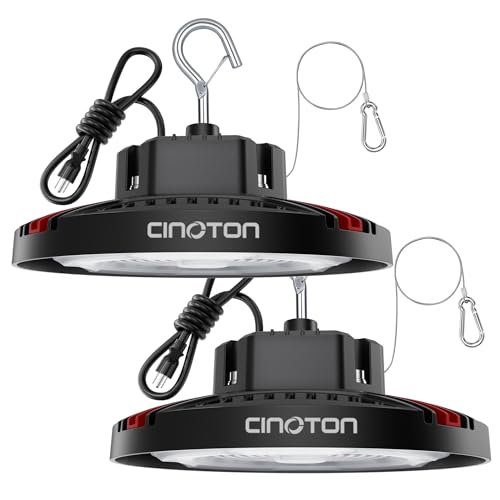 CINOTON KING-HR150EBrightest and most efficient
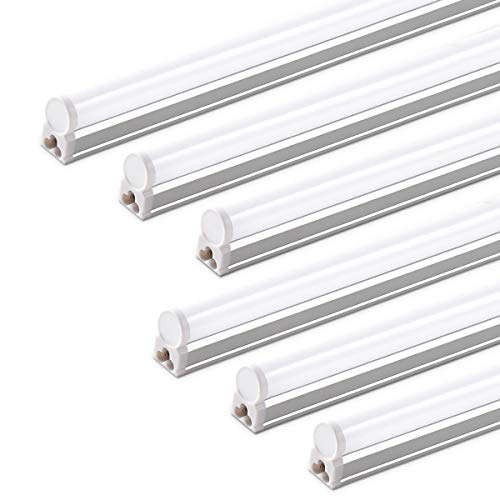 Barrina AAL20Truest colors, longest chain
Start by Identifying What You Have Now
Look at your ceiling before you buy anything. Most garages have one of three setups: a bare screw-in socket, a fluorescent tube fixture, or a hardwired fixture with its own housing.
A bare socket is the easiest to upgrade. Fluorescent tube fixtures can take LED replacements, but many people remove the old fixture and mount a new LED one instead, since the old ballast is just extra hardware that can fail. Hardwired fixtures need the wires reconnected, which is the step that calls for the most care.
Note the ceiling material and height too. Drywall, exposed joists and open rafters all mount differently, and a high ceiling means a taller ladder and a heavier lift.
Choose the Right Type of LED Fixture
The mounting type decides how hard the job is. Our best garage lights page lists mounting, lumens, weight and certification for each product, so you can match a fixture to your ceiling before you commit.
Here is how the three common routes compare.
| Fixture type | Wiring needed | Best for | Watch for |
|---|---|---|---|
| Screw-in panel light | None, fits an E26/E27 socket | Existing bare sockets | Weight hanging from one socket |
| Plug-in linkable tube | Plug into an outlet, or hardwire | Long benches and wide ceilings | Needs outlet access or a switch cord |
| Hardwired fixture | Connect to ceiling wires | Clean, permanent installs | Wiring skills and a tested circuit |
Safety Before You Touch Anything
Garage lighting work happens overhead, near live circuits, so treat the preparation as part of the job.
Switching off the wall switch is not enough. The wires in the ceiling box can still be live.
- Turn off the breaker for the garage lights, then flip the light switch on to confirm nothing comes on.
- Use a non-contact voltage tester at the socket or wires to confirm the power is off.
- Use a stable ladder on level ground, and have someone steady it if you can.
- Wear safety glasses, since dust and old parts can fall toward your face.
- Let old bulbs cool before you grab them. Old fixtures can stay hot for a while.
- If you see burned, brittle or aluminum wiring, or you are unsure about a connection, stop and call a licensed electrician.
Remove the Old Lights Step by Step
Once the power is confirmed off, removal is straightforward. Take your time on the first fixture so you know how the rest come apart.
- Clear the floor and move vehicles out from under the work area.
- Unscrew old bulbs from sockets, or twist out fluorescent tubes. Tubes can break, so handle them gently.
- For a fixture, remove the cover or lens, then look for the screws or clips that hold it to the ceiling.
- Hold the fixture with one hand while you loosen the last fastener, so it does not drop.
- Disconnect the wires by removing the wire nuts. Note which wire goes where, and take a phone photo first.
- Cap any exposed wire ends with wire nuts if there will be a gap before the new fixture goes in.
Install the New LED Fixtures
For a screw-in light, thread it into the E26/E27 socket until snug and switch the power back on. Do not overtighten. Check the weight first: the Meiqils 80W listing gives 0.6 lb, while the POLARPRA 200W panel light lists 2.34 lb per fixture. A heavier fixture puts more strain on an old socket, so check that the socket is secure and the ceiling holds firm.
For a hardwired fixture, mount the bracket to a joist or an electrical box rated for the load. Connect the matching wires with wire nuts: black to black, white to white, and bare or green to the ground. Tug each connection gently to confirm it is tight, then fasten the fixture and fit the cover.
For linkable tubes, hang them with the included hooks or chains and connect them end to end. The Barrina T5 listing says you can link up to 8 tubes, and that it comes with snap joints and a power cord with an on/off switch. It also lists hardwire accessories, so you can choose how to power it. The CINOTON high bay light lists a US plug and an included safety chain, which is a helpful backup for a hanging fixture.
After installation, restore the breaker and test each light. If one does not come on, turn the breaker off again before you adjust anything.
Check the Specs Before You Buy
Lumens tell you how much light each fixture makes. For scale, our product data runs from 2200 lm per fixture on the Barrina tube to 24000 lm on the CINOTON high bay light. Multiply lumens per fixture by the number of fixtures to estimate the total for your space, and remember that a bigger garage needs more.
CRI shows how true colors look, which matters when you read wire colors or match paint. Only some products list it. The Barrina lists CRI 85 and the POLARPRA lists CRI 80. If a maker does not publish CRI, treat color accuracy as unknown.
Safety certification deserves real weight. An ETL or UL listing means a recognized lab certified the fixture to electrical safety standards. The CINOTON and Barrina both list ETL or UL. The POLARPRA lists no certification, and the Meiqils lists FCC only. Since a fixture runs overhead for hours, a safety listing is worth putting ahead of a few extra lumens.
You can compare all of these numbers side by side on our garage lights comparison.
Frequently asked questions
Can I put an LED screw-in light in a garage door opener socket?
Many openers have a socket, but check the opener manual for bulb size and wattage limits first. Some LED bulbs can also cause radio interference with the remote, so confirm compatibility with the opener maker.
Why does my new LED light flicker?
Common causes are a loose connection, a dimmer switch that is not compatible with LEDs, or a worn-out switch. Turn the power off, check that the fixture is seated firmly, and replace a dimmer with a standard switch if needed.
How do I dispose of old fluorescent tubes?
Fluorescent tubes contain a small amount of mercury, so do not put them in regular trash. Many hardware stores and local waste programs accept them for recycling, so check with yours.
Do I need an electrician to replace garage lights?
Not for screw-in or plug-in lights. A hardwired install is a reasonable DIY job if you are comfortable with basic wiring and follow the safety steps. Call a licensed electrician if the wiring looks damaged or you are unsure.