How to Remove a Stuck or Stripped Oil Drain Plug
Start with a six-point socket or box-end wrench that fits snugly, add penetrating oil around the plug, and pull with steady force on a long handle. If the head is already rounded, grip it with a bolt extractor socket, a pipe wrench or Vise-Grips, or cut new flats with a chisel. Always support the car on jack stands, wear eye protection, and have a pan under the plug.
 ValvoMax [VM-QT-001]Best overall
 Fumoto F106NLever clip included
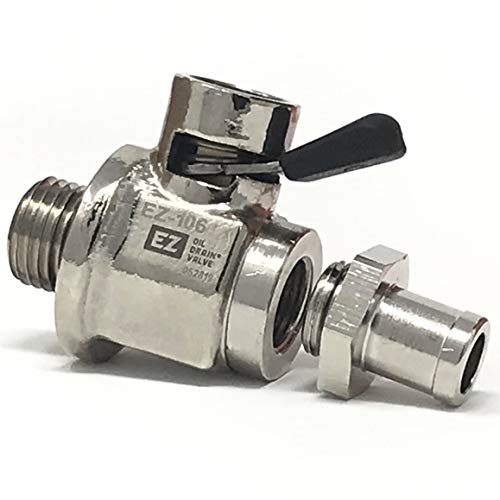 EZ Oil Drain Valve EZ-106RHTied for shortest length
Why drain plugs get stuck or stripped
A drain plug sits in a hot, wet, dirty spot under the engine. Heat cycles, road grime and years of sitting can bind the threads. Over-tightening at a past change is the most common cause, because the plug gets squeezed against the pan until it seizes.
Stripped heads usually come from the wrong tool. A 12-point socket or an adjustable wrench that is slightly too big rounds the corners of the hex. After that, every pull makes the head rounder. The good news is that most plugs can still be saved if you stop and change tools before the head is fully round.
Get set up safely first
Park on level ground and let the engine cool until the pan is warm, not hot. Warm oil flows well, but a hot pan and hot oil can burn you quickly. Never rely on a jack alone. Lift the car, set it on jack stands, and chock the wheels that stay on the ground.
Wear safety glasses, because oil, rust flakes and metal chips can fall toward your face. Wear gloves too. Slide a drain pan under the plug before you pull, since a plug that suddenly gives way can let oil rush out. Our best oil drain pan comparison lists capacities and designs so you can pick one that catches the stream.
- A six-point socket in the exact size of the plug head
- A breaker bar or a long-handled ratchet
- Penetrating oil and a small brush
- A hammer for light taps
- Jack stands, safety glasses and gloves
- Shop towels and a drain pan
How to loosen a stuck plug
Work through these steps in order. Each one adds a little more force without hurting the head.
Never push the pull force with a pipe on a wrench that does not fit well. A snug socket with a longer handle is safer than an ill-fitting wrench with brute force.
- Clean the plug head and the area around it with a brush and a rag so the socket seats fully.
- Spray penetrating oil on the threads where the plug meets the pan. Wait 15 to 30 minutes, and longer for a plug that has been in for years.
- Fit a six-point socket squarely and push it fully onto the head. Make sure it does not wobble.
- Pull on a breaker bar with a smooth, steady motion. A sudden jerk is more likely to slip and round the head.
- Tap the end of the plug and the surrounding pan gently with a hammer while keeping tension on the socket. The vibration can break the bond.
- If it still holds, add a few more minutes of penetrating oil and try again.
Removing a rounded or stripped plug head
Once the corners are rounded, a normal socket will spin. You have several ways to get a grip, and the table below sorts them from least to most aggressive.
Try the first options before the cutting ones. Each step that removes metal makes a replacement plug and a clean seal harder to achieve.
| Method | How it works | Best when |
|---|---|---|
| Bolt extractor socket | Spiral flutes bite into the rounded head as you turn counterclockwise | The head is rounded but still has some shape |
| Vise-Grips or locking pliers | Clamp onto the head and turn the plug | There is room to reach around the head |
| Pipe wrench | Teeth dig into the sides of the head | The plug sticks out far enough to grip |
| Hammer and chisel | Tap the edge of the head to spin it counterclockwise | The head is fully round and you have clear access |
| Cut new flats with a file or rotary tool | Create two parallel surfaces for a wrench | The head is round and you have space to work |
| Left-hand drill bit extractor | Drill into the plug center and back it out | Last resort, since drilling risks metal chips in the pan |
If the pan threads are damaged
Sometimes the plug comes out but takes pan threads with it, or the threads are already worn and the new plug will not hold. Do not keep over-tightening a plug that does not seal. A leaking plug can drop the oil level fast.
Common fixes include an oversize plug that cuts fresh threads, a thread repair insert, or a repair sleeve. Some shops can also re-tap the hole. If the pan is aluminum or thin steel, ask a mechanic about the options. Replacing the pan is a bigger job, so look at the lower-cost repair routes first.
Whatever you use, match the plug to the thread size and pitch. A mismatch can ruin the threads again.
Prevent it at the next oil change
Use a new washer or gasket at every change and tighten the plug only to the torque listed in your service manual. A torque wrench removes the guesswork that leads to over-tightening. A light smear of clean oil on the threads also helps the plug turn out next time.
If you do your own changes often, an oil drain valve can spare the plug and threads from being removed again. You open the valve instead of unscrewing a plug each time. Our best oil drain valve page compares thread size, body material and seal type. Valves there come in 14 mm at 1.5 mm and 12 mm at 1.75 mm, among others, so check your pan thread first.
Confirm the thread before you buy, because the wrong pitch can damage the pan threads you just worked to save.
Frequently asked questions
Should I use heat on a stuck drain plug?
Avoid open flame near an oil pan, because oil residue and fumes can ignite. Penetrating oil and gentle tapping are safer and often enough.
Can I drive with a damaged drain plug thread?
It is risky. A plug that does not seal can leak oil and damage the engine. Fix the threads or use a proper repair part before driving.
Which direction do I turn to loosen it?
Turn counterclockwise, the usual left-to-loosen direction. Check that your extractor or tool is also set to turn that way.
Why does a 12-point socket round the head?
Its thin points sit on the corners of the hex and can slip. A six-point socket grips the flat sides and spreads the force.
When should I call a mechanic?
Call one if the plug will not budge after the steps above, if you would have to drill near the pan, or if the pan threads are stripped.